

Sea myths
The Atlantic Ocean as a space of mythical islands: the Fortunate Isles, Atlantis and San Borondón.
Greco-Latin and medieval tradition placed a set of mythical islands in the Atlantic, west of the known world. The Fortunate Isles, Atlantis and San Borondón are different versions of the same fascination: a maritime territory where utopia, paradise and the edge of the world meet.[1]
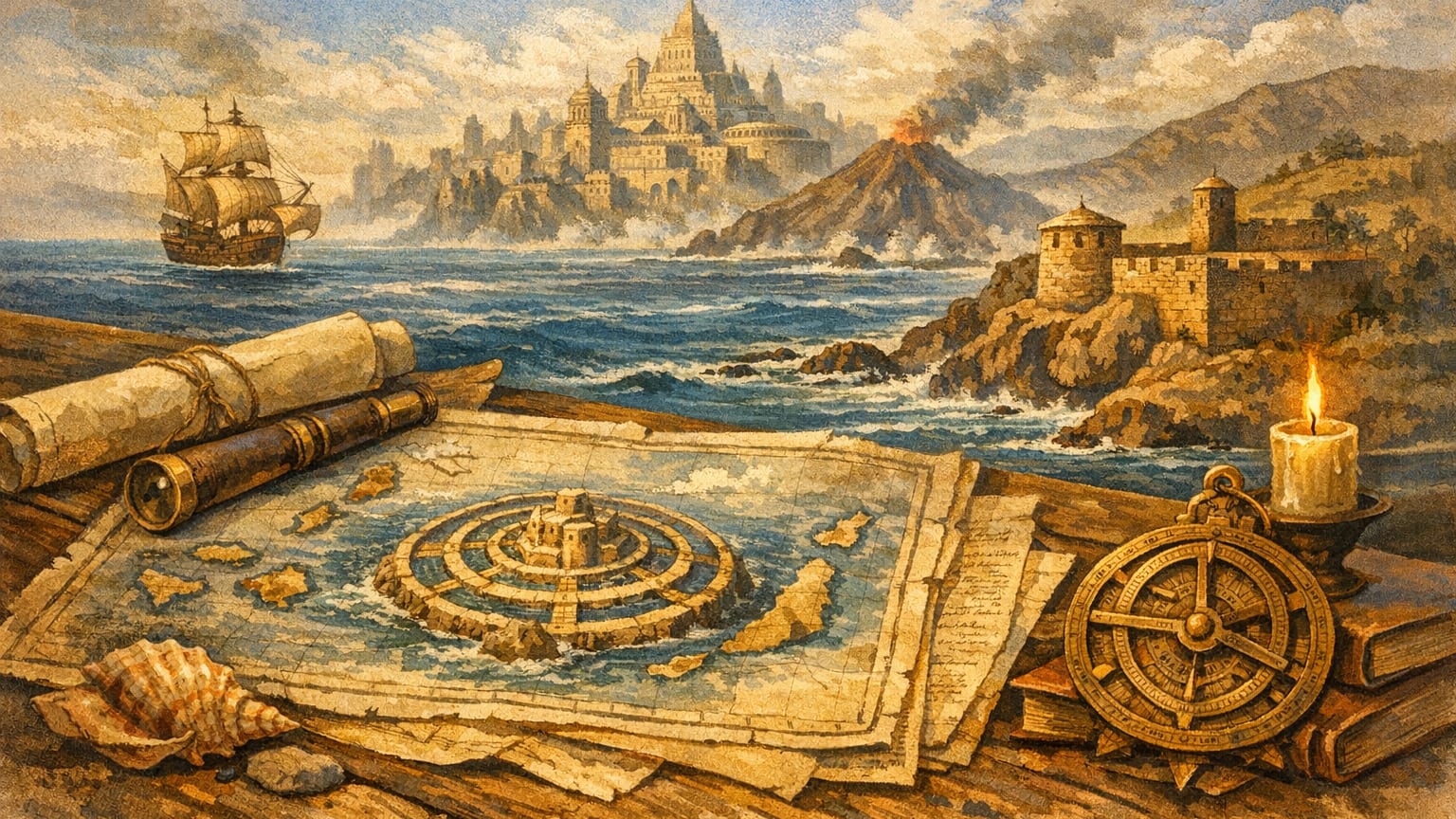
Fortunate Isles
From Hesiod to Pliny, the Fortunate Isles were identified with Atlantic archipelagos such as the Canaries. In the Middle Ages the association was consolidated and gave rise to an image of the Canaries as a privileged place close to Paradise.[1]
Related reading
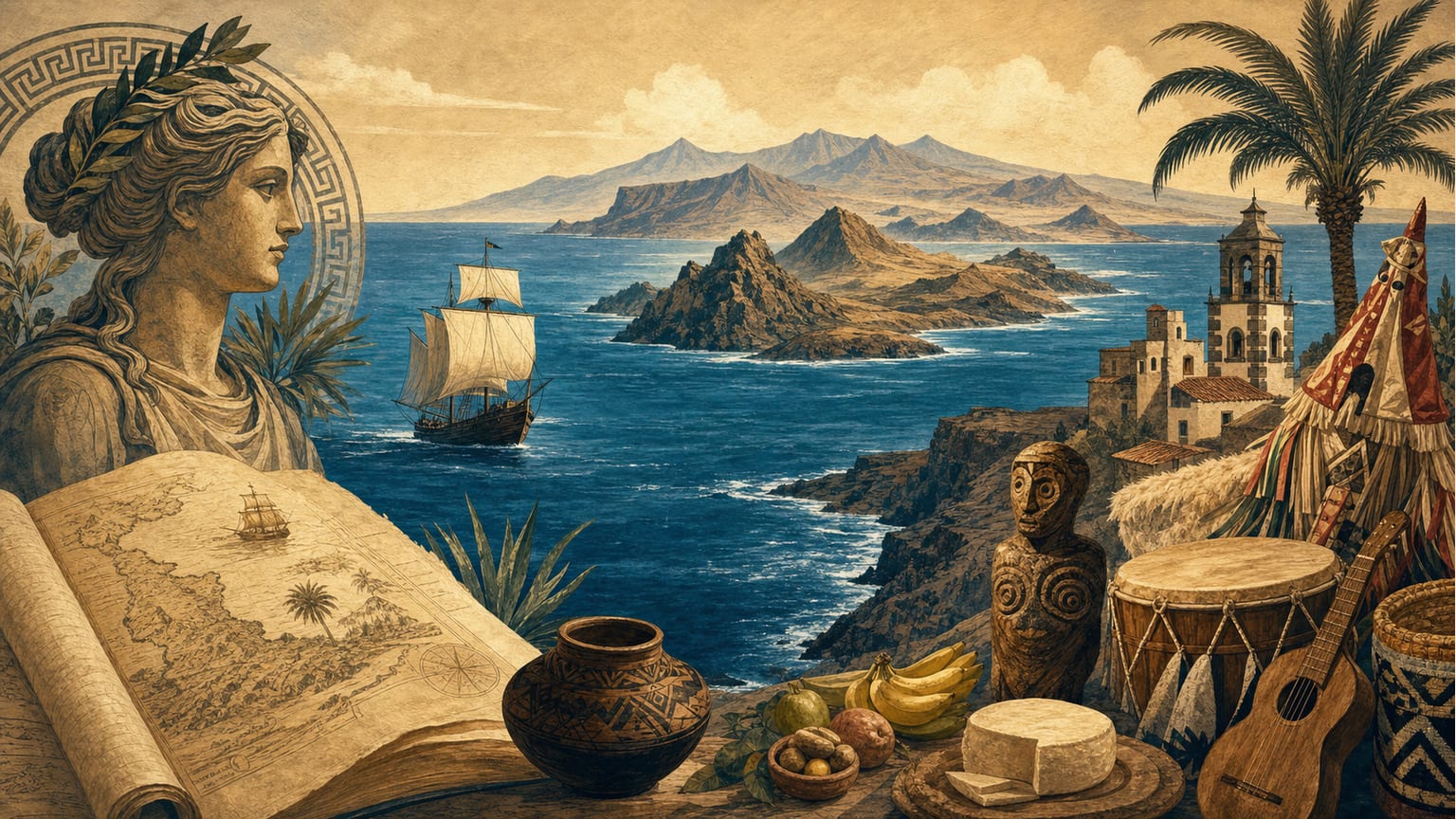
The Isles of the Blest: Myth and Reality in Canary Islands History
Discover how the myth of the Isles of the Blest shaped the identity and perception of the Canary Islands from ancient Greek literature to modern times.
Read more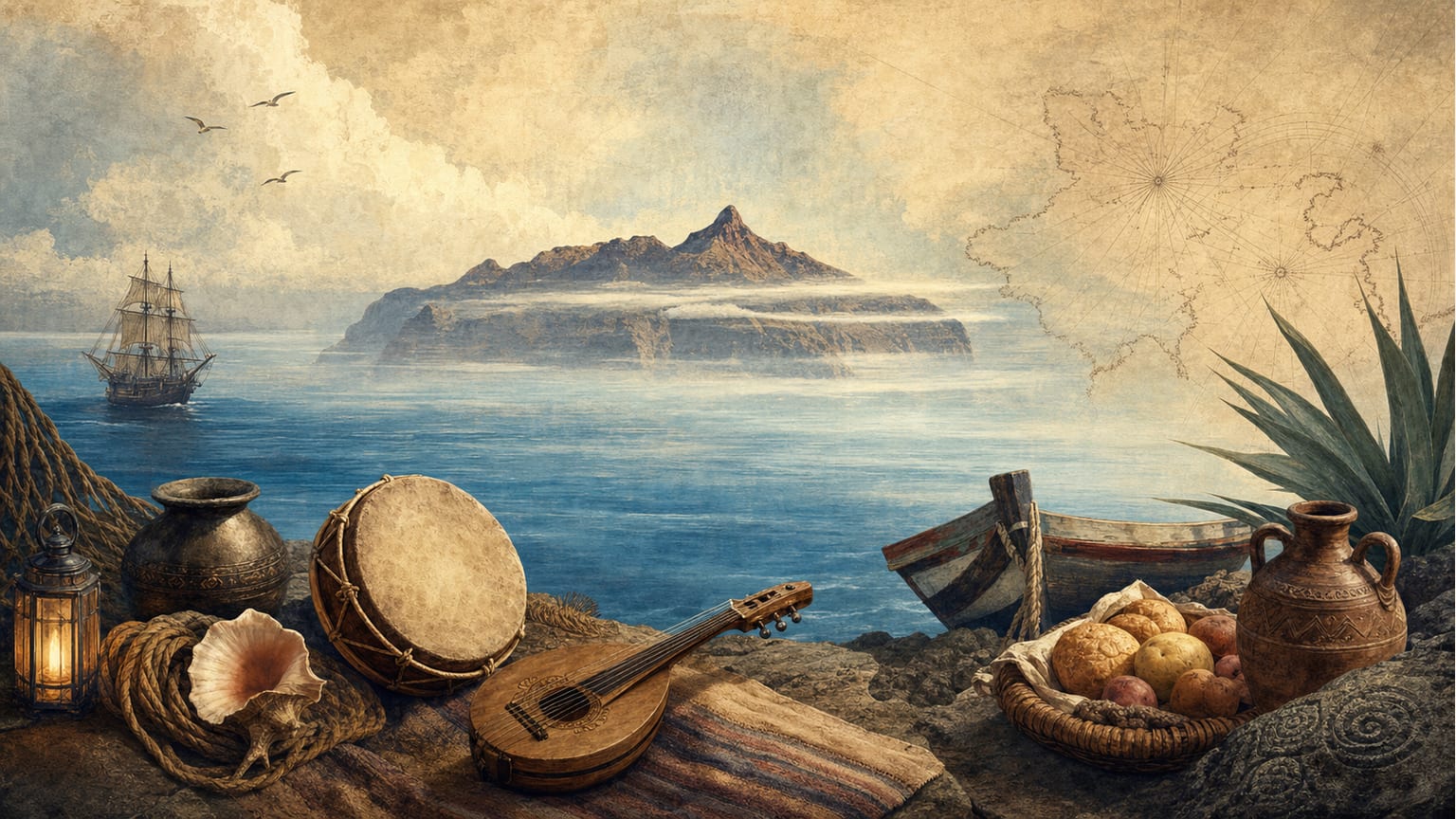
San Borondón: The Phantom Island of the Canary Islands in Atlantic Tradition
San Borondón, the island that appears and disappears, holds a unique place in Canarian and Atlantic imagination. This article explores its origins, development, and the literary and cartographic sources linking it to the Canary Islands.
Read moreSources used
- Marcos Martínez Hernández — Islas míticas en relación con Canarias (2010), pp. 139-158 Dialnet (Universidad de La Rioja)View reference
- José Manuel G. y García de la Torre — Leyendas guanches de las Islas Canarias (Primera recopilación) (1969), pp. 245 p. Memoria Digital de Canarias — ULPGCView reference