Pepa Aurora
ContemporáneaLiterature20th CenturyVoice of Canarian oral tradition

Writer, oral storyteller and teacher

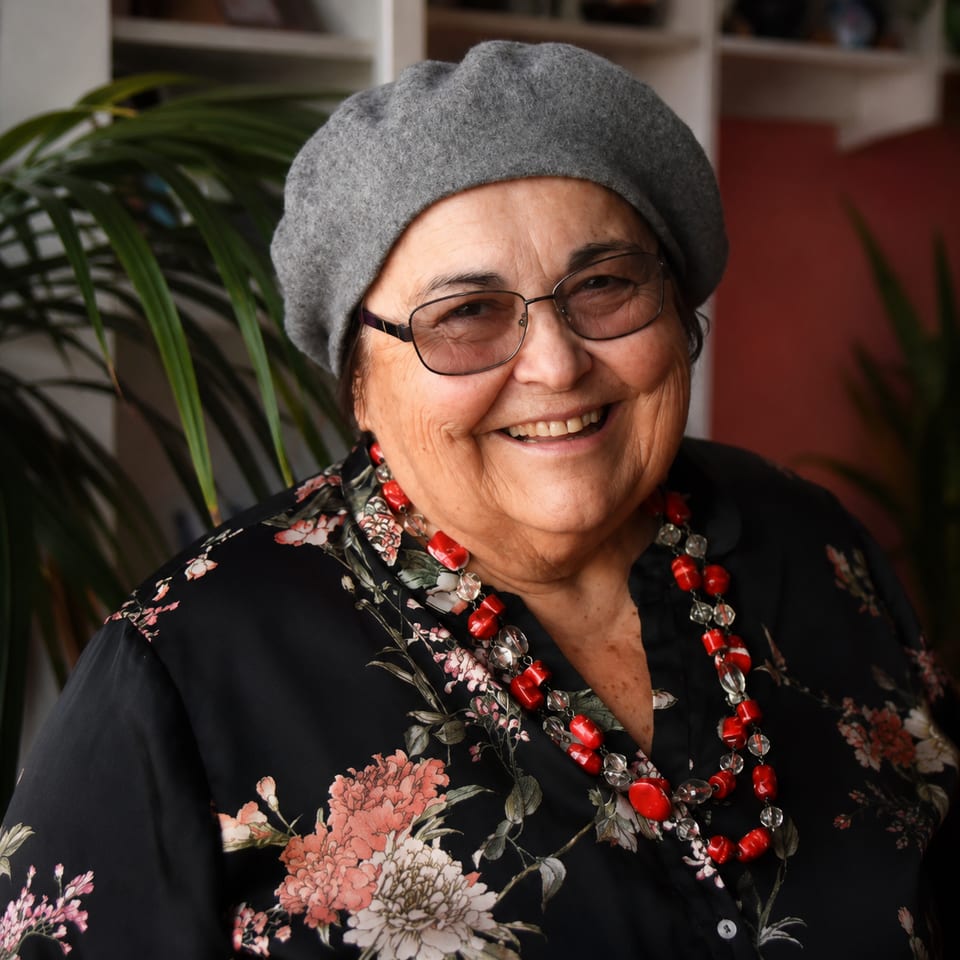
Pepa Aurora is a writer, oral storyteller and teacher born in Agüimes, Gran Canaria, in 1946. The author of more than fifty children's and young-adult books, she is a central figure in collecting Canarian oral tradition.
Early life

Pepa Aurora was born on 23 July 1946 in Agüimes, Gran Canaria, and grew up in the municipality of Ingenio. She trained as a teacher and worked in the classroom for more than thirty years, combining teaching with oral storytelling and writing children's and young-adult literature.

Historical role

Her career intertwines two inseparable vocations: the classroom and the spoken word. Since 1989 she has been part of the Hispanic-American network of oral storytellers, which took her stories into classrooms across the Canary Islands, mainland Spain and countries such as Mexico, Colombia, Chile and Venezuela, building an unusual bridge between the local classroom and an international community of storytellers. The Biblioteca de Canarias credits her, alongside Isabel Medina, as one of the pioneers of a Canarian-themed children's literature meant to preserve regional legends and traditions that had barely found a place in school books until then. Her writing does not simply collect that heritage: she actively reclaims it against the imported imagery of classic fairy tales, as she herself has put it: "I have learned far more from tales of witches than from princesses." That line captures how she understands children's literature: not as escapism, but as a way for Canarian children to recognise themselves in their own fears, landscapes and voices.

Legacy

Her importance is measured both in distinctions and in community impact, two dimensions that reinforce each other in her case. The prizes she has received over her career recognise a body of work sustained over decades, but it is the territory's own response that best reveals her reach: twelve children's libraries in Gran Canaria and Tenerife bear her name, and more than a hundred school communities have paid tribute to her work, a scale of popular recognition rarely seen for a children's author. Pepa Aurora shows that the genre can be cultural heritage and pedagogical tool at once: her work has kept Canarian oral tradition alive at a moment when it risked fading, and has shaped several generations of children, teachers and families in the value of telling and listening to their own stories.

Timeline

  1. 1946Pepa Aurora is born in Agüimes, Gran Canaria.
  2. 1985She receives the Alhóndiga Prize and publishes "Cuentos de Brujas, Miedos y Misterios" and "Papá Teide".
  3. 1989She joins the Hispanic-American network of oral storytellers, taking her stories to schools in the Canary Islands, mainland Spain and Latin America.
  4. 1992She receives the Chamán Prize for best storyteller for Spanish-speaking children, awarded by the Cátedra de Narración Oral.
  5. 2008She receives the International Prize for Sayings and the Short Story.
  6. 2012She publishes "Juana Catalina, la última bruja" and "Kaweca", among her best-known children's titles.
  7. 2017She is named an adoptive daughter of Ingenio and publishes "Versos con Chocolate" and "Cuentos de la tradición oral en Canarias para leer y contar".
  8. 2018She publishes "Igual y diferente", a work on gender equality for young readers.
  9. 2019She is named an honorary member of the Academia Canaria de la Lengua.
  10. 2020She publishes "Aventuras y desventuras del Fray Antón".

Sources and verification

  • Pepa Aurora · Ecoescuela de Escritoras Canarias, Gobierno de Canarias
  • Pepa Aurora · Biblioteca de Canarias, Gobierno de Canarias
  • Pepa Aurora · CanariWiki, Gobierno de Canarias