

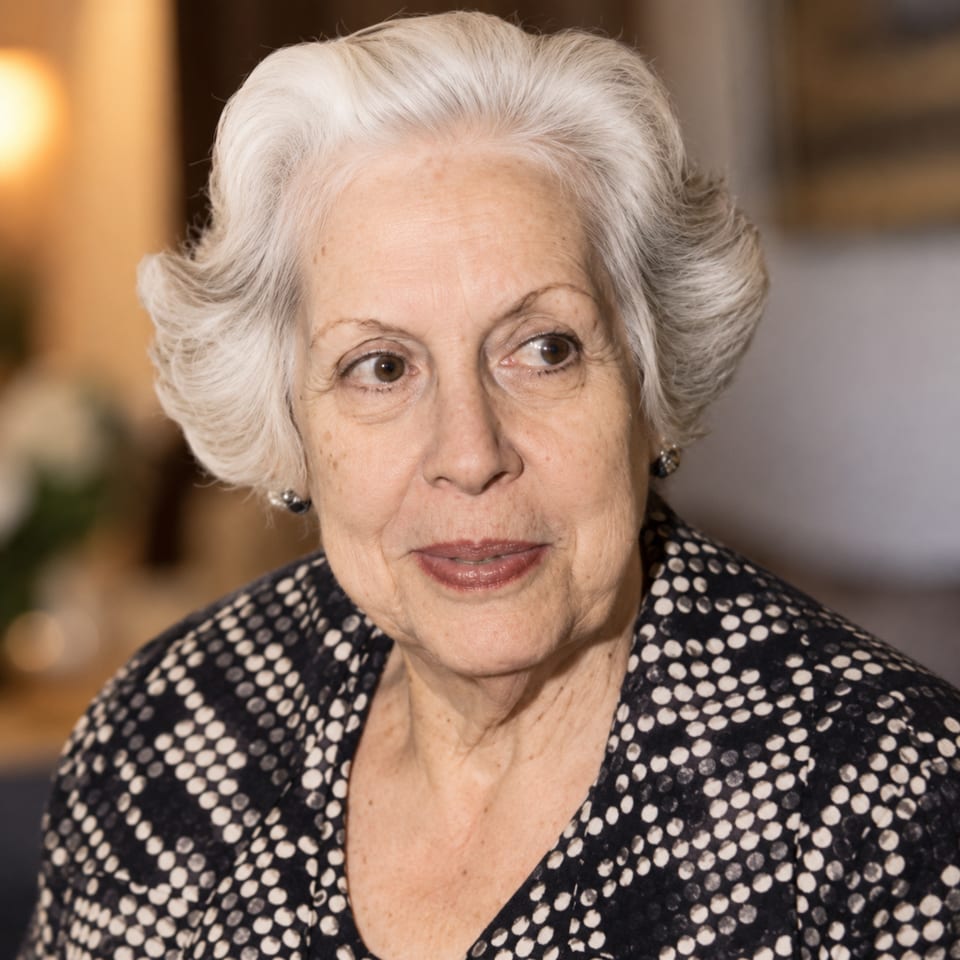
ContemporaryMusic20th CenturyLola de la Torre: musical heritage
Musicologist, singer and teacher
Known as Lola de la Torre, she taught singing and researched the musical archives of the Cathedral of the Canary Islands and El Museo Canario.
Musicologist, singer and teacher · 1902–1998
Musicologist, singer and teacher
Known as Lola de la Torre, she taught singing and researched the musical archives of the Cathedral of the Canary Islands and El Museo Canario.
Dolores de la Torre Champsaur, known as Lola de la Torre, was born in Las Palmas de Gran Canaria in 1902. She died in her home city on 19 January 1998. Her career brought together three closely connected activities: musical performance, the teaching of singing and archival research. Her studies of the Cathedral of the Canary Islands and her involvement in El Museo Canario helped preserve and make available documents for researching the archipelago’s musical history.
She was the daughter of the baritone Néstor de la Torre Comminges and Dolores Champsaur Millares, who also sang. She studied piano with Antonio Bonnín in Tenerife and began performing in concerts in 1918 with a benefit recital for the Escuela Luján Pérez. After moving with her family to Havana, she performed and developed a teaching career. She taught singing at the Conservatorio Molina in 1923 and at the Conservatorio Internacional from the following year. Her repertoire included French music, German songs and early Spanish songs.
She continued teaching in Tenerife, Madrid and Barcelona. In 1938 she obtained a specialist music teaching post in L’Hospitalet de Llobregat through a competitive examination. After the Civil War she returned to the Canary Islands and in 1942 took up the singing chair at Las Palmas’s municipal music school. A further period in Cuba began in 1949; she returned to Spain in 1952 and settled permanently in Gran Canaria in 1955. In 1975 she was appointed singing teacher at Las Palmas’s professional music conservatory. Her pupils included Lothar Siemens Hernández.
She promoted Los Pequeños Cantores de La Luz in 1955 and the Las Palmas branch of Juventudes Musicales in 1956. She had trained in research with Eduardo Martínez Torner in Madrid. From 1957 she investigated the cathedral’s musical documentation and resolved a confusion involving the Durón brothers: the musician associated with that cathedral was Diego, rather than Sebastián. With her husband, the intellectual Juan Manuel Trujillo Torres, she organised the archive and assembled an extensive body of historical documents. The catalogue of its musical works appeared in El Museo Canario in 1964 and 1965.
She also organised the museum’s musical holdings and advocated a musicology section, established in 1970. In 1993 she deposited her research documentation there, and the section was named after her. Her publications include La música en la Catedral de Las Palmas, 1514-1600: Documentos para su estudio, issued in 1983. She became an honorary member of El Museo Canario, a Hija Predilecta of Las Palmas de Gran Canaria and a recipient of the Canary Islands Gold Medal. Her legacy connects the training of performers with the documentary recovery of musical heritage.
Musicologist and composer
1941 - 2017
Meet figures
Sculptor and architect
1756 - 1815
Meet figures
Physician and writer
1803 - 1896
Meet figures
Painter and architectural designer
1812 - 1880
Meet figuresLawyer, teacher and essayist
1821
Meet figures