Lawyer, mayor and museum president
A lawyer born in Artenara, he was mayor of Las Palmas and president of El Museo Canario. He promoted the reorganisation of its libraries and newspaper collection and the revival of its journal.
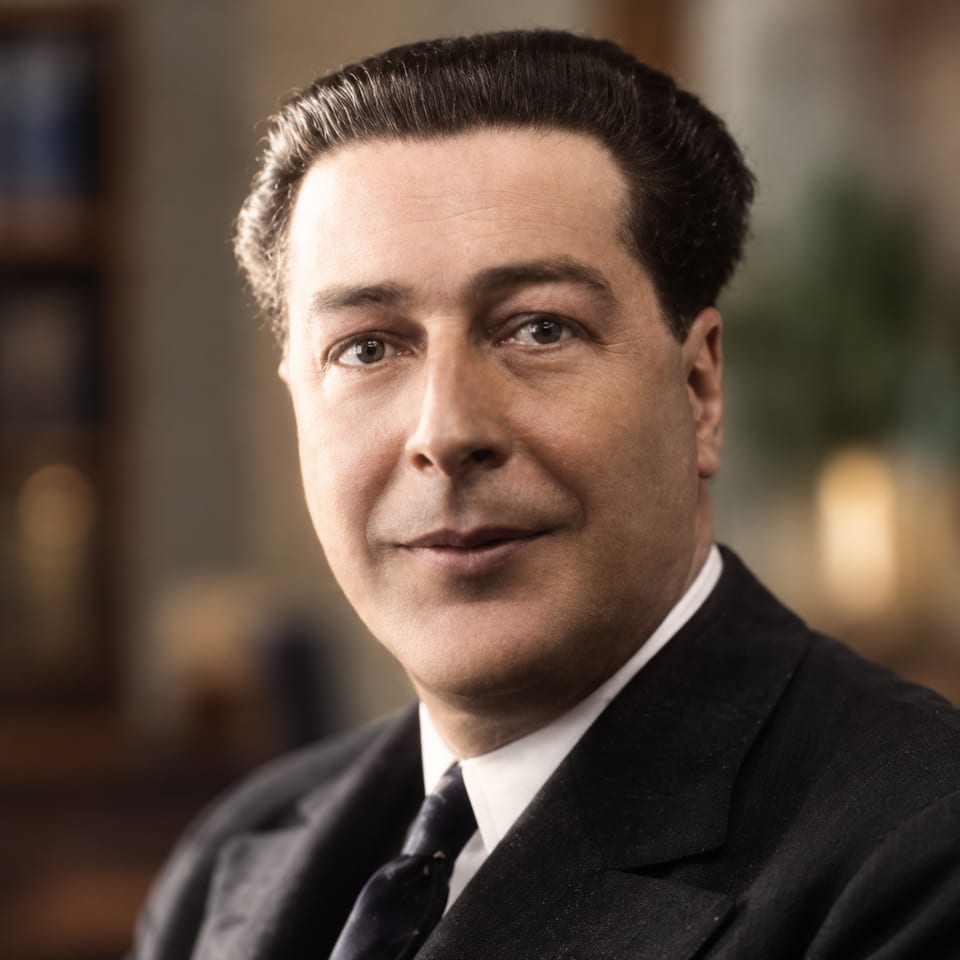
Lawyer, mayor and museum president · 1891–1960
Lawyer, mayor and museum president
A lawyer born in Artenara, he was mayor of Las Palmas and president of El Museo Canario. He promoted the reorganisation of its libraries and newspaper collection and the revival of its journal.
José Díaz Hernández was born in Artenara on 2 July 1891. He died in Las Palmas de Gran Canaria on 26 February 1960. His career took him from municipal administration to legal practice and the governance of cultural institutions. He was mayor of Las Palmas and president of El Museo Canario. His significance lies both in urban management and in reorganising the spaces and documentary collections that the scientific society made available to readers and researchers.
For more than fifteen years he served as secretary of Artenara’s town council. Alongside this work he pursued legal studies and graduated in law from the University of La Laguna. The institution’s obituary describes him as studying independently and passing the degree examinations in four sittings over little more than a year. He had nine children, seven of them sons. Towards the end of 1933 he joined the Las Palmas bar association. A few months later he moved to the island’s capital to practise his new profession.
He was appointed mayor of Las Palmas in 1937, during the Spanish Civil War. The museum’s account of his municipal work highlights improvements in La Isleta, construction there of the school then named Generalísimo Franco, the beginnings of the Las Canteras promenade project, and a municipal tobacco tax funding public works to relieve unemployment. These projects belong to the institutional memory assembled by El Museo Canario. The obituary’s strongly appreciative tone should be distinguished from its descriptions of documented offices and projects.
His connection with the museum began while working in the law office of Rafael Cabrera Suárez, who supported his first candidacy. He became a full member in 1938 and joined the governing board on 29 December 1940, remaining on it until his death. The general assembly elected him president on 30 December 1943. He held the post for the four complete years from 1944 to 1947. At the time of his death he was the society’s second vice-president.
During his presidency, the Biblioteca Luis Maffiote was installed with support from Gran Canaria’s island council. This collection formed the basis of the Biblioteca Canaria, comprising books, pamphlets, manuscripts, engravings and maps relating to the islands. The institution’s existing Inquisition records were also cleaned and organised. Another undertaking was the construction of a new reading room and a hall for events and exhibitions, financed by a grant from the Mando Económico de Canarias.
In 1944 the museum joined the CSIC. That year it also helped organise a collective exhibition of Canarian artists in Madrid. Díaz promoted the reorganisation of the newspaper collection, during which more than two hundred volumes of Canarian newspapers were arranged and bound. At this stage the press collection became a separate section within what had originally been a single library. The museum’s journal also resumed publication in 1944 after a period of interruption, issuing ten numbers during his presidency. His work thus left a concrete mark on the institution’s facilities for consultation, preservation and publication.