

There are artists who paint a place, and there are artists who end up inventing its image forever. Néstor Martín-Fernández de la Torre belongs to the second category, although to get there he first had to travel a very long way around the world[1].
From Las Palmas to the European avant-garde
He was born in Las Palmas de Gran Canaria in 1887, into a large family, and from a very young age showed a talent that did not fit with staying on the island[1]. His brother Miguel, with whom he always maintained a very close relationship, would become one of Spain’s most prominent rationalist architects[2][1]; years later, the two would end up working side by side. Before that, Néstor travelled through Madrid, London, Brussels and especially Barcelona, where he settled in 1907 and frequented the modernist gatherings of the Café Pombo and the Café de Castilla, mingling with the artistic avant-garde of the time[1]. In 1920 he moved his studio to Madrid, and later also lived in Paris: a symbolist and modernist painter, admirer of the Pre-Raphaelites, with a career that placed him among the European artistic elite of his time[1].
The turn to Tipismo
Then, almost in his fifties, he took a turn that surprised everyone. In 1934 he returned to Gran Canaria from Paris and launched what he himself called a campaign of “Tipismo”: a programme of revaluation, of exaltation of the region, of Canarian identity, in his own words[1]. He was deeply concerned about the future of tourism in the islands and how it was being exploited, and decided that the best defence was to build a proud, distinctive image of Canarian identity before others defined it for him[1].
The Pueblo Canario
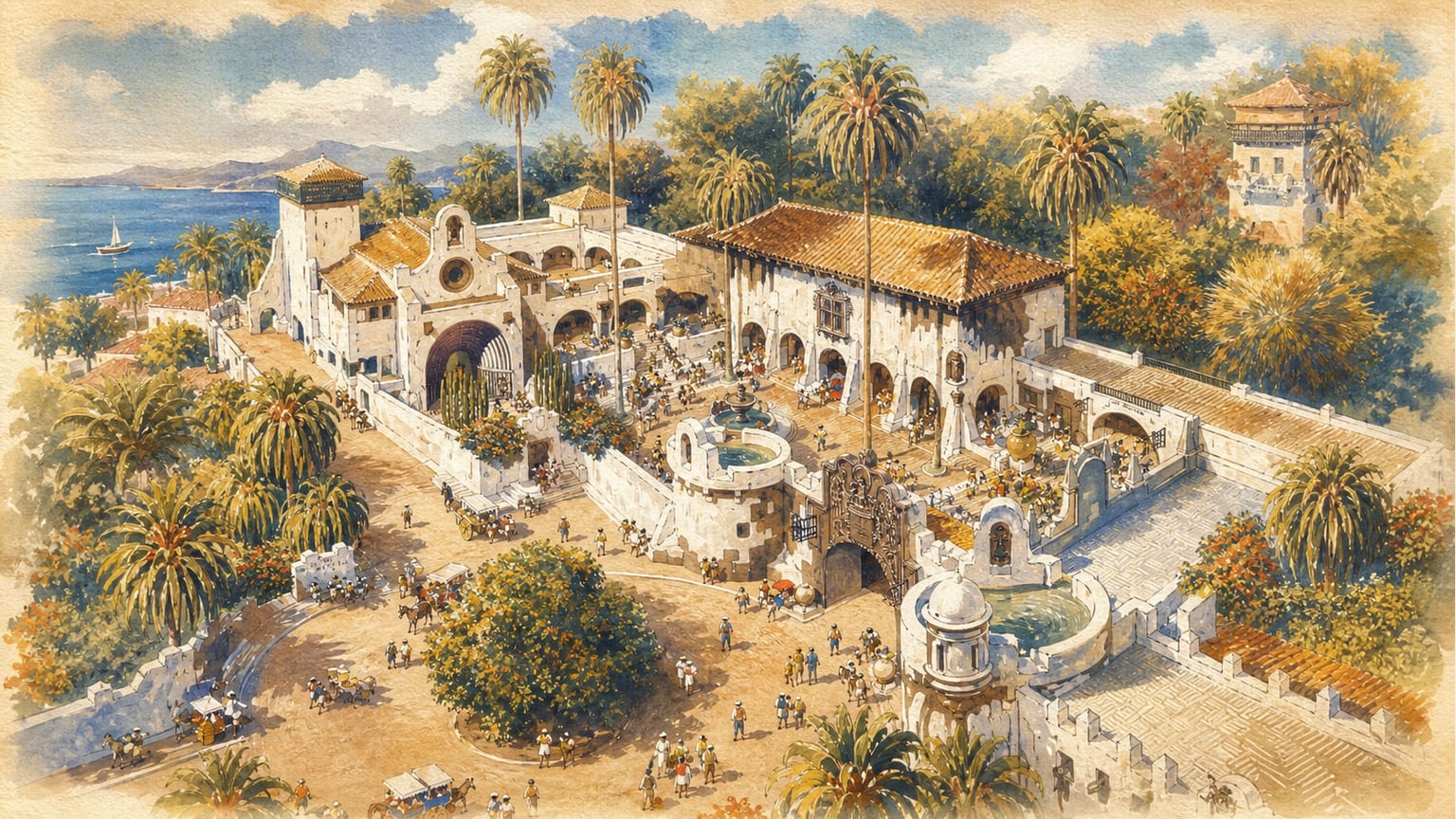
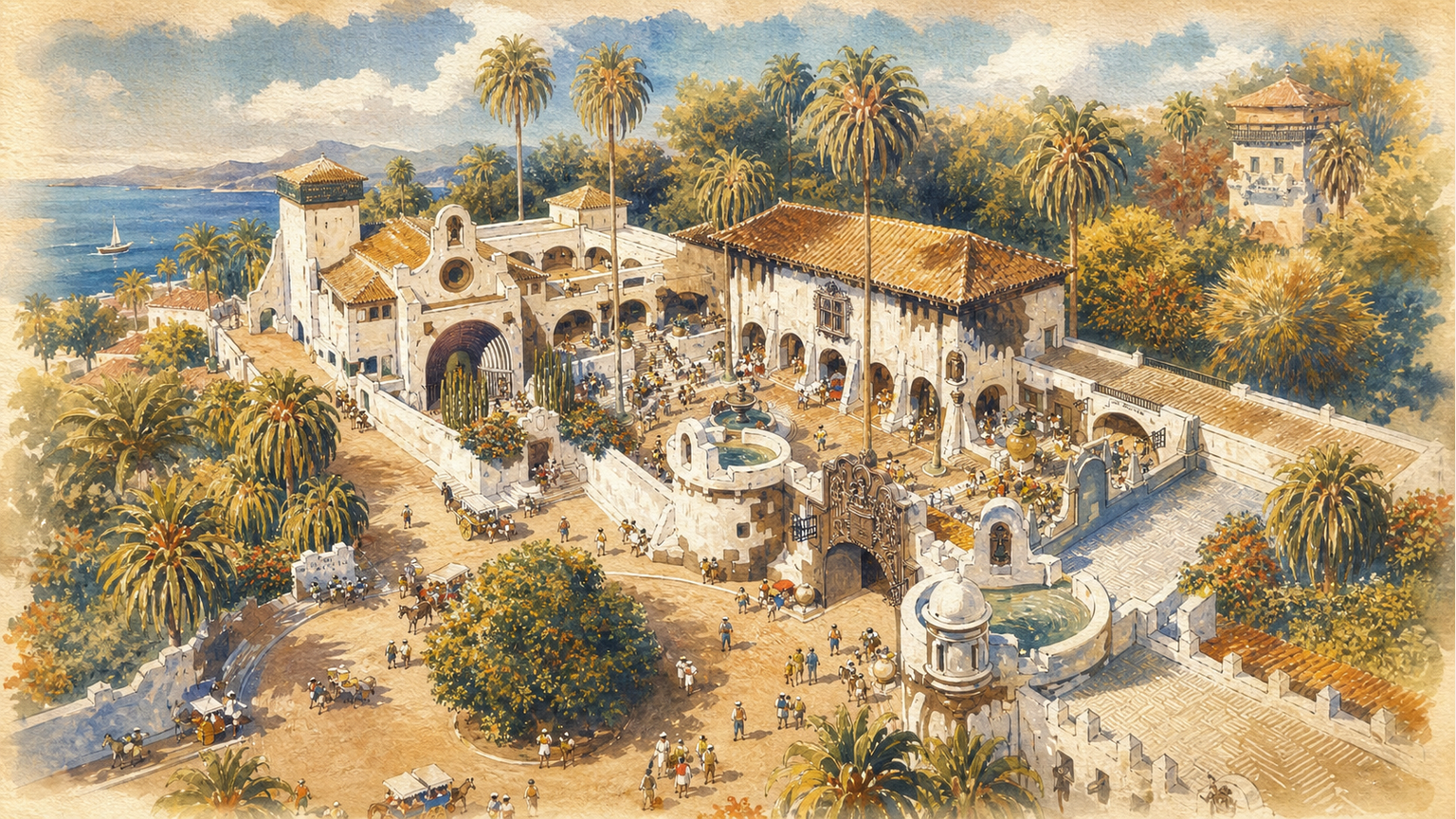
Out of that campaign came his most ambitious work: the Pueblo Canario. In 1937 he drew the first sketches, an architectural ensemble designed to bring together the traditional architecture of the islands in a single space and share it with visitors[1]. Néstor designed it with the intention of spreading Canarian culture among visitors, drawing inspiration from the traditional buildings of the islands[1]. He also worked with Miguel on the Teatro Pérez Galdós in Las Palmas and the Parador de Cruz de Tejeda, in the mountains of Gran Canaria[1].
He never saw it finished. He died prematurely in 1938[1]. It was his brother Miguel who directed the construction of the Pueblo Canario from 1939 onwards, respecting Néstor’s original sketches as much as possible — as if finishing his brother’s work were also a form of mourning[1].
In 1956 the Museo Néstor opened within the same complex, designed by Néstor and Miguel, and today houses most of his output[1]. The museum and the Pueblo Canario are still there, in the heart of Las Palmas, as if the project had never stopped breathing.
The curious thing is that much of what we instinctively associate with “Canarianness” today — that white-and-green aesthetic, those patios, that architecture that seems to have been there for centuries although in reality it is less than a hundred years old — was born largely from the eye of one man. A painter who decided, almost at the end of his life, that the best way to protect an identity was to draw it first.