

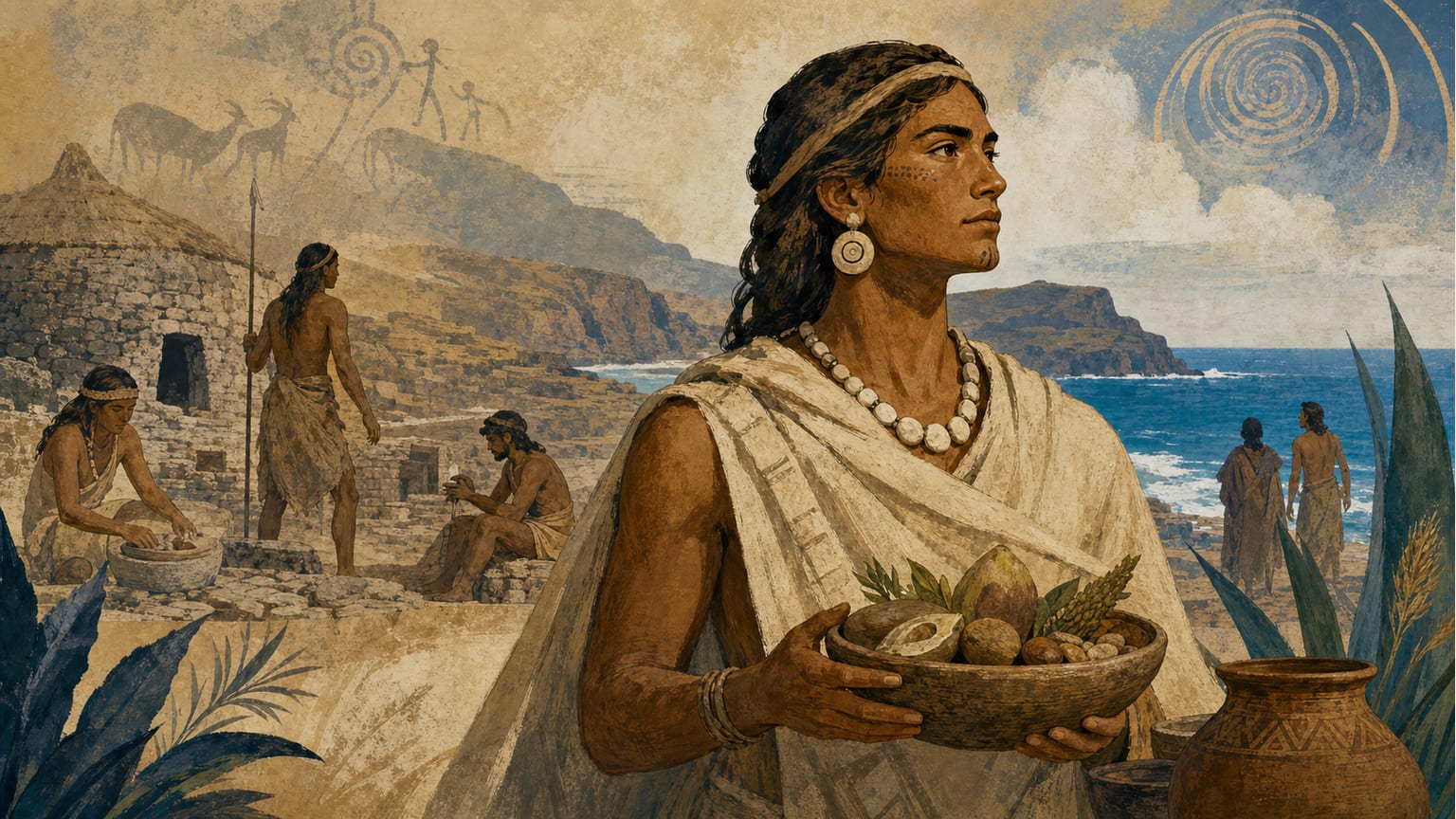
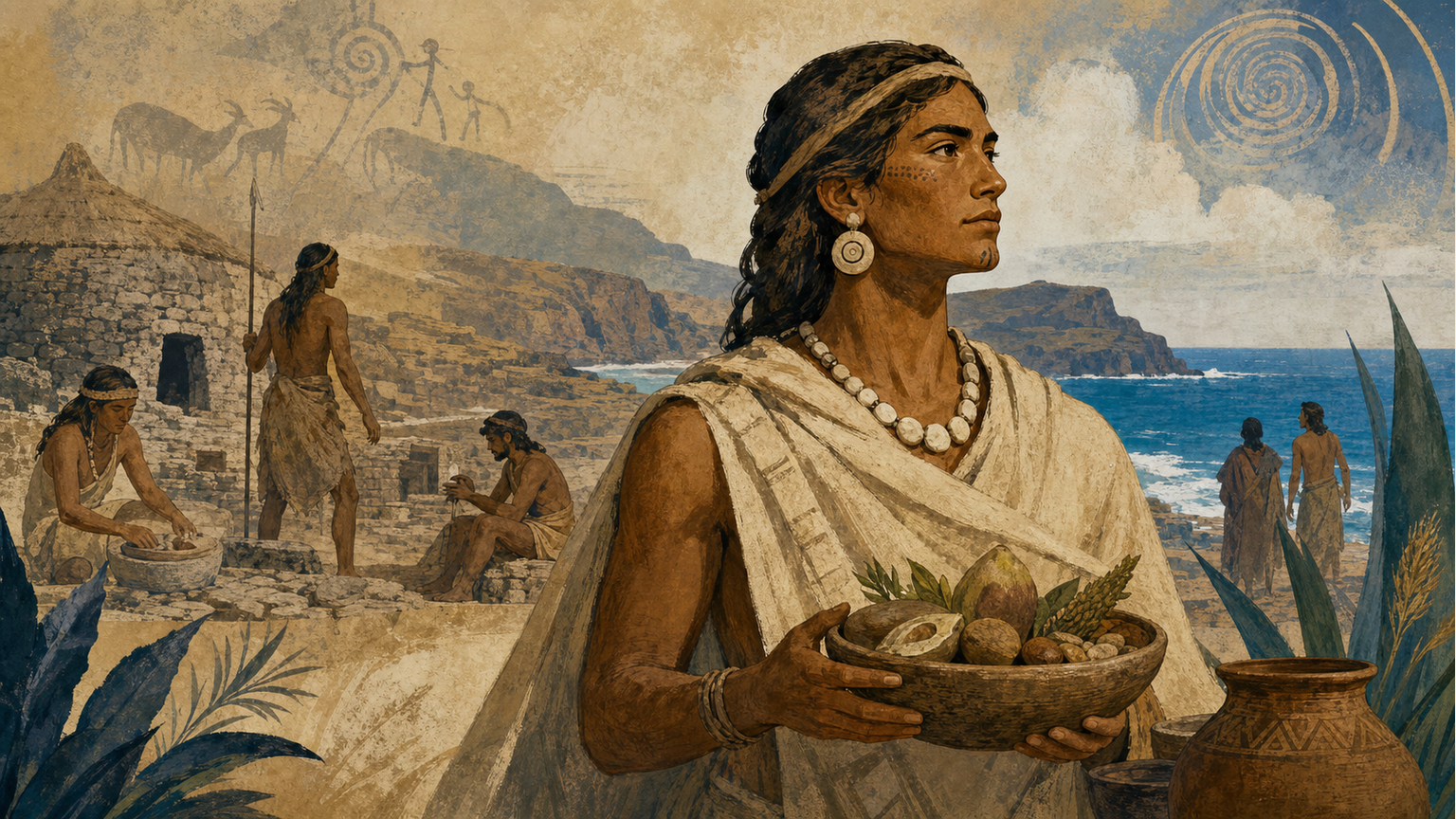
The daily life of the ancient inhabitants of Gran Canaria, as described by Agustín Millares Torres, provides insight into their diet, clothing, and social customs in the late 14th century [1].
Their staple food was barley. The source states, “Conocíase en el país el cultivó de la cebada, cuyo grano, después de tostado, molían entre unas piedras preparadas al efecto, para formar la harina que, con el nombre de gofio, constituía uno de sus principales alimentos” (Barley was cultivated, toasted, and ground into flour called gofio, which was a main food) [1]. Figs were also important, dried and stored in baskets made of palm leaves [1].
Regarding housing, Millares Torres notes that houses were “edificios construidos con piedras cuadradas, cuyas paredes estaban revestidas interiormente con hermosas piezas de madera” (buildings made of squared stones, with wooden interiors). Caves in rugged locations were also used, considered more comfortable and healthy than houses [1].
For clothing, ancient Canarians wore “toneles de hojas de palma o de juncos, primorosamente tejidos, de una tercia de longitud, que llamaban tamarcos, pintados a veces de amarillo y rojo” (garments woven from palm or reed leaves, called tamarcos, sometimes painted yellow and red). They did not wear shoes and kept their hair long as a sign of nobility, often covering their faces with it [1].
Their language was described as “dulce y armonioso” (sweet and harmonious), and they were fond of singing and dancing. Millares Torres writes that “muchos años después de la conquista, se consideraba célebre el baile canario, que acompañaban con una especie de melópea, en que la poesía ruda y expresiva del pueblo conquistado tornaba también una parte muy principal” (the Canarian dance, accompanied by a chant, remained famous long after the conquest) [1].
Society was mainly composed of shepherds and warriors, dividing their time between livestock care and military activities. Their offensive weapons included “una maza o magado terminado en dos gruesas bolas, rodeadas de pedernales afilados, que llamaban tabonas; un hacha de combate, cuyo filo era formado con un trozo de jaspe o de obsidiana, y una lanza de tea, endurecida al fuego” (a mace called magado, a battle axe with a jasper or obsidian blade, and a pine spear hardened by fire). For defense, they used a dragon tree bark shield and the tamarco wrapped around the left arm [1].
Physically, the ancient Canarians are described as “audaces, inteligentes, esencialmente hermosos, de elevada estatura, de desarrolladas proporciones, tez morena, ojos generalmente azules y cabello rubio” (brave, intelligent, tall, well-built, dark-skinned, usually blue-eyed, and blond-haired) [1].
Agustín Millares Torres’s account offers a detailed portrait of a farming and herding society with distinct traditions, preserved until the arrival of European conquerors [1].