

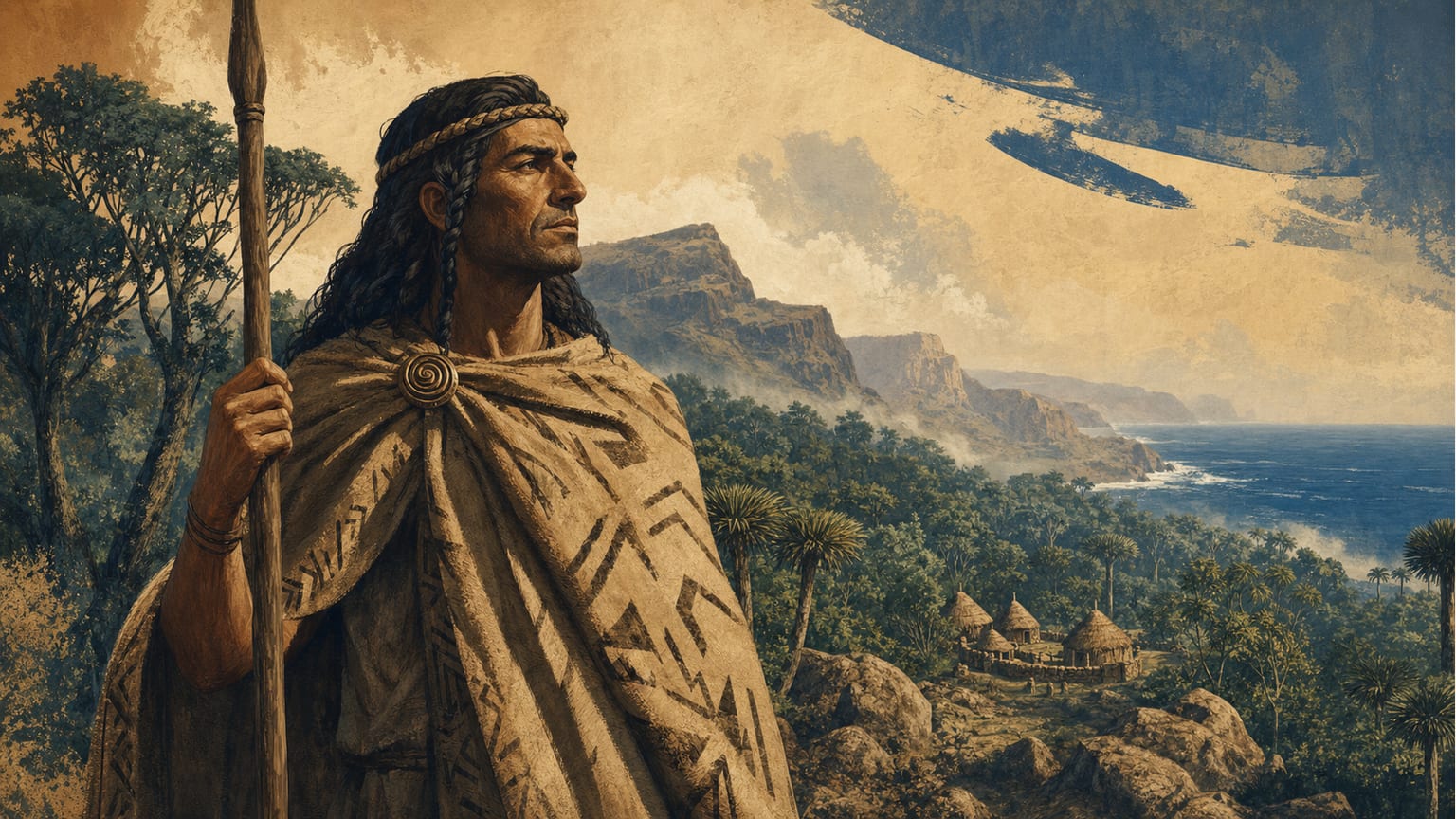
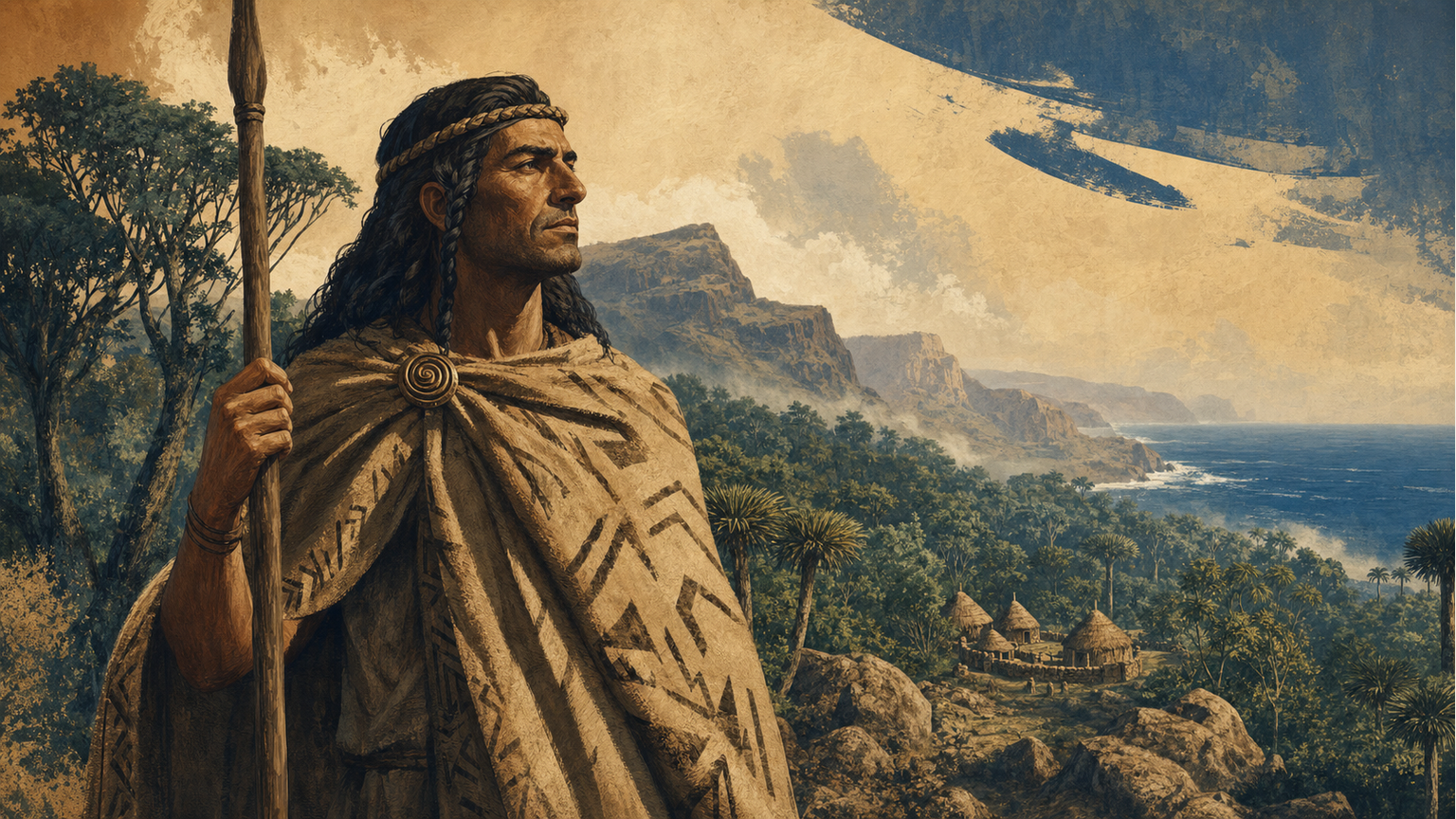
The Doramas Forest was one of the most remarkable natural spaces in pre-Hispanic Gran Canaria, stretching from the district of Arucas to Moya in the north of the island, and including Firgas and Teror, covering an area of more than four square leagues[1]. Named after the famous leader Doramas, this forest was distinguished by its dense, lush vegetation and a continuous canopy formed by centuries-old trees that blocked sunlight from reaching the ground[1].
The forest floor was layered with dry leaves, grass, and climbing plants that entwined around the trees, creating a natural carpet. The gentle undulations of the terrain added to the varied and picturesque landscape[1]. Flocks of brightly colored birds would occasionally break the forest’s solemn silence with their songs, while vigorous, truly tropical vegetation flourished everywhere, constantly offering new and enchanting scenery[1].
The Doramas Forest was not only significant for its natural wealth but also for serving as a refuge and base for Doramas, a man of humble origin who rose to prominence during a period of social unrest[1]. Doramas and his followers established an independent stronghold in this forest, taking advantage of its fertility and size, without opposition from the Guanartemes or the kings of Teide and Gáldar[1].
Contemporary chronicles and literary descriptions, such as Cairasco’s from 1581, highlighted the forest’s magnificence: “This is the shady forest that bears the famous name of Doramas, and these are the trees that rival those of Mount Lebanon, and the tallest palms, much taller than the pyramids of Egypt…”[1]. Bishop Cristóbal de la Cámara y Murga, in 1634, also emphasized the grandeur of the place, mentioning the variety of trees, the abundance of streams, and the thick canopy that prevented sunlight from reaching the ground[1].
Thus, the Doramas Forest became a symbol of Gran Canaria’s natural wealth and a central setting for the island’s 15th-century historical events. Its memory endures in local place names and collective memory, even though the exact location of the forest is no longer preserved[1].