

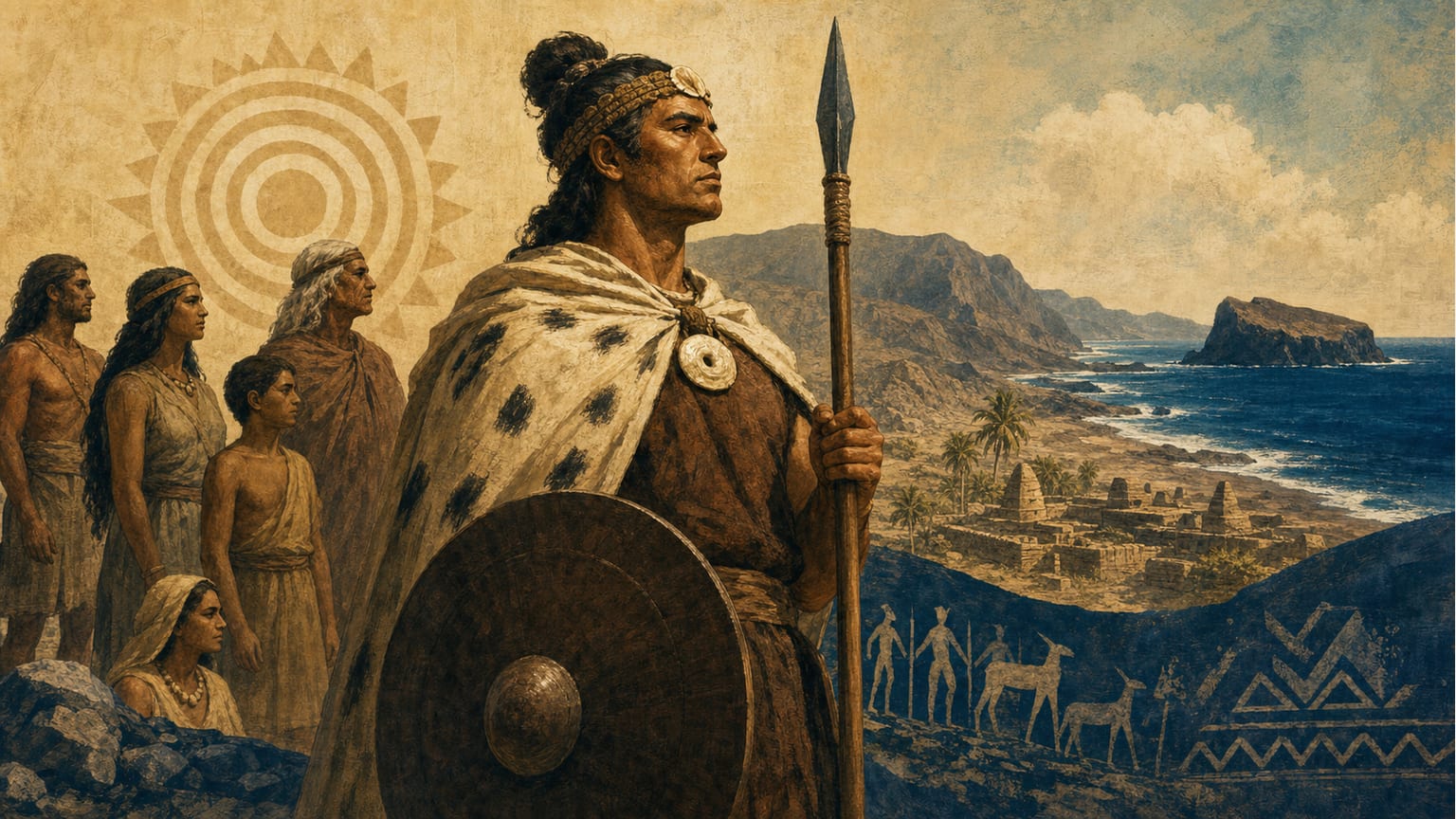
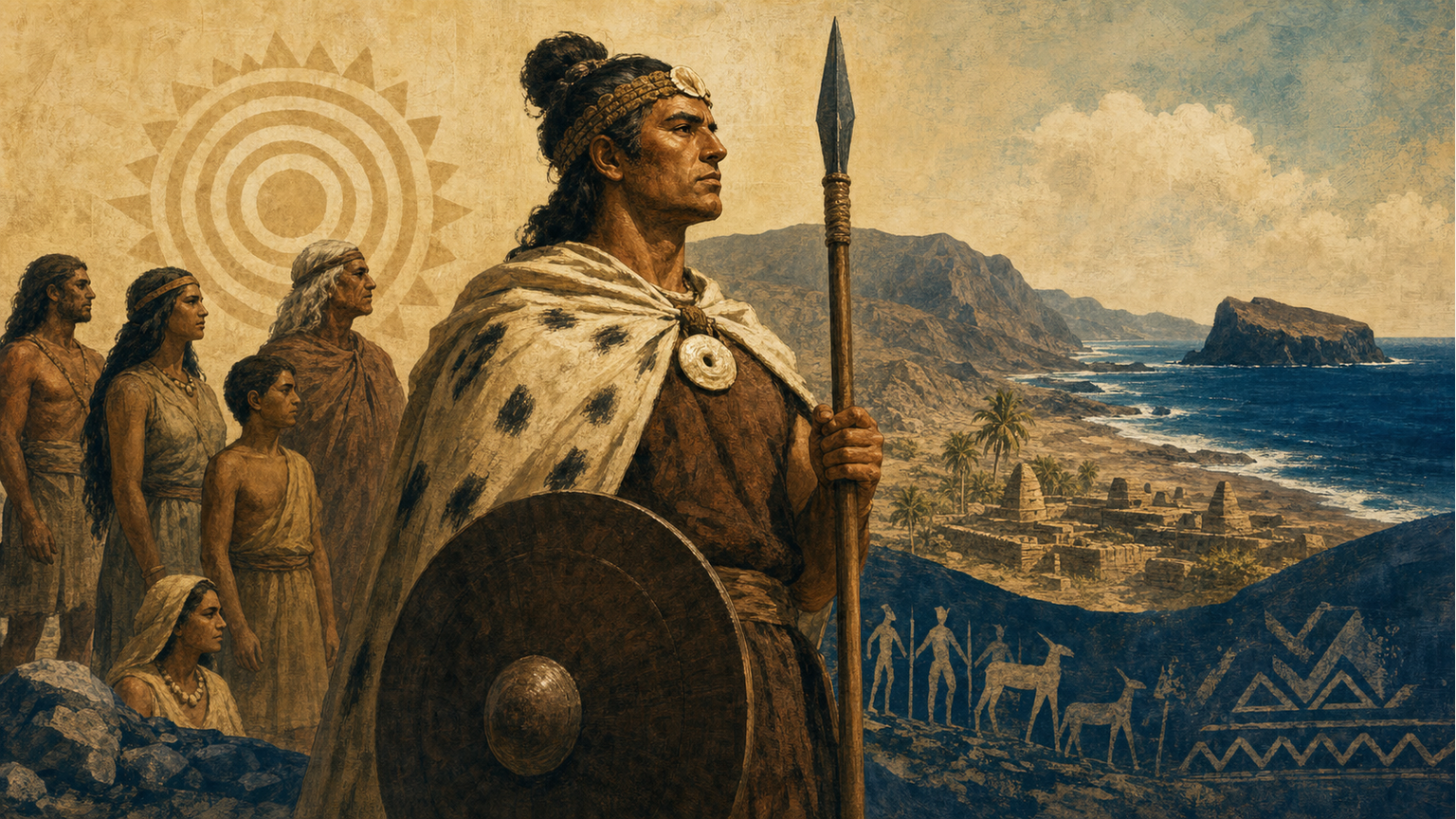
In his work Biografías de canarios célebres, Agustín Millares Torres provides a detailed account of the social organization of pre-Hispanic Gran Canaria, emphasizing the existence of a well-defined caste system and the dominant role of the warrior nobility prior to European conquest [1].
According to the source, Gran Canaria’s society was divided into two main groups: a privileged caste, mainly composed of nobles and warriors, and a class of slaves or people of humble origin. Millares Torres states, “Ya en esta naciente sociedad, como en todas las que registra la historia antigua, se encontraba desarrollado por completo el principio de la división en castas y, por consiguiente, la absoluta separación en dos razas: una de privilegiados, otra de esclavos” [1].
The warrior nobility was the ruling class, responsible for military affairs and the possession of land and livestock, which were the main sources of wealth. The author notes, “Los primeros, cuyo solo ejercicio era el de las armas, organizados fuertemente y dueños del terreno y de los ganados, únicas fuentes de riqueza del país, impusieron desde luego la ley del más fuerte a los que la casualidad del nacimiento había relegado a la clase inferior” [1].
This caste system, as described by Millares Torres, persisted for centuries due to the island’s geographic isolation and the lack of significant external influence before the arrival of Europeans. He writes, “los progresos de la civilización eran nulos, como es fácil de concebir, en una isla tan apartada y desconocida cual lo era entonces Gran Canaria, y aquel estado de desnivel social se perpetuó sin duda durante muchos siglos, sin que mejorase ni variara la triste condición de la clase proletaria” [1].
The warrior nobility not only controlled material resources but also played a key role in governance. Millares Torres describes a political system where the sovereign was advised by a council of nobles or warriors, whose vote was always respected: “El gobierno que regía estos estados era, si se nos permite la frase, una monarquía patriarcal, templada por un consejo de nobles o guerreros, cuyo voto era siempre respetado por el soberano” [1].
The source also notes that social mobility was extremely limited. However, in times of crisis or upheaval, such as in the case of Doramas, individuals of humble origin could rise to power through their valor and abilities, though this was the exception rather than the rule [1].
In summary, the caste system and the supremacy of the warrior nobility defined the social and political structure of pre-Hispanic Gran Canaria, as documented by Agustín Millares Torres, who highlights the rigidity of these divisions and their impact on the lives of the island’s ancient inhabitants [1].