Sor María de Jesús de León y Delgado
ConquestReligion17th CenturyLa Siervita, Servant of God

Dominican nun and mystic

Dominican nun born in El Sauzal in 1643, known as La Siervita. She entered the convent of Santa Catalina de Siena in San Cristóbal de La Laguna in 1668 and lived there until her death in 1731; her incorrupt body is kept in the convent and shown for veneration every 15 February.
Early life

María de León y Delgado was born on 23 March 1643 in El Sauzal, in the north of Tenerife, and was baptised on 26 March in the church of San Pedro Apóstol in the town. Daughter of Andrés de León y Bello and María Delgado y Perera, she came from a humble family of noble descent; as an undocumented hypothesis, tradition has claimed a possible Guanche lineage through her maternal line. After her father's death she went to live with her uncles Miguel Pérez and Catalina Delgado in San Cristóbal de La Laguna, where she rejected the comfort and inheritance they offered her, already determined to devote herself to religious life.

Historical role

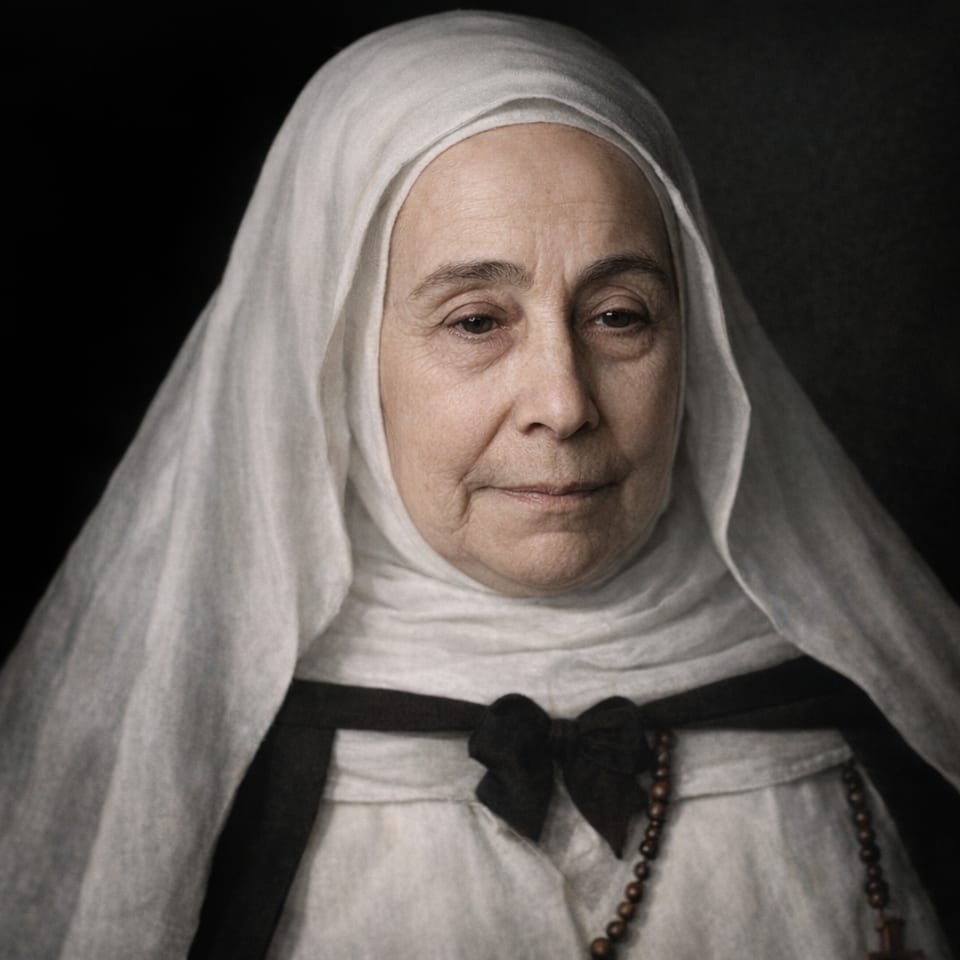
In February 1668 she entered the convent of Santa Catalina de Siena, of the Order of Preachers, in San Cristóbal de La Laguna, as a lay sister, taking the name Sor María de Jesús, inspired by Teresa de Jesús. A devotee of the Virgen de Candelaria, she entered the convent wearing the yellow habit of the Patroness of the Canary Islands. In the community she took charge of an elderly, sick nun, and her life of service and penance soon drew the attention of her contemporaries.

According to the convent chronicle, her religious life was surrounded by mystical phenomena: ecstasies, episodes of levitation described by her fellow sisters, a perceived luminosity on her face and a raised body temperature. Tradition also records a wound in her side, identified with the stigma of the lance, which would have become visible after her death. Among her friends were the privateer Amaro Rodríguez Felipe, Amaro Pargo, who attributed miracles to her, felt protected by her and donated the sarcophagus that still holds her, and Fray Juan de Jesús, a Franciscan from Icod de los Vinos. The tradition of bilocation even placed her in Cuba, saving Pargo from a Turkish pirate.

In 1689 she was credited with prophesying a great flood and an eruption of Mount Teide. The documented event is the Arenas Negras eruption, which began on 5 May 1706 and whose lava flows destroyed the town and harbour of Garachico; pious tradition has associated that disaster with her forecast ever since.

Sor María de Jesús died on 15 February 1731 in the convent, aged 87; tradition holds that she spent her last three days in ecstasy. In 1734, when her remains were moved, her body was found incorrupt, and since then it has been kept in Santa Catalina de Siena, exposed for veneration every 15 February inside a sarcophagus locked with three keys: one held by the convent, one by the La Laguna town hall and one by the descendants of Amaro Pargo. That same year José Rodríguez de la Oliva painted, commissioned by Pargo himself, the post-mortem portrait that has become her most widespread image and which historians have analysed from an iconographic perspective.

Legacy

Her beatification cause opened as a diocesan process on 12 December 1992 and was sent to Rome; an earlier expediente, between 1826 and 1832, had been interrupted. She is now venerated as a Servant of God, and a manuscript catalogue records 1,251 miracles attributed after her death, peaking at 258 cases in 1740. The house in El Sauzal where, according to tradition, she first saw the light has housed the Casa Museo de la Sierva de Dios since 2007. Her figure, portrayed in José Rodríguez Moure's 1911 work and in Domingo García Barbuzano's 1990 biography, remains one of the most intense focal points of popular religiosity in the Canary Islands.

Timeline

  1. 1643March 23, 1643She is born in El Sauzal (Tenerife) on 23 March; she is baptised on 26 March in the church of San Pedro Apóstol.
  2. 1668She entered the convent of Santa Catalina de Siena in San Cristóbal de La Laguna as a lay sister, taking the name Sor María de Jesús.
  3. 1689Tradition attributed to her the prophecy of a great flood and an eruption of Mount Teide.
  4. 1706May 5, 1706The Arenas Negras eruption reached Garachico and destroyed its harbour; tradition linked it to the prophecy attributed to La Siervita.
  5. 1731February 15, 1731She died in the convent of Santa Catalina de Siena, aged 87; tradition records three days of ecstasy before her death.
  6. 1734When her remains were moved, her body was found incorrupt; José Rodríguez de la Oliva then painted her post-mortem portrait, commissioned by Amaro Pargo.
  7. 1992December 12, 1992The diocesan beatification process opened and was later sent to Rome; she is now venerated as a Servant of God.
  8. 2007December 19, 2007The Casa Museo de la Sierva de Dios opened in El Sauzal, in the house where she is believed to have been born.

Sources and verification