

Leprosy and the Motivation of Juan de Bethencourt in the Conquest of the Canary Islands
According to Bonnet, Buenaventura, a crucial but often overlooked aspect of Juan de Bethencourt’s biography is his affliction with leprosy, which played a decisive role in his departure from the French court and his leadership of the conquest of the Canary Islands[1].
Bonnet cites the Portuguese explorer Diogo Gomes, who wrote in 1460: “A certain magnate from the kingdom of France, of noble lineage, named Juan de Betingkor (Bethencourt), leprous, so as not to embarrass his relatives, sold all his possessions and, taking his wife and servants, came to the kingdom of Castile, to the city of Seville, and remained there for some time. And hearing of these islands, which were uninhabited, he said to himself that nowhere else in the world could he live better and more freely, without shame, than on those uninhabited islands…”[1].
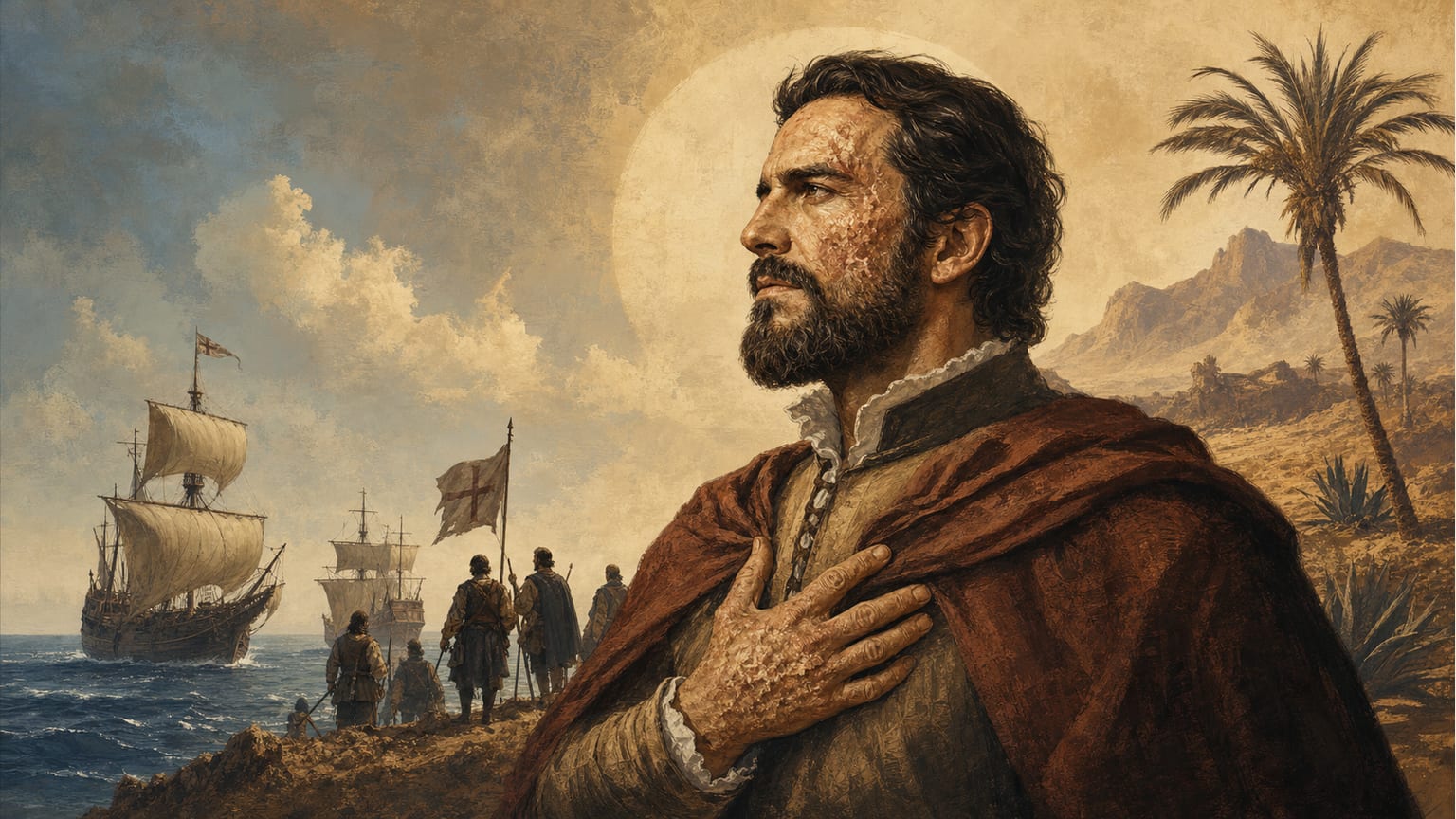
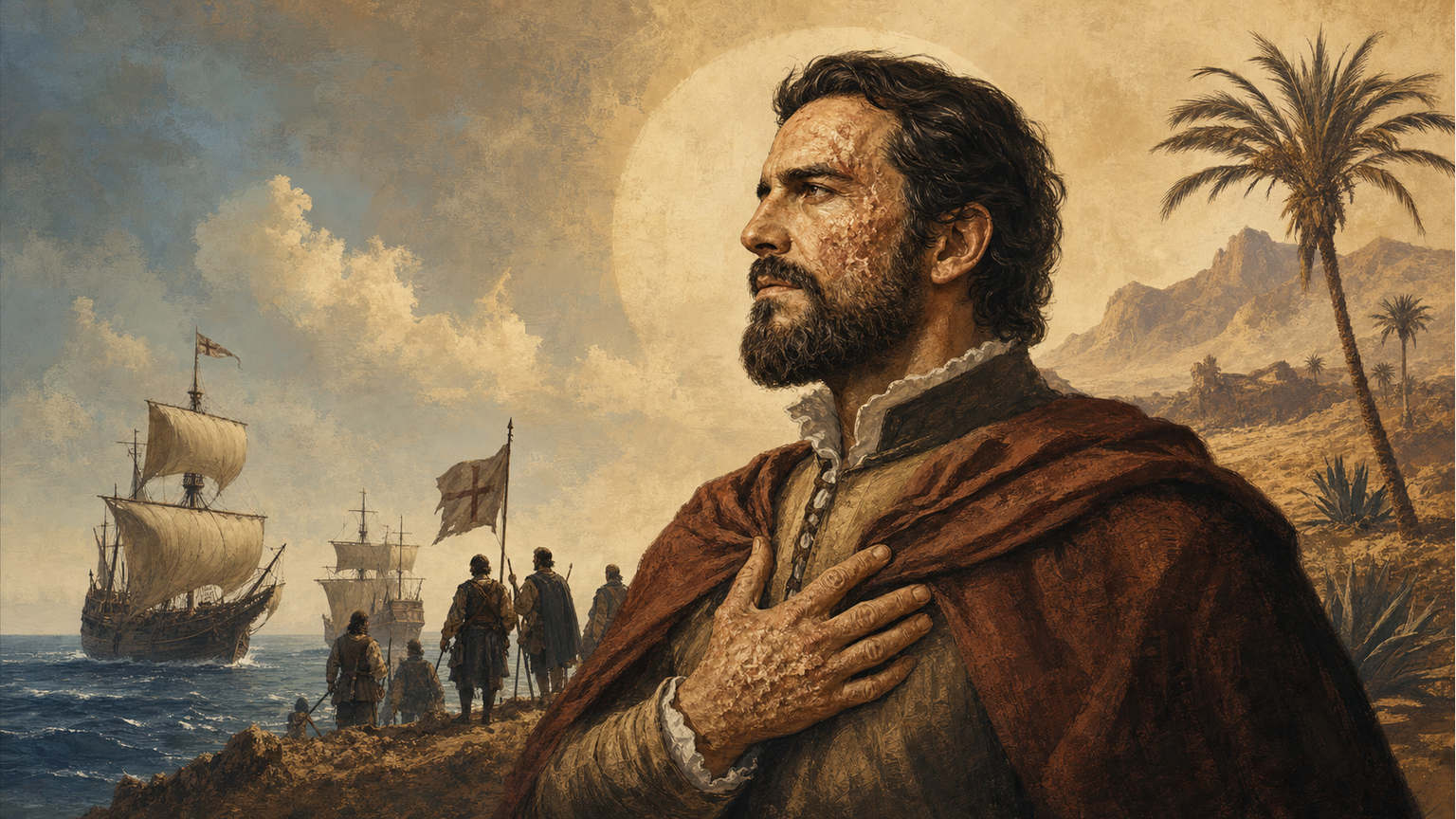
This testimony is reinforced by the preface to Boutier’s Chronicle, contemporary to the events, which states that Bethencourt “in feats of arms had lost the strength and virtue of some of his limbs, he should be greatly honored in chivalric deeds, to turn and convert to the faith the population of these foreign lands, which cannot be done without God’s help…”[1]. Bonnet interprets “loss of strength and virtue of some of his limbs” as a reference to leprosy symptoms, such as muscle atrophy and loss of sensation in hands and feet, described by medical experts and observed in Bethencourt’s portrait, which shows signs of the disease[1].
Bonnet notes that other scholars, such as Gravier, Margry, and Bergeron, had not addressed this issue, which he considers vital to understanding Bethencourt’s motivation[1]. According to Bonnet’s hypothesis, the leprosy was not hereditary but likely contracted during the disastrous Naples expedition, where fever and misery facilitated the spread of the disease among both soldiers and nobles[1].
The reputation of the Canary Islands as a place with a benign and healthy climate, where diseases could be cured, was a determining factor for Bethencourt in choosing this destination in search of relief for his illness[1]. Bonnet mentions that even in later times, such as Christopher Columbus’s 1498 expedition, it was documented that people traveled to Atlantic islands to treat leprosy, reinforcing the plausibility of Bethencourt’s motivation[1].
In summary, according to Bonnet, Buenaventura, Juan de Bethencourt’s illness not only marked his personal life but was a key element in his decision to lead the Franco-Norman conquest of the Canary Islands, seeking not only glory and land but also hope for health and anonymity far from the French court[1].