

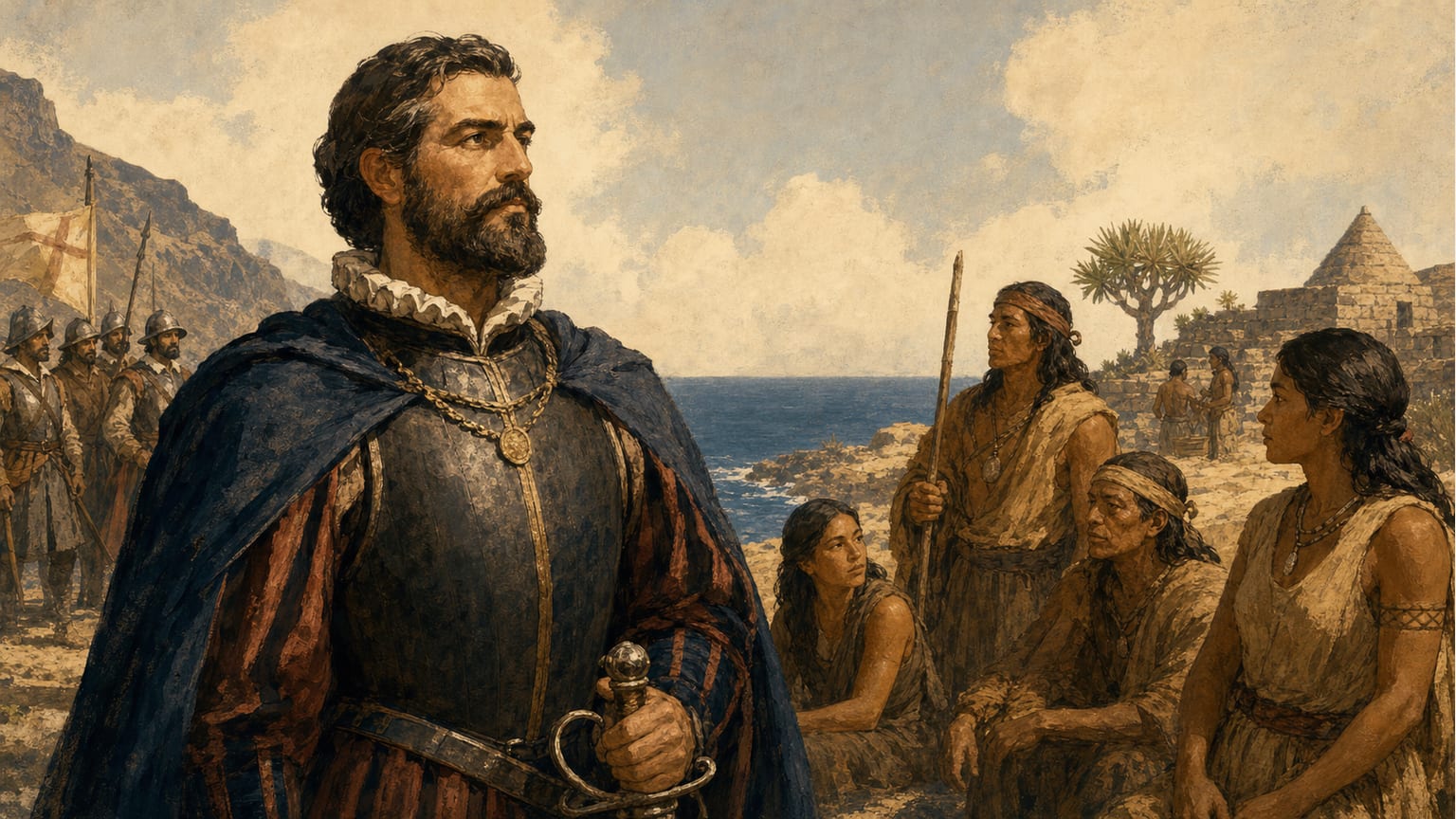
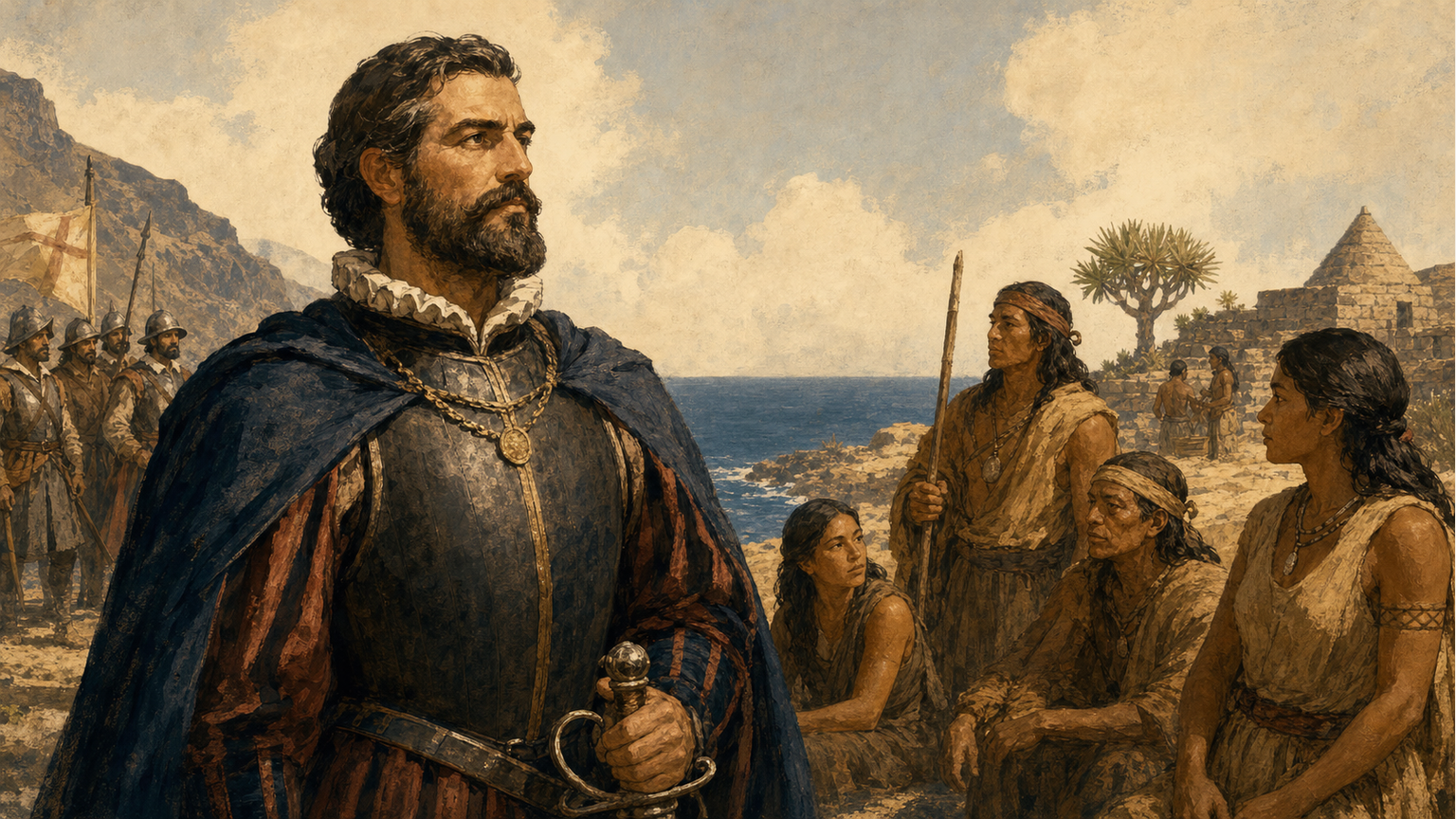
Alonso de Lugo’s Treatment of the Guanches after the Conquest of Tenerife
The 1508 residencia (official inquiry) into Alonso de Lugo, led by Lope de Sosa, provides detailed documentation on how the Adelantado treated the Guanches after the conquest of Tenerife. According to the source, the most serious and sensitive accusations were related to the treatment of the defeated indigenous people, as Lugo’s conduct towards the Guanches provoked protests even among his contemporaries[1].
One of the main accusations was that Lugo did not respect the “bandos de paces” (peace agreements) and enslaved the Guanches indiscriminately, regardless of their kingdom or faction. In his defense, Lugo argued that such Guanches did not exist, claiming all resisted or aided those who resisted the Catholic Monarchs, and thus, once subdued by force, were at the mercy of the conqueror as legitimate war captives[1]. However, the source points out that this claim contradicts both historical tradition and documentation, such as the actions of Lope Sánchez de Valenzuela, who in 1498 was commissioned to Tenerife to free Guanches unjustly held captive[1].
The documentation includes a letter from Alonso de Lugo dated July 27, 1499, which distinguishes between Guanches based on their origin. It states that slaves from Adexe, Abona, Anaga, and Guymar were to be treated differently, with a specific reward for each, demonstrating that distinctions were indeed made according to kingdom or faction[1]. The following day’s proclamation reinforced this, promising security and ownership of captured slaves except for those from these four regions, for whom a set payment was required[1].
Specific cases are documented, such as Lugo having “spared Guantejina, his Guanche slave, and then selling him again,” or selling a son of King Ventor to his own sister and then reselling him to another resident, as well as the sale of Diego Copado, a Christian Guanche, despite his conversion[1]. Lugo defended himself by questioning the reliability of witnesses or the age of the complainants, but even some witnesses presented by his side corrected him and confirmed the facts[1].
The source highlights that these actions were protested not only by the Guanches but also by some Castilians, such as Don Enrique de Anaga, who filed a special complaint regarding the unjust enslavement of the indigenous people[1]. The residencia process thus documents both the existence of distinctions in the treatment of the Guanches and the persistence of slavery and sale of indigenous people after the conquest of Tenerife, despite royal decrees and complaints raised to the court.