Physician, librarian and researcher
A founder and the first librarian and archivist of El Museo Canario, he collected and copied historical and literary documents, preserving part of the islands’ written heritage.
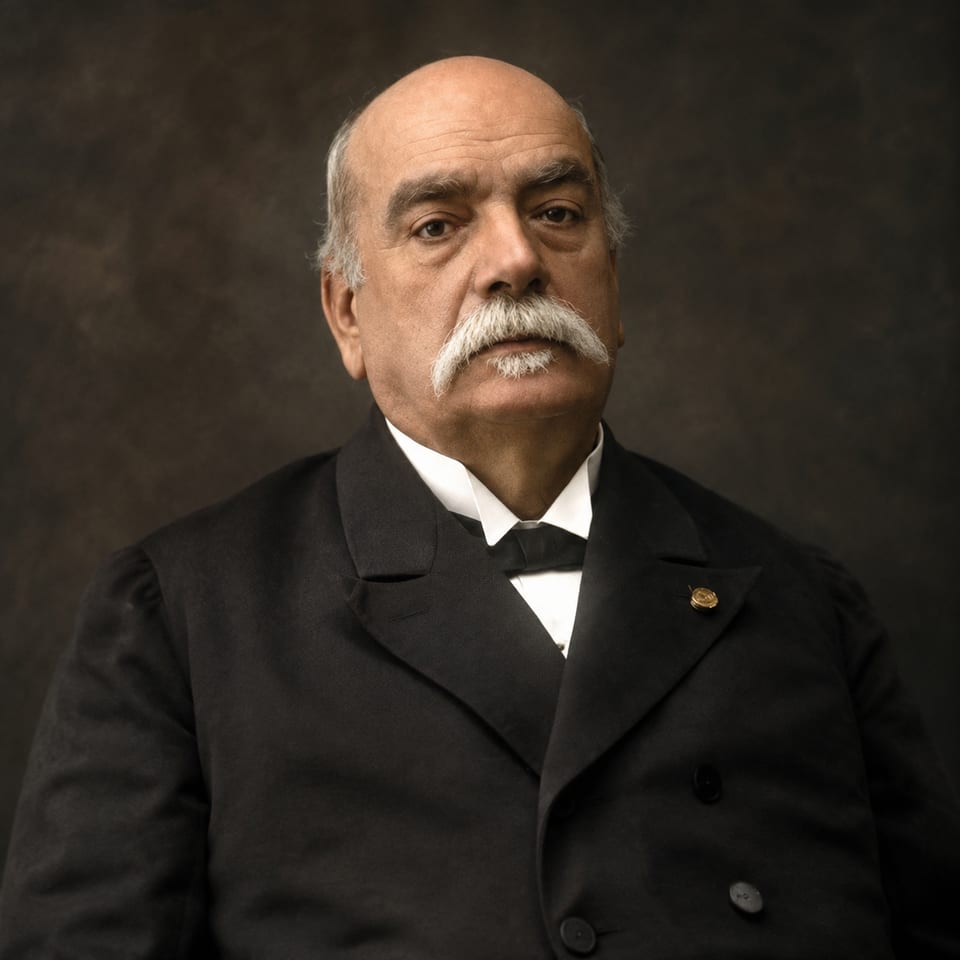
Physician, librarian and researcher · 1826–1891
Physician, librarian and researcher
A founder and the first librarian and archivist of El Museo Canario, he collected and copied historical and literary documents, preserving part of the islands’ written heritage.
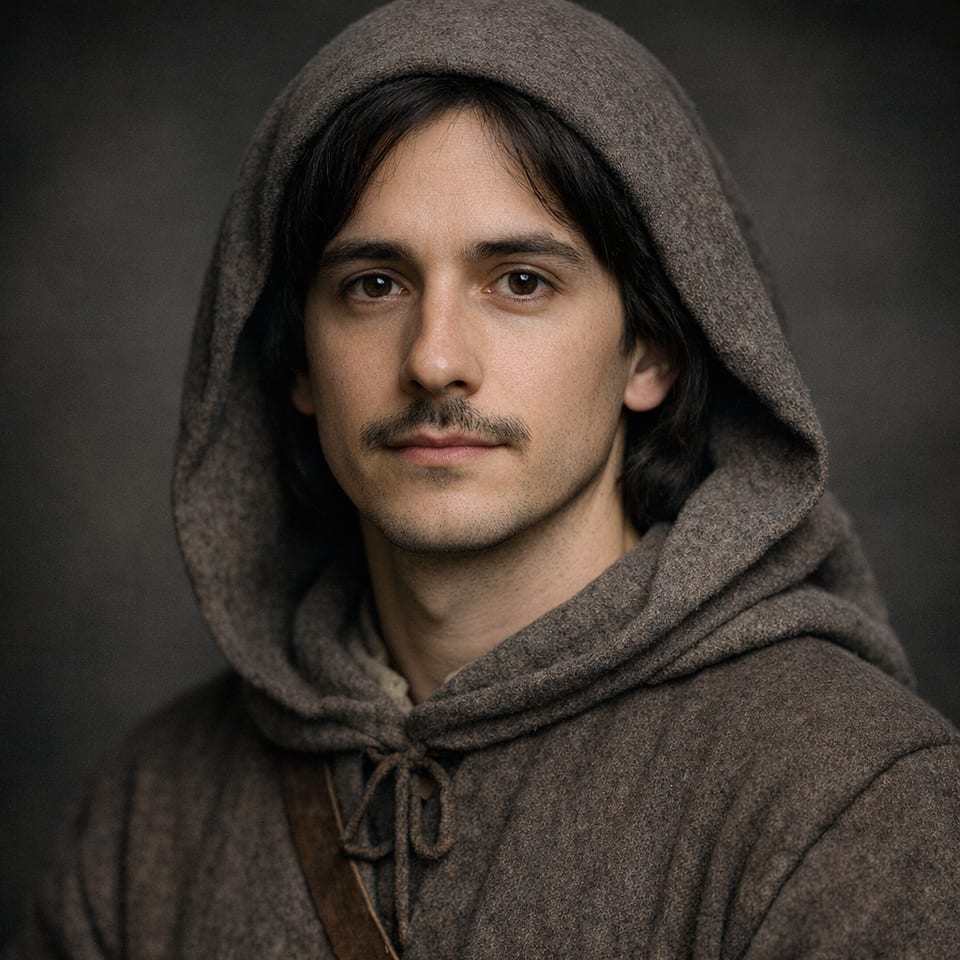
Juan Francisco de Padilla y Padilla was born in Las Palmas de Gran Canaria on 23 August 1826. He died in the same city in 1891. A physician, teacher and librarian, he participated in the political and cultural life of nineteenth-century Gran Canaria. His most lasting contribution was connected with the establishment of El Museo Canario and the recovery of historical and literary documents. The copies he assembled preserved texts that were difficult to consult and supported later research into the writers of the islands.
He attended the diocesan seminary and the San Agustín school. In 1847 he moved to Paris to study medicine at the Sorbonne. There he became friends with Gregorio Chil y Naranjo, who arrived the following year, and took part in the revolutionary events of 1848. He also completed studies in physical sciences at the University of Caen. In 1858 he concluded his medical training with a thesis on gynaecology. He returned to Gran Canaria in 1859 and initially worked as the municipal physician in Gáldar before settling in the island capital.
He combined medical practice with teaching French and geography at the Las Palmas secondary school. He served as secretary-general of the Economic Society of Friends of the Country, participated in the Academy of Medical Sciences and the organisation of the Las Palmas Red Cross, and worked as the municipal librarian. A federal republican, he participated in the revolution of 1868 and served as mayor of Las Palmas in 1871. He subsequently became deputy governor of the Gran Canaria district. In his later years he withdrew from party politics and concentrated on cultural institutions.
He chaired the assembly that established El Museo Canario on 2 September 1879. On that day he was appointed librarian and archivist, a permanent position he held until his death. He organised natural science collections and gathered Canarian literature. His collaboration with Chil included arranging the manuscripts of the Estudios históricos, climatológicos y patológicos de las islas Canarias, which appeared in instalments. The museum’s library and archive therefore benefited from sustained work searching for documents, copying them and organising the resulting material.
He collected works by Graciliano Afonso, Rafael Bento y Travieso, Bartolomé Martínez de Escobar and other authors. A specific example of his legacy is the collection of 166 manuscript sheets containing poetry by Agustina González y Romero, known as La Perejila. Néstor Álamo used those copies to publish her work in 1947. Padilla had died before the poet and could not collect her final compositions, so the collection also reflects the limits of his work. His historical importance lies in this documentary mediation: he made scattered texts available to other readers and researchers, helping to sustain the literary and historical memory of the Canary Islands.