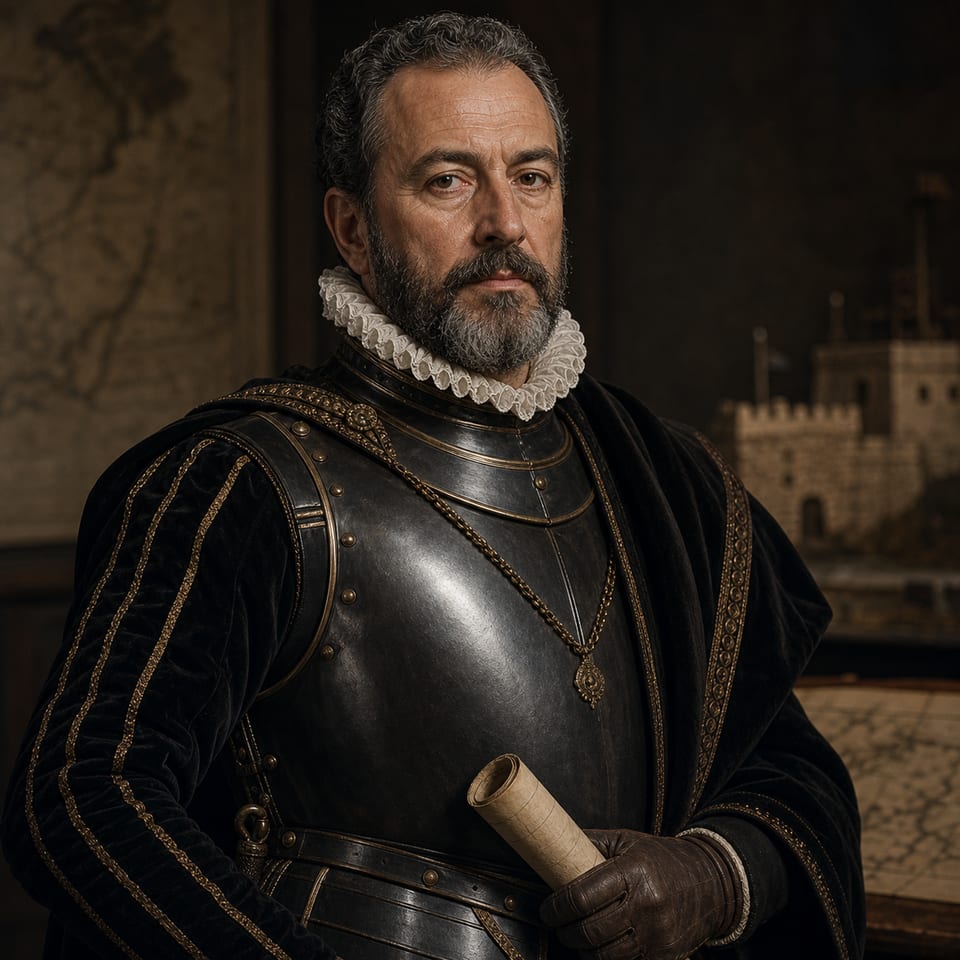
Pedro de Vera Mendoza
ConquestHistory15th CenturyConqueror of Gran Canaria

Governor and captain in the conquest of Gran Canaria

Castilian governor of Gran Canaria during the final phase of the royal conquest. His government culminated with the surrender of Ansite in 1483 and was also associated with reprisals and captivity in La Gomera.


Early life

Pedro de Vera Mendoza was sent to Gran Canaria during the final phase of the royal conquest, after the conflicts that had marked the early years of the Castilian enterprise begun in 1478. He served as governor and captain with direct responsibility for the military and political culmination of the conquest.

Historical role

The surrender of Ansite, dated to April 1483, marked the close of the Castilian conquest of Gran Canaria. Traditions about the incorporation of the last Indigenous leaders and the island's transition into colonial organisation under the Crown of Castile are organised around this phase.

His profile is not limited to Gran Canaria. After the Gomera rebellion he intervened in La Gomera, where, together with Beatriz de Bobadilla, he carried out the captivity and sale of Gomerans as reprisal, an episode confined to that island and that specific context.

Legacy

Pedro de Vera therefore remains a central and contentious figure of the conquest: decisive in the Castilian integration of Gran Canaria, but also associated with practices of violence and captivity.

Timeline

  1. c. 1430Pedro de Vera Mendoza is born in Jerez de la Frontera, Crown of Castile.
  2. 1480He took office as governor, corregidor and captain general of Gran Canaria during the royal conquest.
  3. 1483April 29, 1483He completed the Castilian conquest of Gran Canaria after the surrender at Ansite.
  4. c. 1505Pedro de Vera Mendoza dies in Jerez de la Frontera, Crown of Castile.

Sources and verification