Jaume Segarra
Pre-HispanicHistory20th CenturyPromoter of the 1351 mission

Mallorcan merchant and navigator

Mallorcan merchant known for the missionary project of 1351: Clement VI's bull Dum diligenter, dated 15 May 1351, names him together with Joan Doria and authorises their personal journey to Canaria and the neighbouring islands with up to thirty people to instruct the inhabitants in the Catholic faith. It is a direct antecedent of the bishopric of the Fortunate Isles.
Early life

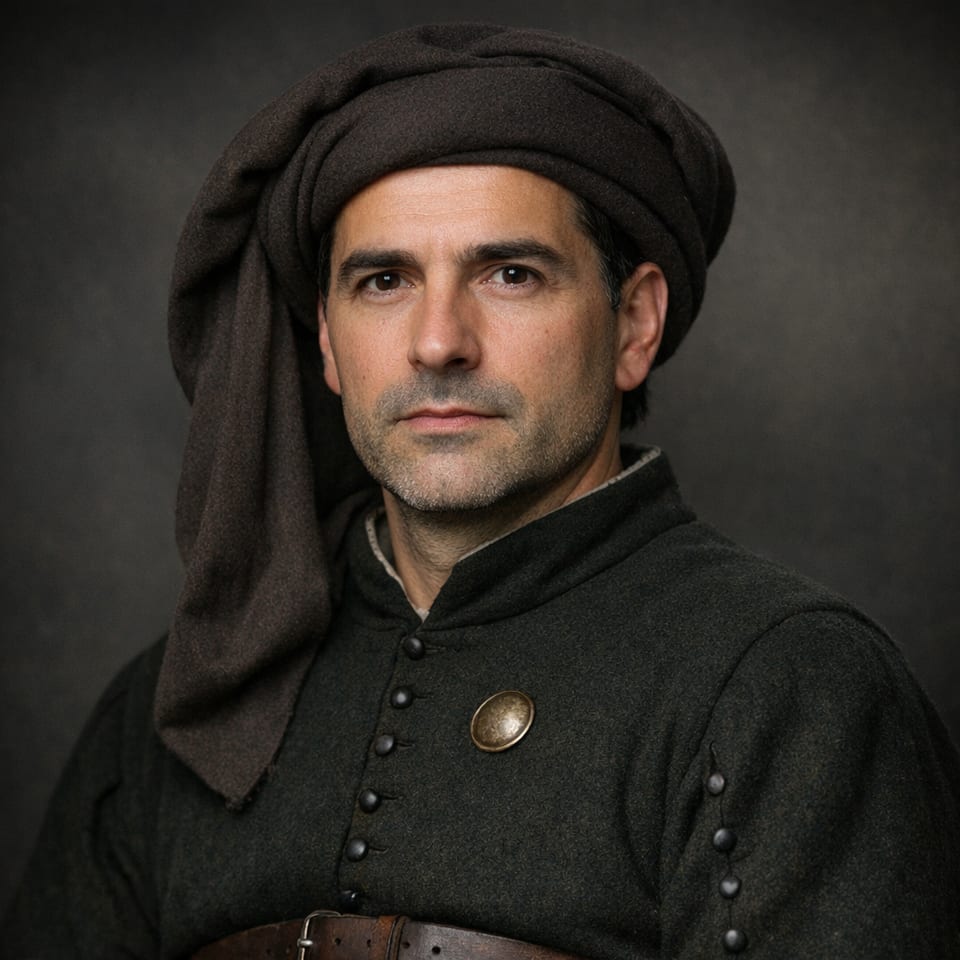
Jaume Segarra was a merchant and citizen of fourteenth-century Mallorca known from a single documented episode: the missionary project directed at the Canary Islands between 1351 and 1352. On 15 May 1351 Pope Clement VI addressed the bull Dum diligenter to him from Avignon, naming him personally together with his compatriot Joan Doria. The pontiff records their intention to travel in person to the island of Canaria and to the other neighbouring islands, called the Fortunate Ones, taking with them up to thirty faithful and God-fearing persons, fit to instruct the idolatrous and pagan peoples who dwell there in the Catholic faith and honest customs, by the teaching of the word and of example. The bull also grants the participants the indulgences of the Crusade.

Historical role

The project belonged to the papal change of strategy after the failure of the Principality of Fortuna, the title with which Clement VI had invested Luis de la Cerda in 1344, who died in 1348 without ever setting foot in the islands. Instead of conquest, the exclusively missionary path. King Peter IV of Aragon, lord of Mallorca since 1343, supported the enterprise: on 1 June 1351 he granted Segarra and Doria a licence for the navigation, praising their purchase of a ship to carry a group of religious versed in theology. A singular element of the plan was the presence among the missionaries of Canarian natives who had been baptised in Mallorca, instructed in the faith and in the Catalan language, and redeemed from slavery at the merchants' own expense; the pope expressly mentions them as a bridge for the preaching. Other documents speak of twelve Canarians in this situation, and on 10 February 1352 Peter IV ordered an inquiry into how they had been taken from their island, arranging for them to be handed over to the expedition's leaders, freed if they had been removed by fraud, or their fair price paid if they were lawfully held captives.

The continuity with the Mallorcan expeditions of 1342 is evident: Guillem Fuser, who had already taken part in that first cycle, also figured in the enterprise of 1351-1352, and on 14 May 1352 the lieutenant of Mallorca issued a new licence naming Arnau Roger as captain, with the approval of the pope and the king. The project of Segarra and Doria was, moreover, the immediate preliminary step to the creation of the bishopric of the Fortunate Isles or of Telde, erected on 7 November 1351 with the bull Coelestis rex regum and entrusted to the Carmelite Bernardo (Bernat) Font, probably of Mallorcan origin according to some historians, whose missionary plan rested on the same Mallorcan faithful and Canarian neophytes.

Legacy

Nothing more is known of Jaume Segarra beyond these documents: neither his birth nor his death is recorded, nor his parentage, nor other mercantile activities. Nor is it securely established that the expedition was carried out as planned. His notability is, precisely, documentary: his name and Doria's were fixed in a papal bull as promoters of the first exclusively evangelising project for the Canaries, which makes him a landmark of the first European contacts with the archipelago.

Timeline

  1. 1351May 15, 1351Clement VI addresses the bull Dum diligenter to him, recording his and Jaume Segarra's intention to travel personally to Canaria with up to thirty people to instruct the inhabitants in the Catholic faith.
  2. 1351June 1, 1351Peter IV of Aragon grants him and Segarra a licence for the missionary navigation; they have bought a ship to carry religious.
  3. 1352February 10, 1352Peter IV orders an inquiry into how twelve Canarians who were to accompany the expedition came to Mallorca, and arranges for their handover to its leaders.
  4. 1352May 14, 1352New licence from the lieutenant of Mallorca with Arnau Roger as captain, naming Doria, Segarra and Guillem Fuser.

Sources and verification