Naturalist and museum curator
A founder of El Museo Canario and collaborator of the Paris Muséum, he donated archaeological objects and promoted its collection of nineteenth-century physical anthropology casts.
Naturalist and museum curator · 1859–1927
Naturalist and museum curator
A founder of El Museo Canario and collaborator of the Paris Muséum, he donated archaeological objects and promoted its collection of nineteenth-century physical anthropology casts.
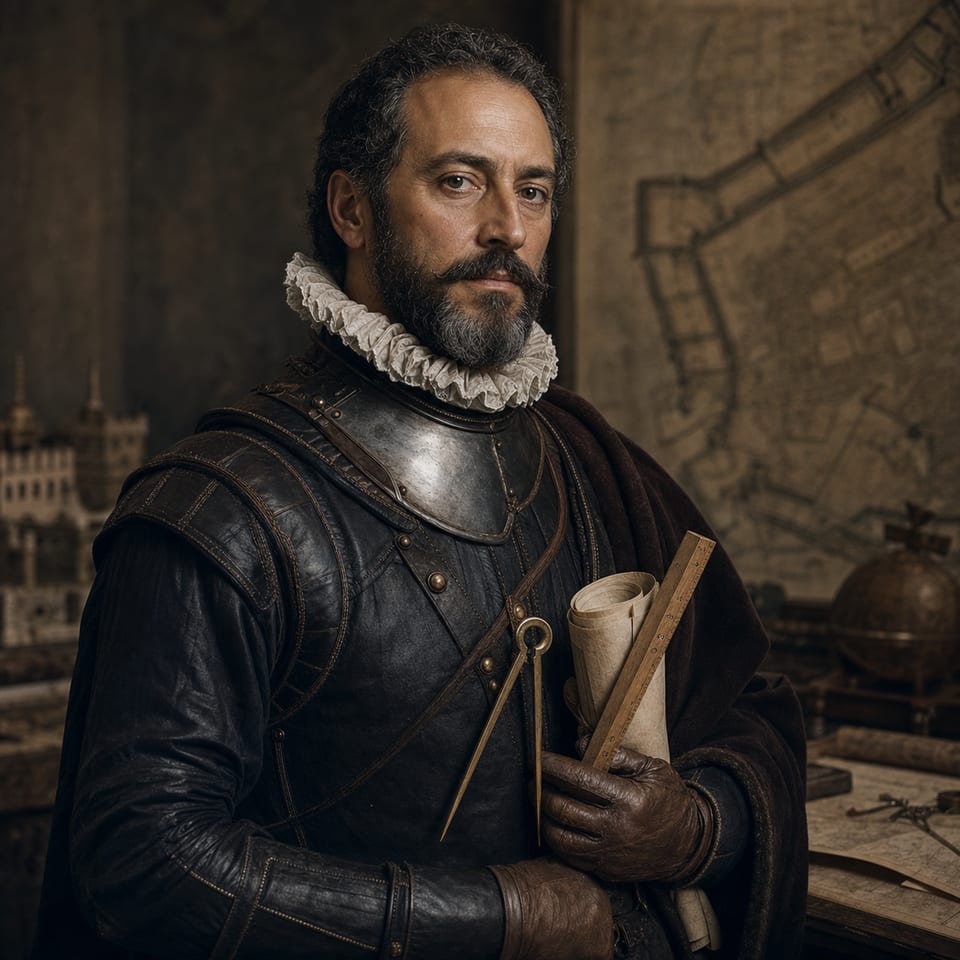
Diego Ripoche Torrens was born in Las Palmas de Gran Canaria in 1859. He died in 1927. A naturalist with an interest in physical anthropology, he helped found El Museo Canario in 1879 and contributed to its collections. His particular importance lies in the links he established between the Gran Canarian institution and scientific circles in France. Through correspondence, purchases, explorations and gifts, he secured materials that expanded the museum's holdings beyond the archaeology of the Canary Islands themselves.
He lived in Paris from 1879 to 1917. There he collaborated with the Muséum National d’Histoire Naturelle and acted as an intermediary between El Museo Canario and French cultural institutions. This long residence gave him contacts through which objects and reproductions could be obtained. After returning to Gran Canaria, he worked as a correspondent for the French museum and as a curator at El Museo Canario. His career therefore connected work abroad with service to an institution on his native island.
His archaeological gifts came from purchases and scientific expeditions. One notable exploration concerned a Merovingian cemetery at Mareuil-sur-Ourcq, in the French department of Oise. The Las Palmas municipal authorities supported the mission on the museum's initiative, following a proposal from Ripoche. In a letter of 1889 to Amaranto Martínez de Escobar, he reported results and announced the dispatch of a Merovingian coffin, Roman coins and other objects. His contributions joined those of Andrés Navarro Torrens, René Verneau and Justine Rondot in the collection of foreign archaeology.
He also promoted the collection of plaster busts. Writing from Paris in February 1888, he proposed placing reproductions of faces alongside skulls in the physical anthropology gallery. His connections made it possible to obtain casts from French collections. The first shipment, comprising thirty examples purchased by the institution, arrived on 17 June 1888 and cost one hundred and fifty pesetas. Further purchases and donations continued to enlarge the collection over the following years.
Five shipments received between 1888 and 1893 formed an initial collection of ninety-four busts. René Verneau and Justine Rondot made donations. Another subscription drew support from thirty-eight individuals, encouraged by six Gran Canarians including Ripoche. In 1893 he published El Museo Canario: estudio de los bustos que posee este centro antropológico establecido en Las Palmas de Gran-Canaria. His contribution therefore extended beyond acquiring objects to providing a written account of the collection.
These activities belonged to nineteenth-century anthropology. The museum itself places the busts within the evolutionist and ethnocentric exhibition practices associated with the Trocadéro, which sought to display different racial types. Such classifications are historical ideas, rather than scientific categories endorsed today. The Sala Ripoche acknowledged his contribution to the holdings. His legacy sheds light on collection building and the networks that sustained it, while also showing the intellectual limitations of the science practised in his time.