

Intangible heritage
Silbo, folklore, romerías, traditional sports and knowledge handed down from generation to generation in the Canary Islands.
The intangible heritage of the Canary Islands comprises practices, representations, expressions and knowledge that communities recognise as part of their identity. From El Silbo Gomero, declared by UNESCO, to romerías, musical folklore and traditional sports, these manifestations link past and present.[1][2]
International recognition
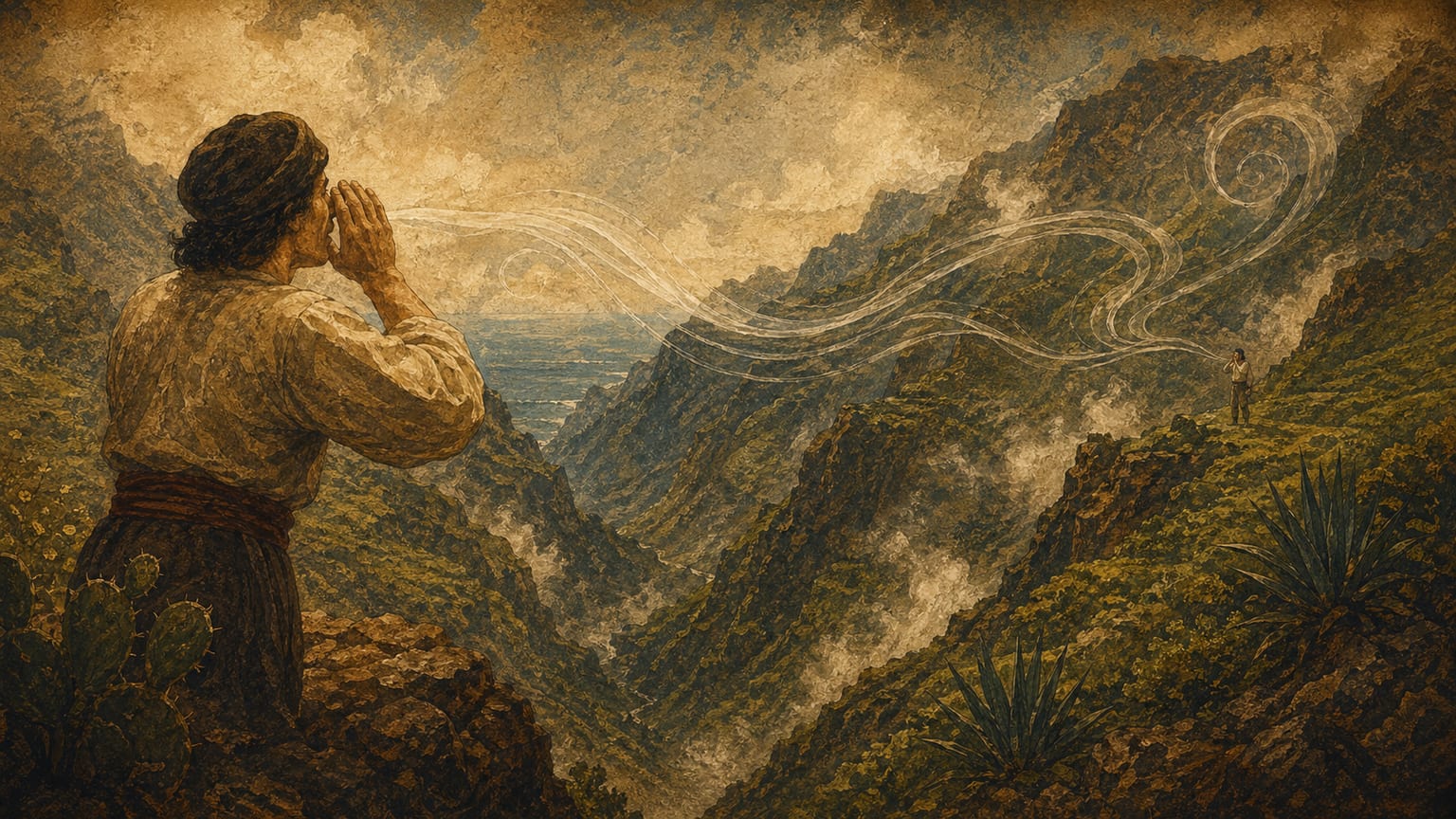
El Silbo Gomero is the most visible example of internationally recognised Canarian intangible heritage. Alongside it, other expressions such as musical folklore, traditional games and romerías constitute a living fabric of community transmission.[1][2]
Music and festivals
Canarian folklore, with forms such as the isa, folia, parranda and malagueña, accompanies festivals and romerías. These musical and dance expressions are both preservation of repertoire and an occasion for social reaffirmation.[1][2]
Related reading
The Gomeran Whistle: A Language That Crosses Mountains
The silbo gomero is a unique whistled communication system that allowed the inhabitants of La Gomera to communicate across the island's deep ravines.
Read more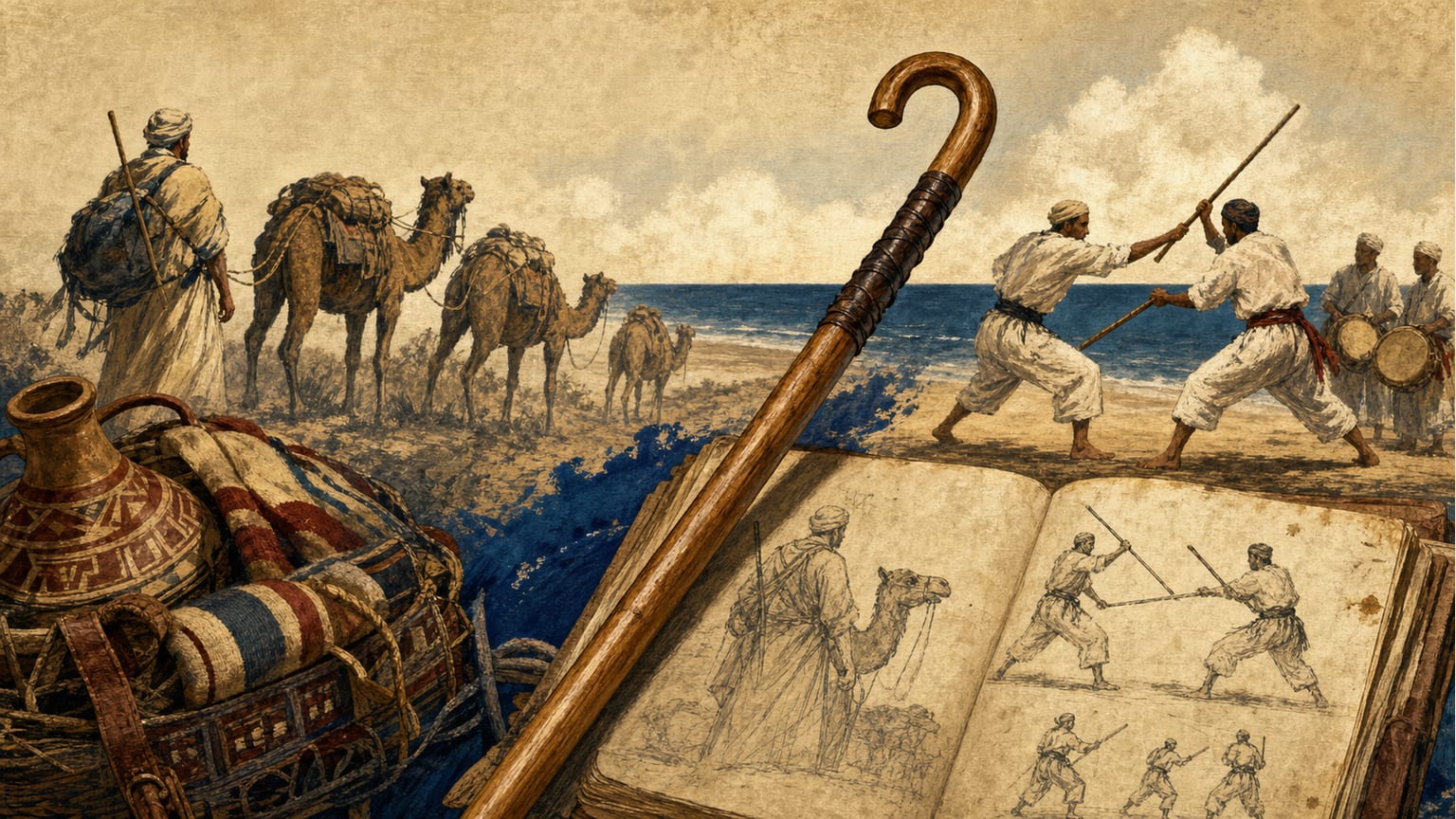
The Camel Driver's Stick and Its Alleged Link to Juego del Palo: A Critical Analysis
A detailed examination of the theory connecting the camel driver's stick to the origin of Juego del Palo, with Morales Magyín arguing that this link lacks documentary support.
Read more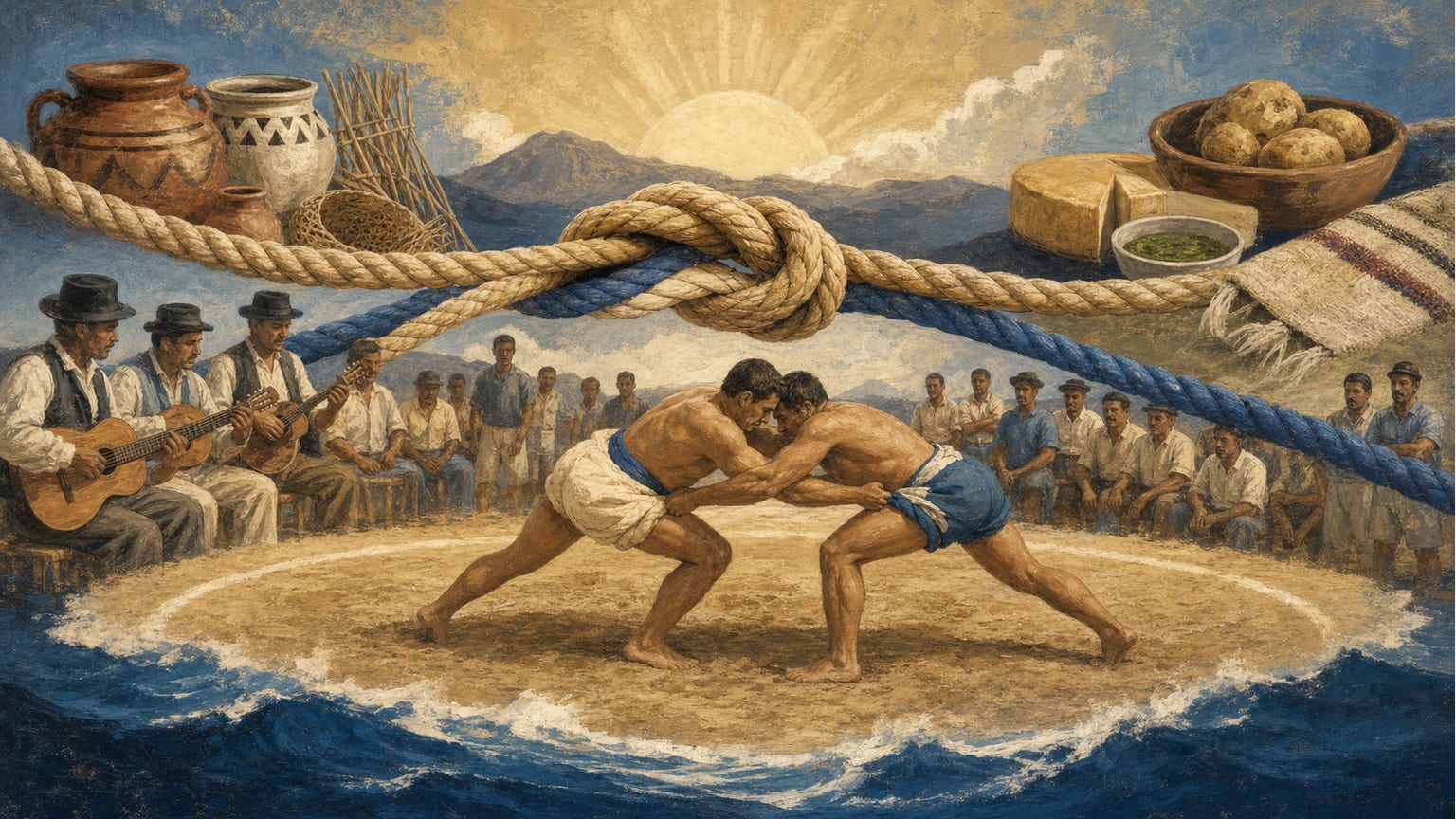
The Inter-Island League: Attempts at Unification in Canarian Wrestling (1946-1959)
The Inter-Island League was a key effort to unify Canarian wrestling between islands, facing organizational challenges and insular rivalries according to Ayala, Antonio (1977).
Read moreSources used
- Arianna Ancarani — El silbo gomero. Medio de comunicación (2008)View reference
- Turespaña (Ministerio de Industria y Turismo) — Islas Canarias (2018)View reference
- View reference