

The Maghrourins’ Arab Expedition and Their Encounter with the Canary Islands
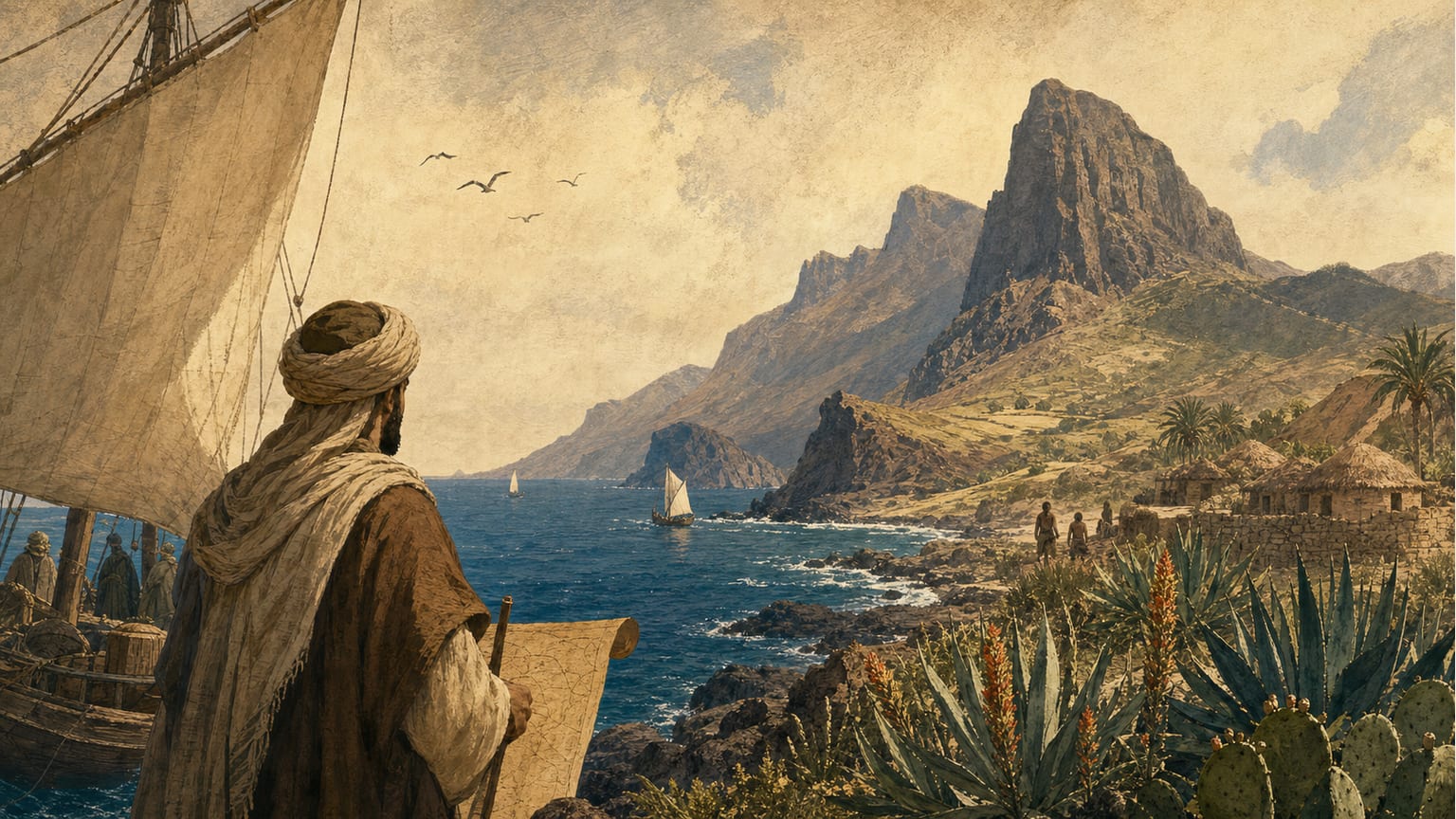
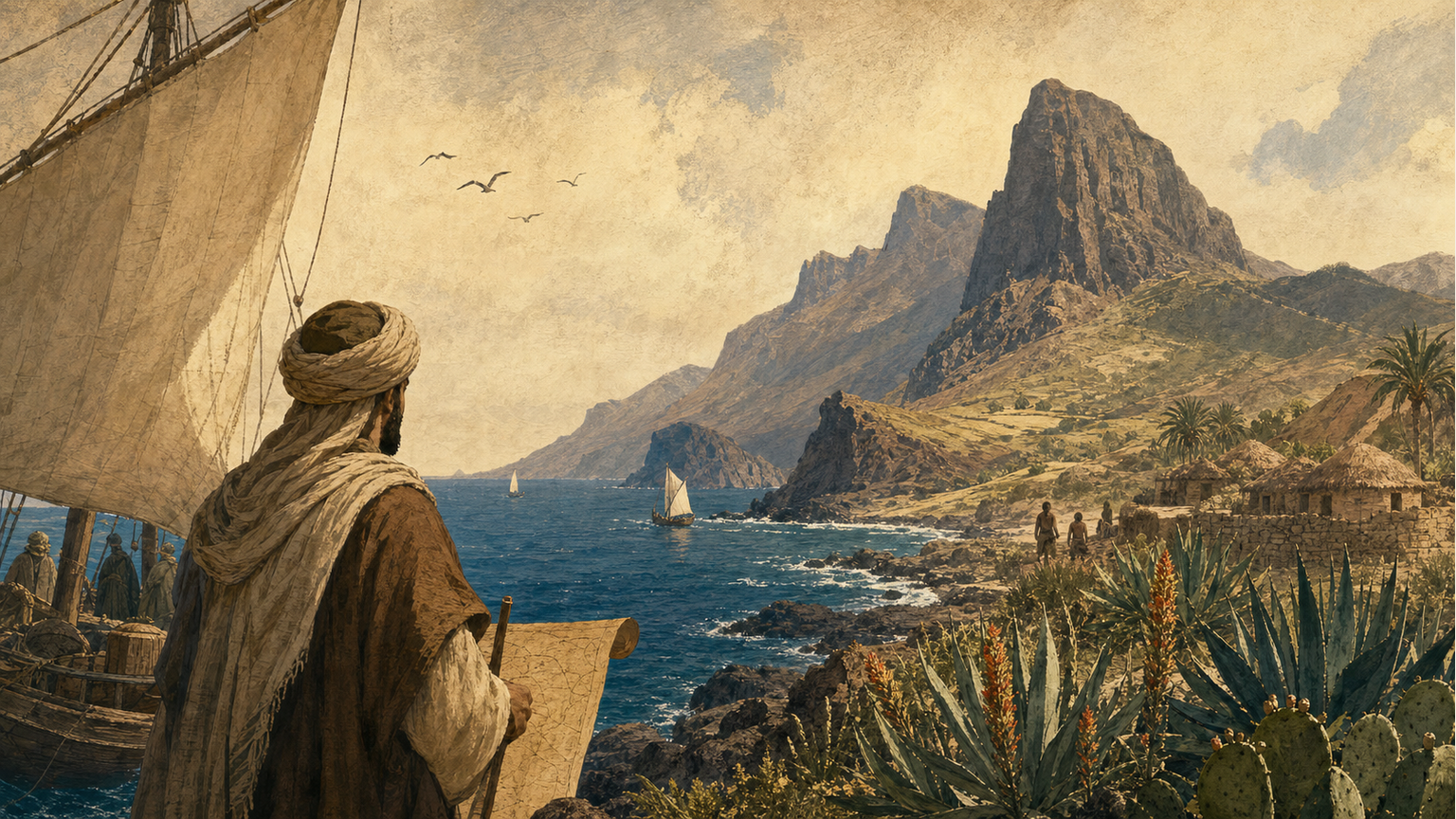
One of the earliest external accounts of the indigenous populations of the Canary Islands comes from the voyage of the Maghrourins, as described by the Arab geographer Edrisi and later cited by Webb and Berthelot in Histoire naturelle des îles Canaries[1]. This episode, which took place before 1147, tells of eight relatives who set sail from Lisbon to explore the limits of the Atlantic Ocean and discover what lands lay beyond the known routes[1].
According to Amédée Jaubert’s literal translation of Edrisi, the Maghrourins built a ship, loaded it with provisions for several months, and sailed for eleven days until they reached a “sea whose thick waves gave off a foul odor, hid many reefs, and were dimly lit.” Fearing for their safety, they changed course southward and, after twelve more days, arrived at the so-called Isle of Sheep, where they found flocks of sheep without shepherds and running water[1].
The meat of these animals was so bitter it was inedible, so only the skins were kept. Continuing their journey, the Maghrourins sighted an inhabited and cultivated island. Upon approaching, they were captured by the locals and brought before a local king. The navigators described the islanders as tall men with reddish skin and long hair, and the women as remarkably beautiful[1].
During their stay, the Maghrourins were questioned by an interpreter who spoke Arabic. They recounted their adventure, and the king explained that his own father had previously sent a similar expedition, which failed when all visual reference was lost at sea. Eventually, the Maghrourins were released and returned to the African coast after a three-day voyage with their eyes blindfolded, where they were found by Berbers who told them how far they were from their homeland[1].
According to Webb and Berthelot, Edrisi’s account is one of the earliest external descriptions of the Canary Islands’ indigenous societies before European conquest. The text highlights the absence of inter-island boats, linguistic diversity, and the existence of a society organized under a king[1]. The physical description of the inhabitants and references to agricultural and livestock products provide information about the way of life of the ancient Canarians in the medieval period.