

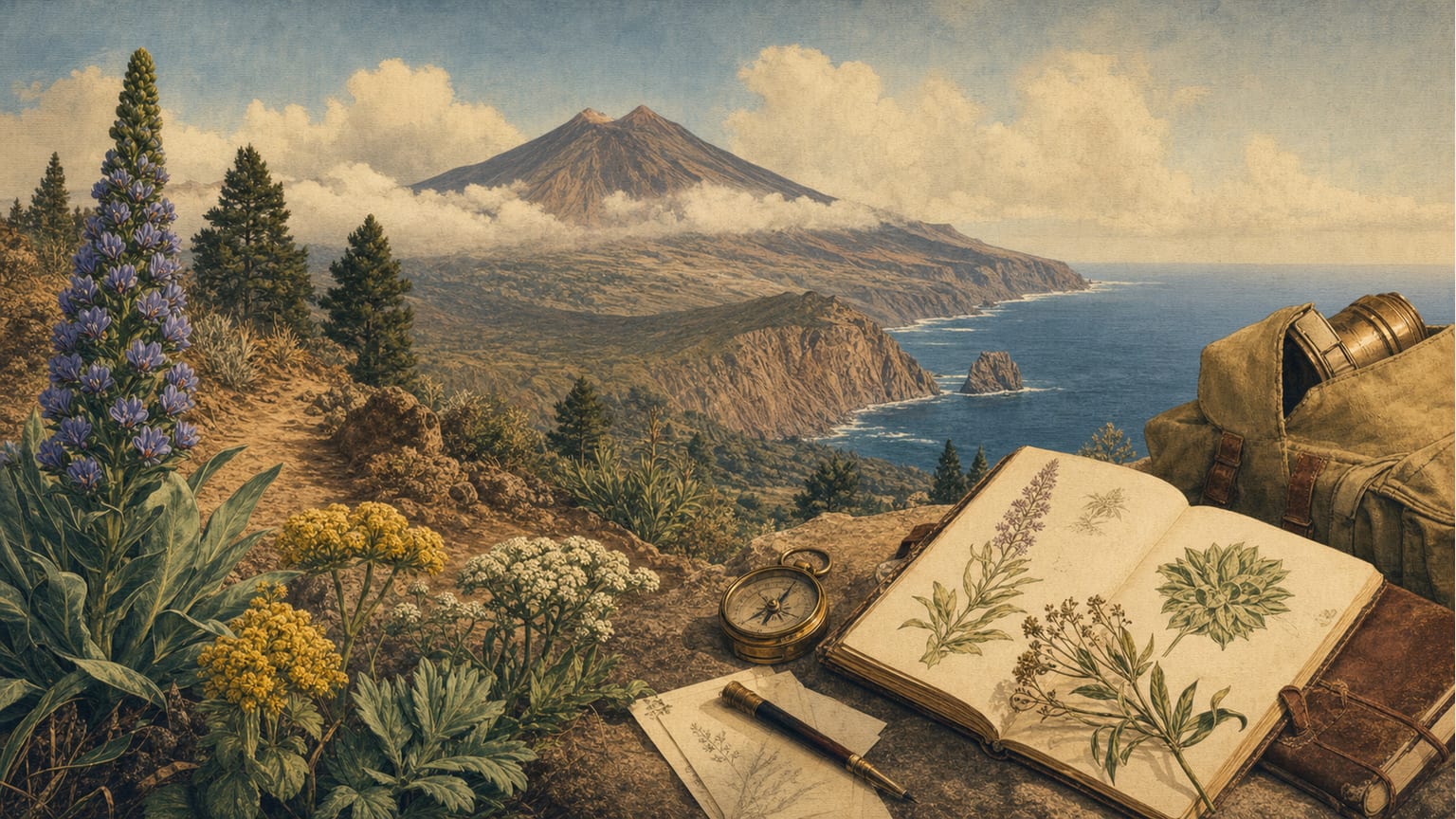
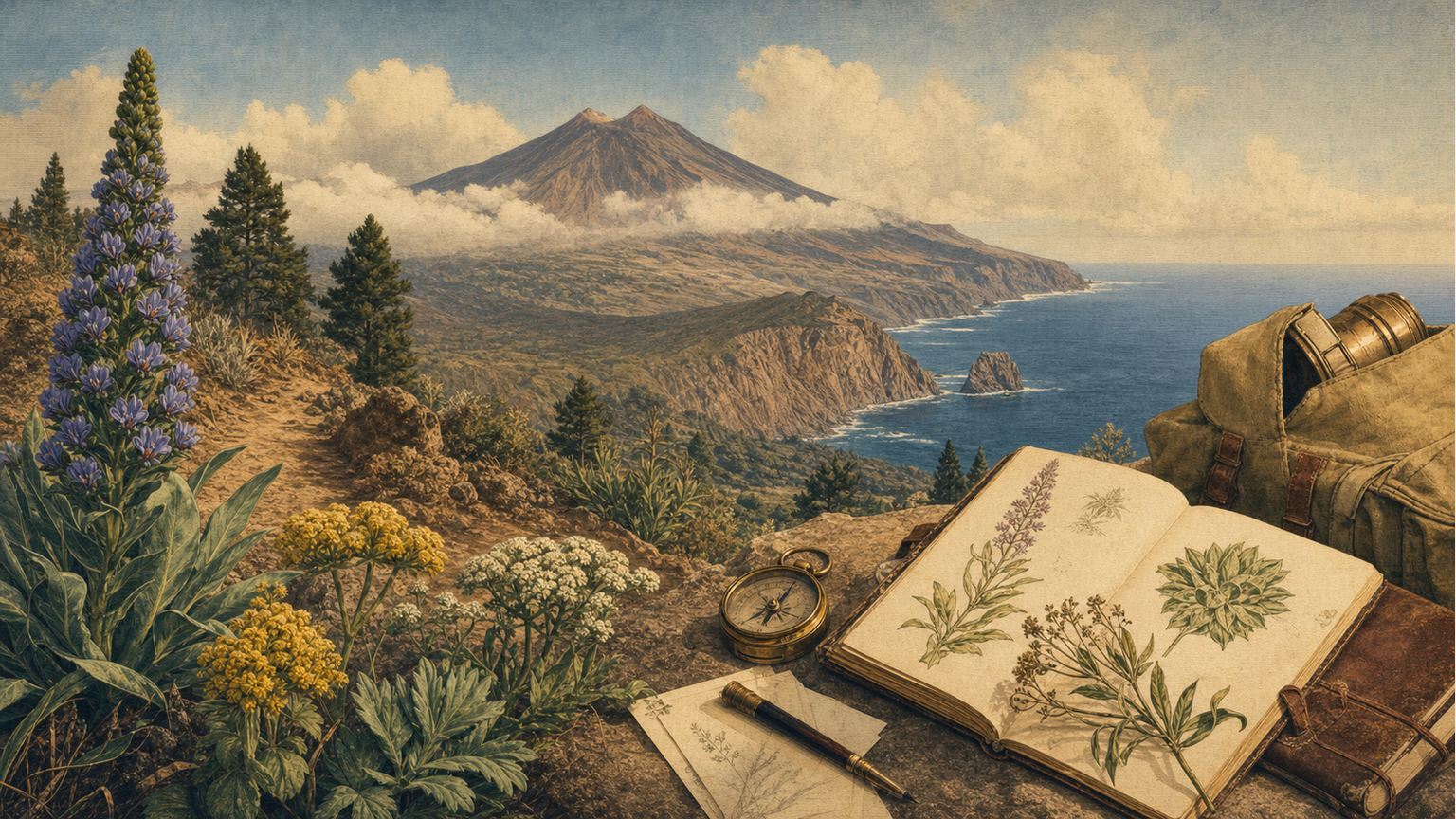
Between 1828 and 1830, Philip Barker Webb undertook extensive botanical collecting expeditions across the Canary Islands, mainly accompanied by Sabino Berthelot. According to Wildpret de la Torre, Wolfredo, after four months of work in Madeira, Webb arrived in Tenerife in August 1828, initially intending to stay only briefly as part of a planned expedition to Brazil[1].
During his time in Tenerife, Webb first stayed in Puerto de la Cruz and later in La Laguna, from where he made numerous botanical excursions. A key event was his chance meeting with Sabino Berthelot in the Barranco de Tahodio, which marked the beginning of a close scientific partnership[1]. Berthelot described how their shared interests and personalities enabled effective collaboration in collecting and studying Canarian flora[1].
Their plant collecting campaigns included trips through the Güímar Valley, Los Roques volcanoes, the ravines of Badajoz and Las Aguas, Montaña Grande, Arico, Granadilla, Vilaflor, and other parts of Tenerife. Webb and Berthelot collected plants and animals, as well as climatic and ethnographic observations[1]. Berthelot highlighted the important roles of local guides, muleteers, and the English artist J.J. Williams, who illustrated many island landscapes[1].
In November 1828, the two naturalists began a significant campaign in southern and western Tenerife, establishing themselves in places like Arico and Vilaflor. The local priest actively participated in their excursions, and Berthelot recounted anecdotes about the challenges of accessing certain areas and the discovery of species previously unknown to science[1].
After exploring Tenerife, Webb and Berthelot traveled to other islands in the archipelago. In May 1829, they sailed to Lanzarote, setting up base in Arrecife and exploring regions such as Haría, Famara, and La Graciosa. They later visited Fuerteventura, including Puerto de Cabras, Antigua, Betancuria, and the Río Palmas valley. In Gran Canaria, they stayed in Las Palmas and made trips to the Caldera de Bandama, Telde, Valsequillo, Tejeda, Teror, Agaete, La Aldea de San Nicolás, and Gáldar[1].
Finally, in 1830, they explored La Palma, crossing the island from Santa Cruz to Los Llanos and Argual, and undertaking an expedition into La Caldera. According to the source, these botanical campaigns enabled Webb and Berthelot to assemble one of the most complete collections of Canarian flora of their time, forming the foundation for the later publication of the “Historia Natural de las Islas Canarias”[1].