

The Canary Houbara: Survival in the Plains of Fuerteventura
The Canary Houbara (Chlamydotis undulata fuerteventurae) is described by Martín Gómez and Cardona Sosa as the largest bird of the Canary Islands’ plains, with Fuerteventura serving as its main refuge following habitat degradation on other islands[1].
Description and Characteristics
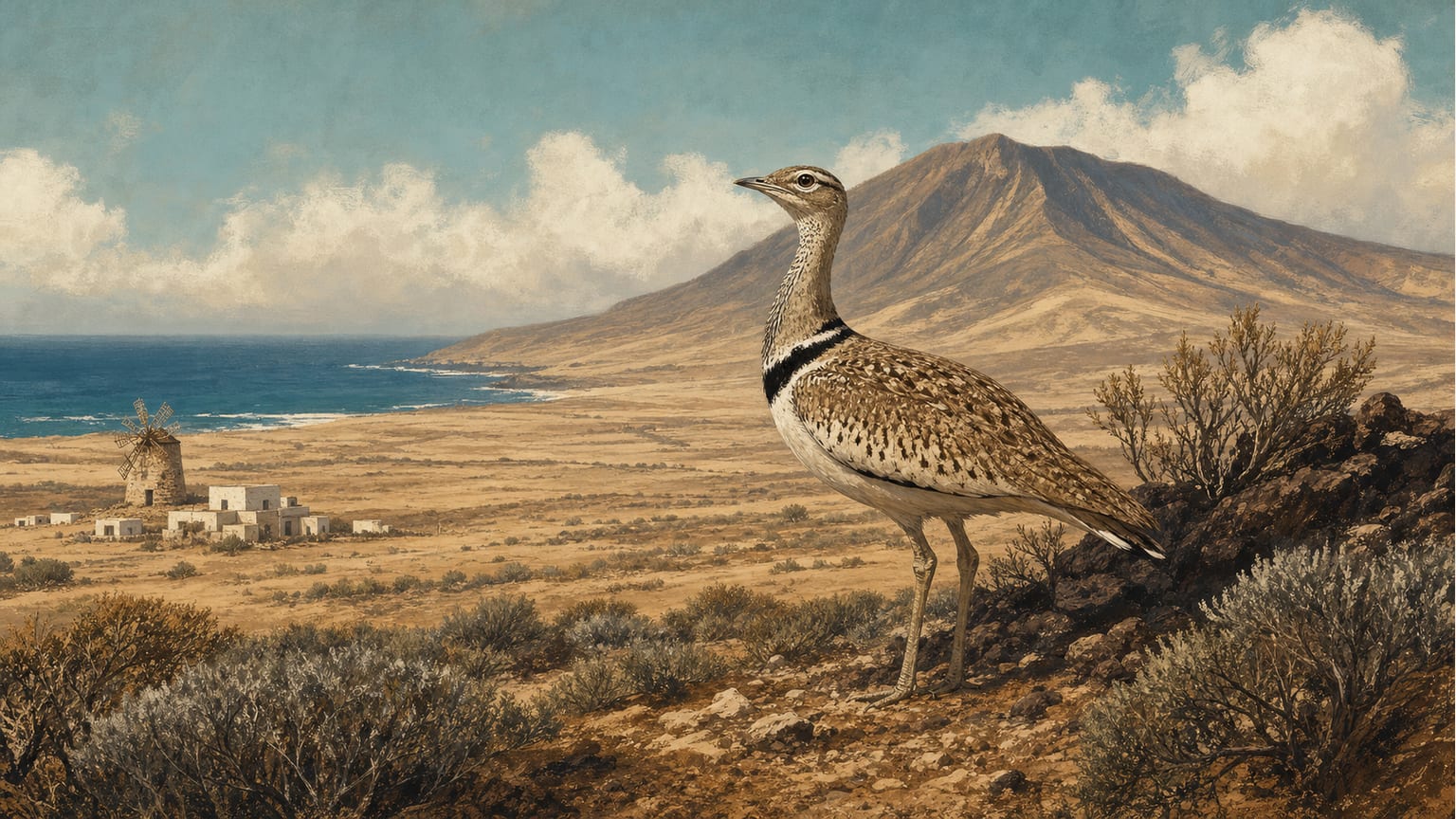
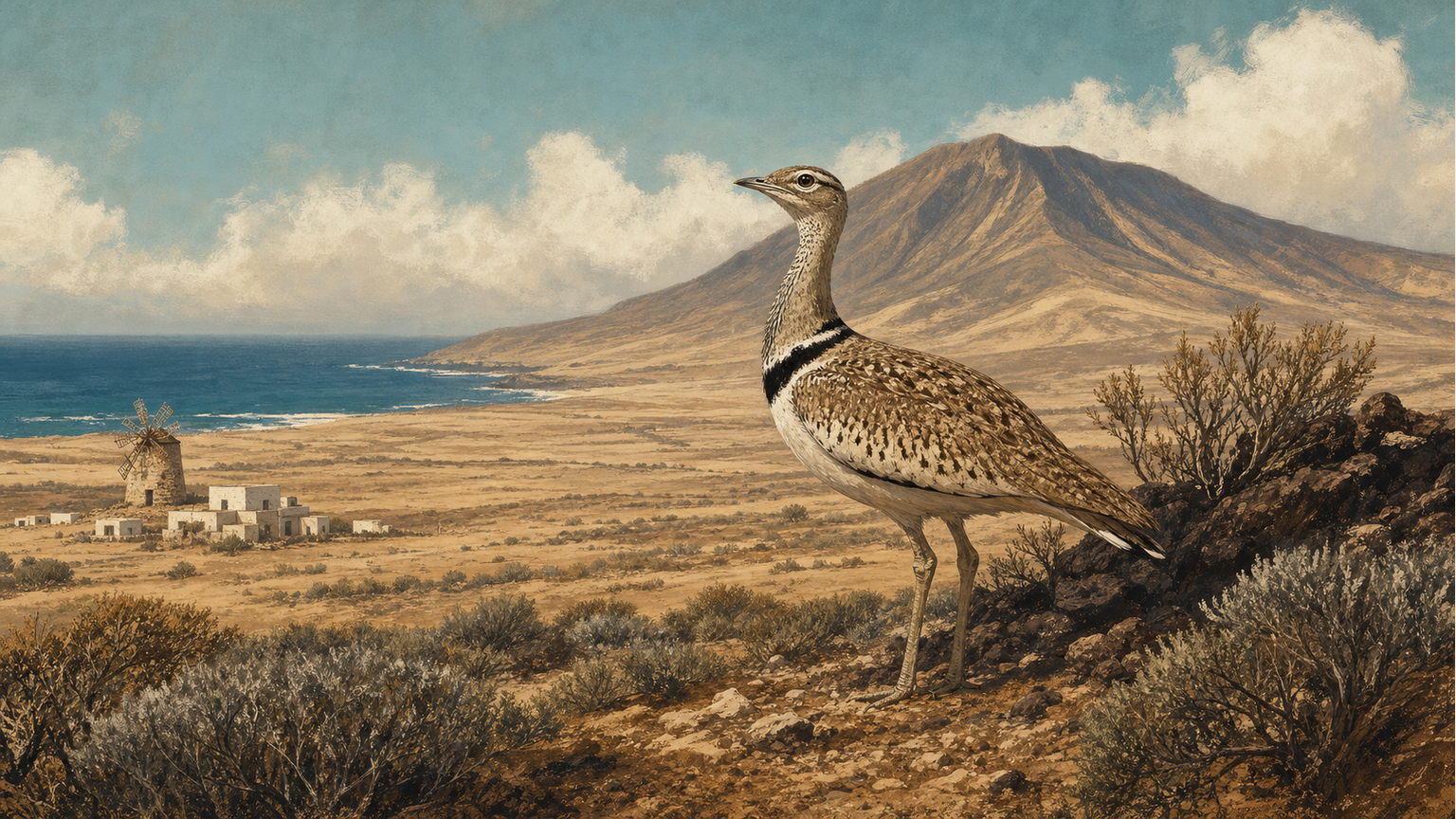
According to the authors, the houbara reaches about 64 cm in length and nearly 1.5 meters in wingspan. Its plumage is brown and camouflaged, allowing it to blend into the terrain and vegetation of the Fuerteventura plains. During courtship, males display white and black feathers on the sides of their necks and a matching crest, performing the “wheel” display for females[1].
The bird has a flat, angular head, a short yellowish beak, and large black eyes. Its long neck features black lines on the sides. The wings are long and rounded, with less white than European and African bustards. Its long, strong legs allow it to run quickly, preferring to walk rather than fly, except when threatened[1].
Habitat and Distribution
The houbara is sedentary and local, inhabiting semi-desert plains or areas with sparse shrubs. In Fuerteventura, it is found in sandy plains, chickpea fields, and rocky areas, while in Lanzarote its presence is more sporadic. The authors note that the largest population is in Fuerteventura, with around fifty pairs at the time of writing[1].
Reproduction and Diet
The houbara nests on the ground, laying one to three light brown eggs with reddish spots. Incubation lasts about 32 days and is performed by the female, while the male distracts potential predators[1].
Regarding diet, the authors state it is practically omnivorous: adults eat mainly green plant parts, grains, and seeds, while juveniles feed almost exclusively on insects and worms. The houbara prefers chickpea, pea, and cabbage fields, visiting them at dawn and dusk[1].
Threats and Conservation
According to Martín Gómez and Cardona Sosa, the houbara has suffered a drastic reduction in habitat due to agricultural transformation, urbanization, and other human activities. Poaching, egg and chick theft, and the lack of suitable crops in its habitats have pushed the species to the brink of disappearance on several islands[1].
The authors emphasize that Fuerteventura is the last refuge for the houbara and other lowland species, highlighting the importance of conserving these areas for the survival of Canarian birdlife[1].