

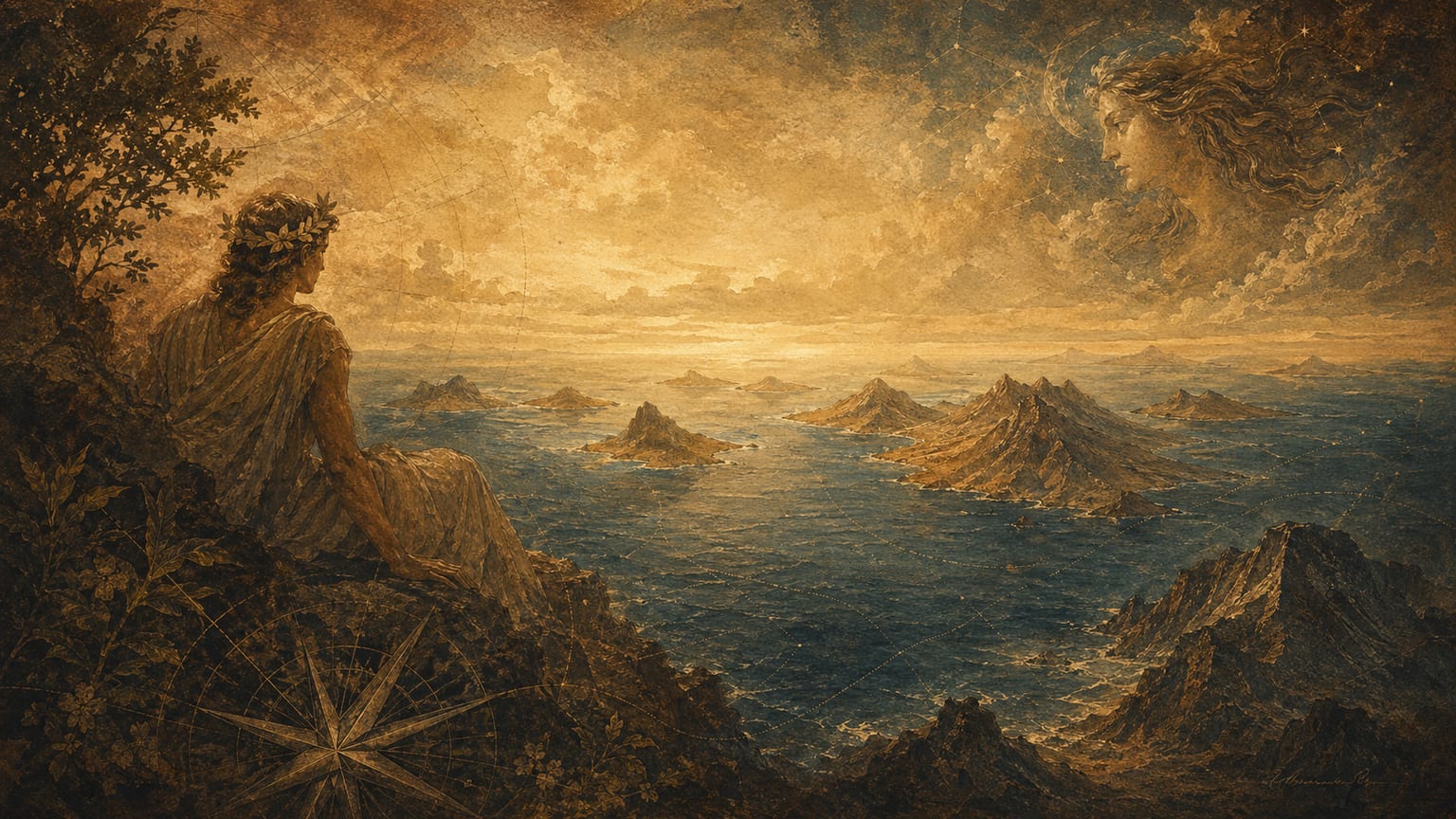

The Fortunate Isles: Myths and Realities of the Canary Islands
The Canary Islands, known in antiquity as the Fortunate Isles, have been a source of fascination and mystery since time immemorial. These islands, located at the western edge of the known world before the discovery of America, have been associated with multiple myths and legends, including the Elysian Fields and the Isles of the Blessed[1].
Predisposition to Myth
The unique geography of the Canary Islands, with their insular, mountainous nature and position as ‘finis terrae’, has made them particularly prone to be the setting for the mythical and the extraordinary. Islands, seen as closed universes, have been the ideal place for the development of myths that defy the laws of everyday reality[1].
Classical Myths and Mythical Geography
Classical myths related to the Canary Islands are framed within what has been called ‘mythical geography’. As the Greeks expanded their knowledge of the world, they shifted their myths westward, situating legends such as the Isles of the Blessed in these islands, a place of eternal spring and eternal happiness[1].
The Isles of the Blessed
This myth, parallel to that of the Elysian Fields, describes a place where heroes and just souls reside after death. The Isles of the Blessed are characterized by a climate of eternal spring, natural wealth, and a life without toil or illness, elements that have been associated with the Canary Islands since antiquity[1].
Atlantis and the Canary Islands
The legend of Atlantis, popularized by Plato, has often been linked to the Canary Islands. Although Atlantis is a myth, the idea of a lost continent in the Atlantic has led many to speculate about the connection between these islands and the legendary sunken land[1].
In conclusion, the Canary Islands have been a crucible of myths and realities, a place where history and legend intertwine, creating a rich cultural tapestry that continues to fascinate scholars and visitors alike.