

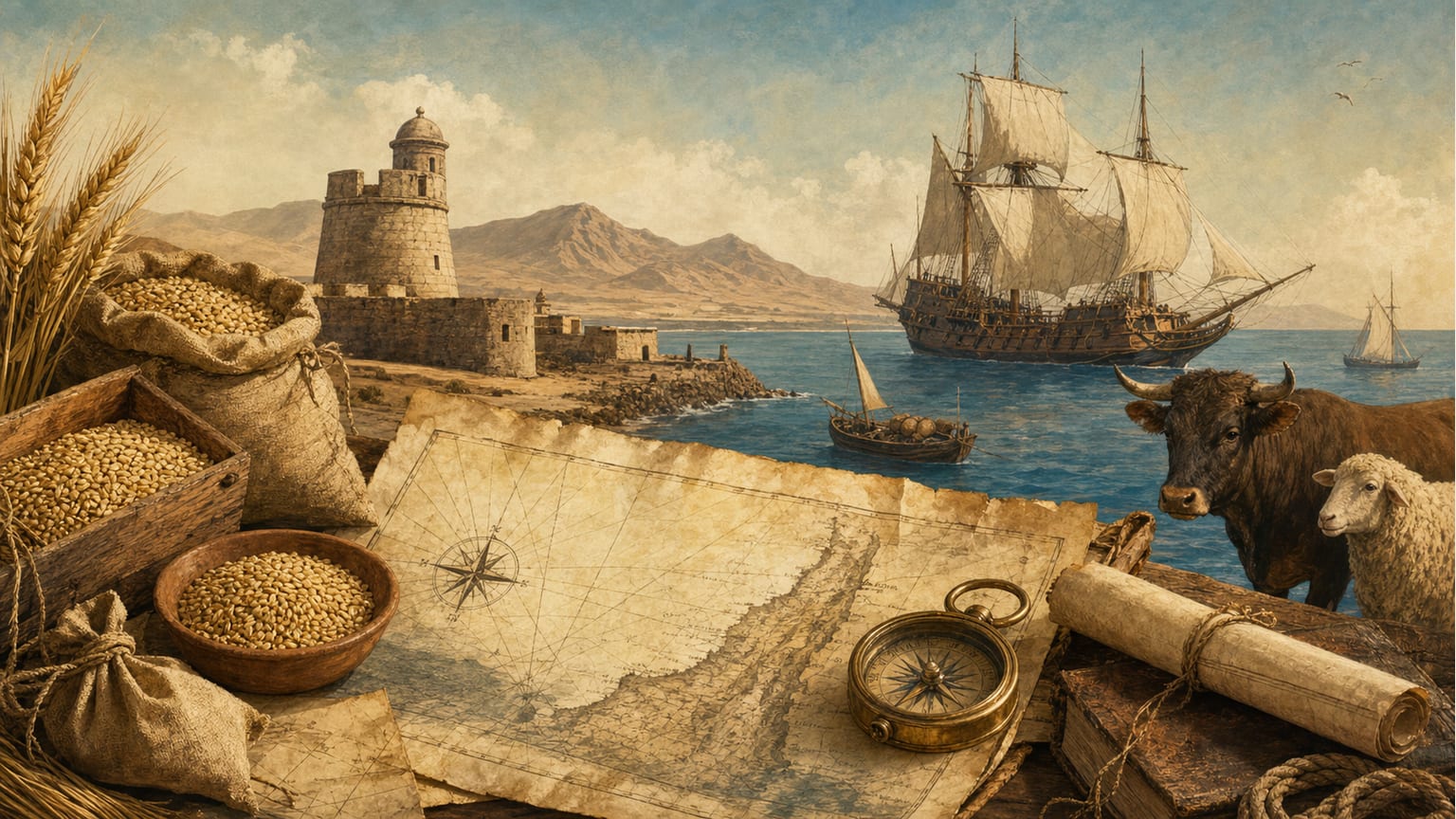
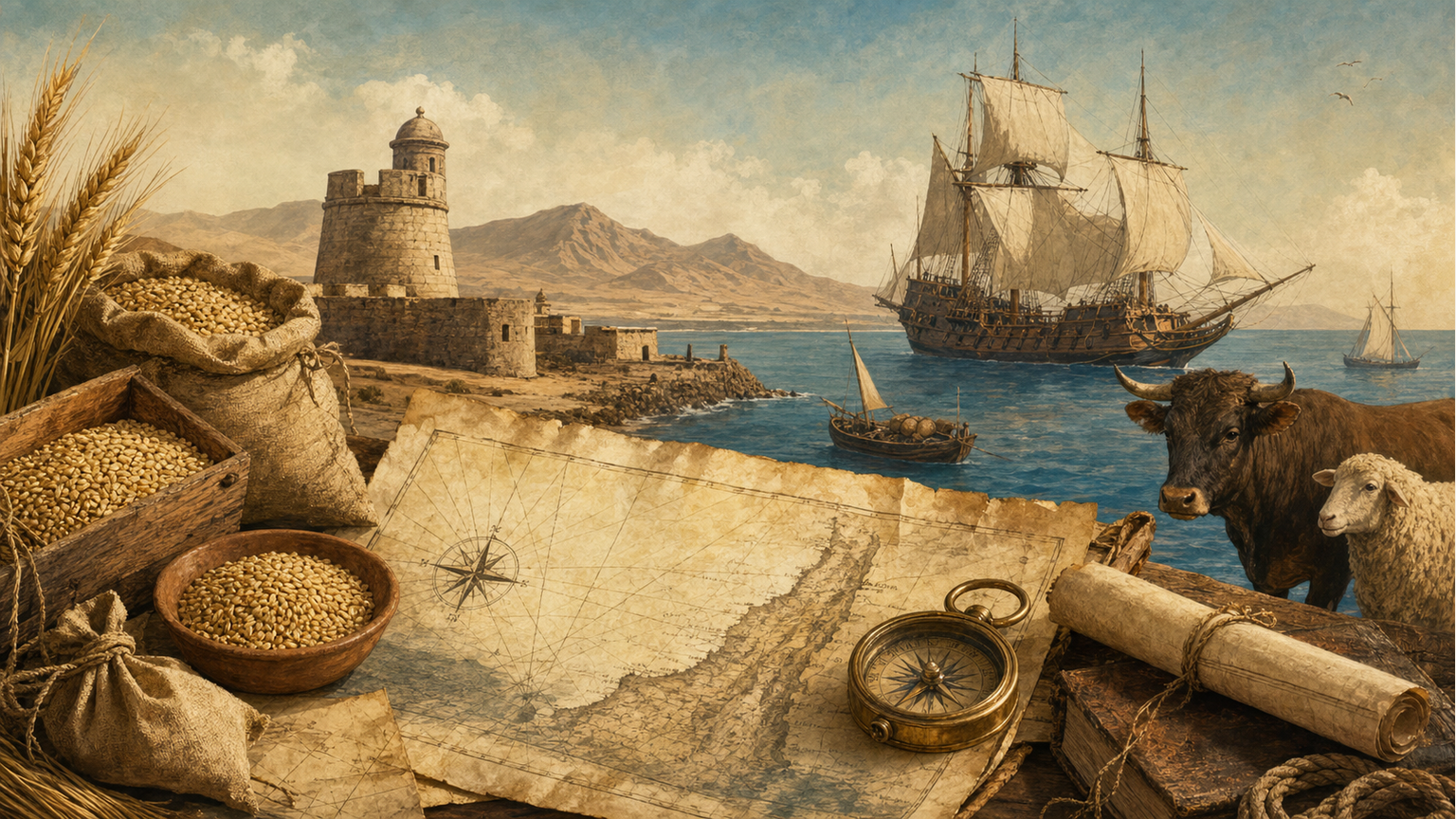
During the 17th century, Fuerteventura’s economy was closely linked to its function as a supplier of cereals and livestock to other islands in the Canary archipelago, particularly Tenerife and Gran Canaria. The source notes that while agriculture and livestock were the main economic pillars, the surplus from these activities gave rise to a third: trade, which was vital and complementary for the entire archipelago[1].
Exports of wheat and barley were fundamental, with Fuerteventura described as “the main granary of all the Canaries” by Viera y Clavijo[1]. The island also exported livestock, mainly goats, sheep, and camels, which supplied the municipal butcheries of Tenerife and Gran Canaria, as well as draft and working animals[1]. Another important product was orchilla, a lichen used for dye, which was in high demand, especially in Cádiz, the main European redistribution center for this product[1].
Most of Fuerteventura’s external trade did not go beyond the inter-island framework. According to the source, 92.6% of the registered vessels were destined for other Canary Islands, mainly Tenerife (71% of the ships), with the remainder heading to Madeira and the Spanish mainland[1]. This inter-island focus has been identified as a possible cause of the island’s underdevelopment, as its dependence on harvests made it vulnerable to climatic crises and famines, which sometimes halted trade for years[1].
Goods were shipped from various ports around Fuerteventura’s coast, including La Peña, Roque de Mascona, Tostón, Amanay, Herradura, Pozo Negro, Gran Tarajal, and others. This abundance of loading points allowed goods to be shipped close to production areas, facilitating transport[1].
Transport was carried out using ships, boats, pataches, frigates, and caravels, mostly of small tonnage and owned by residents of Tenerife and La Palma. Shipmasters and owners were usually outsiders, and the only person from Fuerteventura known to own a vessel was Captain and Sergeant Major Sebastián Trujillo Ruiz[1].
Trade was mainly controlled by merchants and agents from other islands, especially Tenerife and Gran Canaria, as well as ecclesiastical institutions and the lord of Fuerteventura. Local inhabitants generally limited themselves to selling cereals or livestock to these intermediaries, so the profits from trade mainly benefited outsiders[1].
Commercial operations were subject to strict controls, such as the requirement for shipmasters to provide guarantees that goods would reach their agreed destination and not be illegally exported outside the archipelago. Freight rates varied depending on the type of cargo and distance, and were sometimes paid in kind, especially for livestock[1].
In summary, Fuerteventura’s cereal and livestock trade in the 17th century was essential for the island and regional economy but was conditioned by climatic factors, dependence on external agents, and limited market diversification, contributing to the island’s vulnerability to subsistence crises[1].