

Introduction
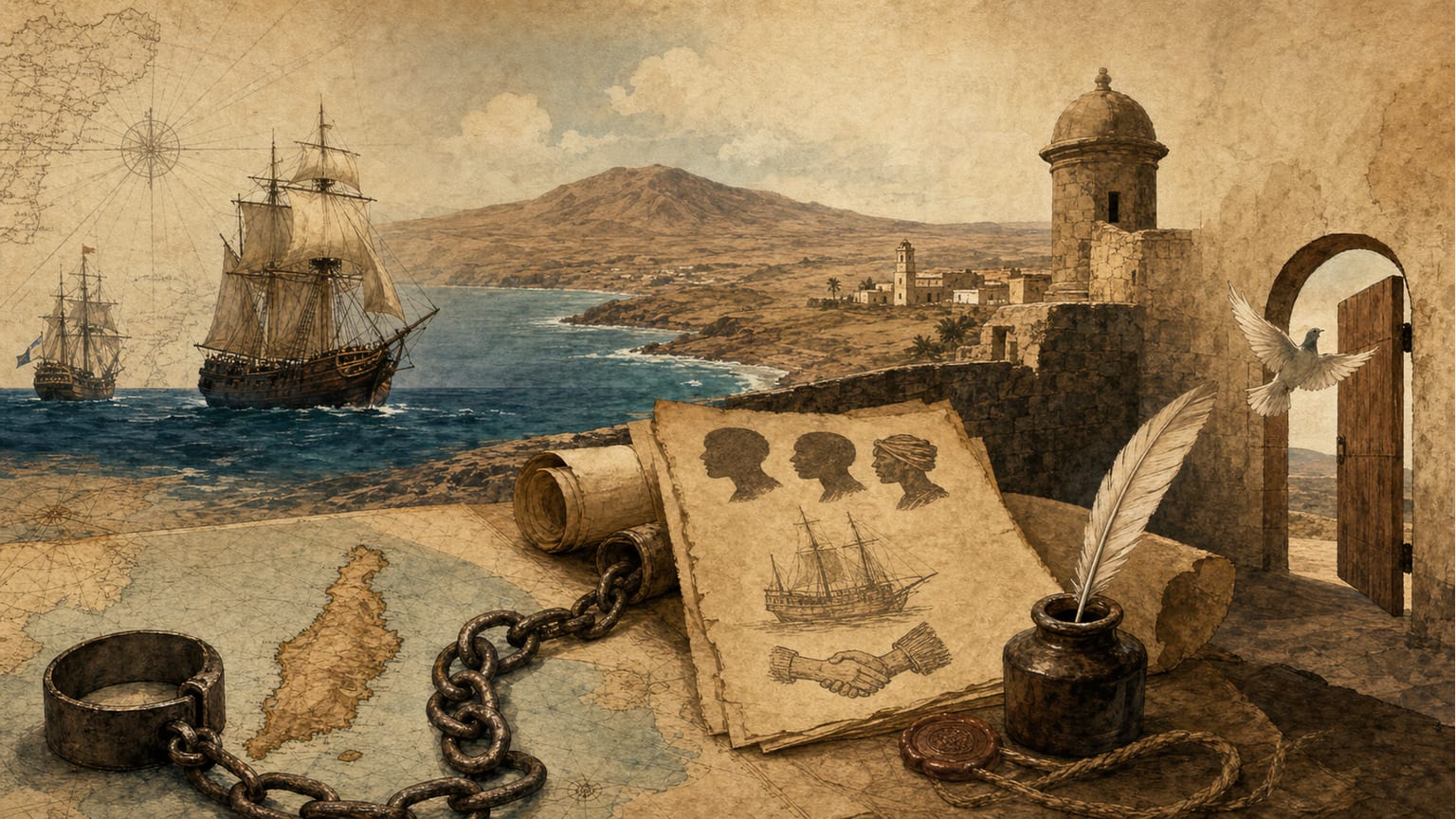
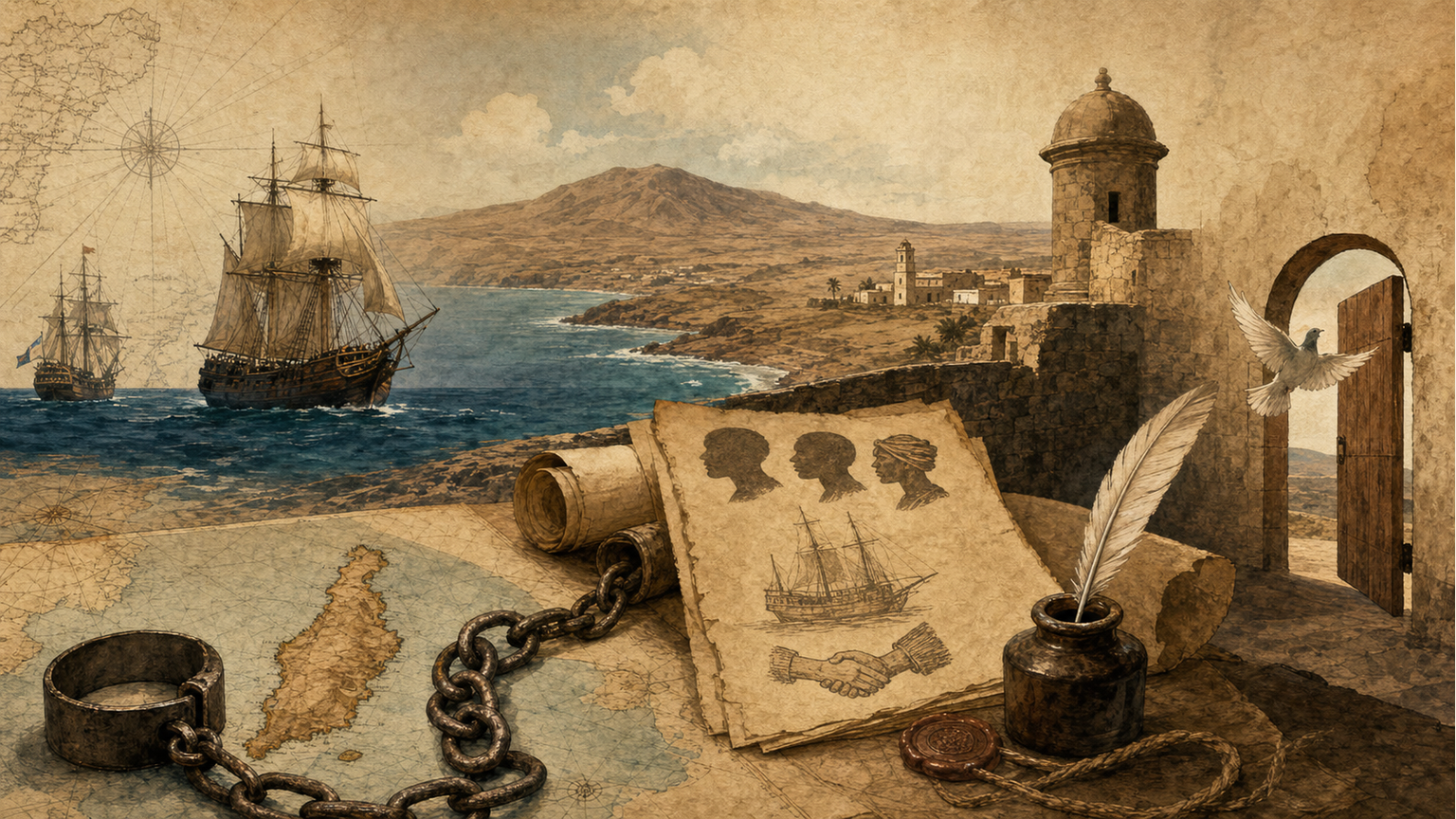
Slavery was deeply rooted in the Canary Islands, and Fuerteventura was no exception. During the 16th and 17th centuries, the island developed a particular dynamic regarding the origins of its slaves, the functioning of the slave market, and the processes of manumission, all of which can be reconstructed through notarial protocols and other documentary sources[1].
Origins of Slaves in Fuerteventura
The first significant enslaved population in Fuerteventura consisted of Moriscos, originating from the African coast. Since the early 15th century, raids in Berberia were documented to capture Moorish slaves, a practice initiated by figures such as Juan de Bethencourt and continued by the island’s lords. These expeditions were prohibited in 1572, although some were later authorized. By the end of the 16th century, most Moriscos had gained their freedom, and the main source of slaves shifted to the importation of black Africans from Madeira, Cape Verde, and other islands, primarily through Portuguese and Tenerife merchants[1].
The Slave Market: Operation and Characteristics
The slave market in Fuerteventura is mainly known through bills of sale, which detail the characteristics of the captives, their prices, ages, sex, and origin. Between the 16th and 17th centuries, black slaves were the most numerous, followed by mulattos and, to a lesser extent, Moriscos and whites. Males were preferred for agricultural and livestock work, while women were assigned to domestic service and valued for their reproductive capacity[1].
Slave prices ranged from 1,000 to 1,600 reales, varying according to age, sex, race, and the captive’s physical condition. Children and the elderly were less valuable, while young women could fetch higher prices, especially for their reproductive potential. Payment could be made in cash or in kind, such as wheat, barley, or livestock[1].
The main slave owners were the island lords, Cabildo members, military officers, and clergy, although some local residents also acquired slaves according to their means. Sellers were mostly outsiders, especially merchants from Tenerife, Gran Canaria, and Portugal, seeking meat and cereals in exchange for captives[1].
Manumission and Freedom
Freedom was the ultimate goal for many slaves, who could obtain it through a letter of manumission, testamentary clause, or by paying a ransom. Approximately 24% of the documented slaves in the 17th century were freed, with women and children being the main beneficiaries, often due to family ties with their owners. The conditions of manumission varied: some were unconditional, others imposed service to heirs or the fulfillment of religious obligations[1].
Sometimes, freedom was obtained by paying an agreed sum, financed by relatives or by the slave’s own earnings. However, not all achieved manumission; some remained enslaved until death or were sold elsewhere in the archipelago[1].
Conclusion
The study of slavery in Fuerteventura during the 16th and 17th centuries reveals a complex reality, marked by the diversity of slave origins, the dynamics of the slave market, and the different paths to freedom, all documented in the notarial records of the period[1].