

Trade between Lanzarote and Madeira in the Early Modern Period
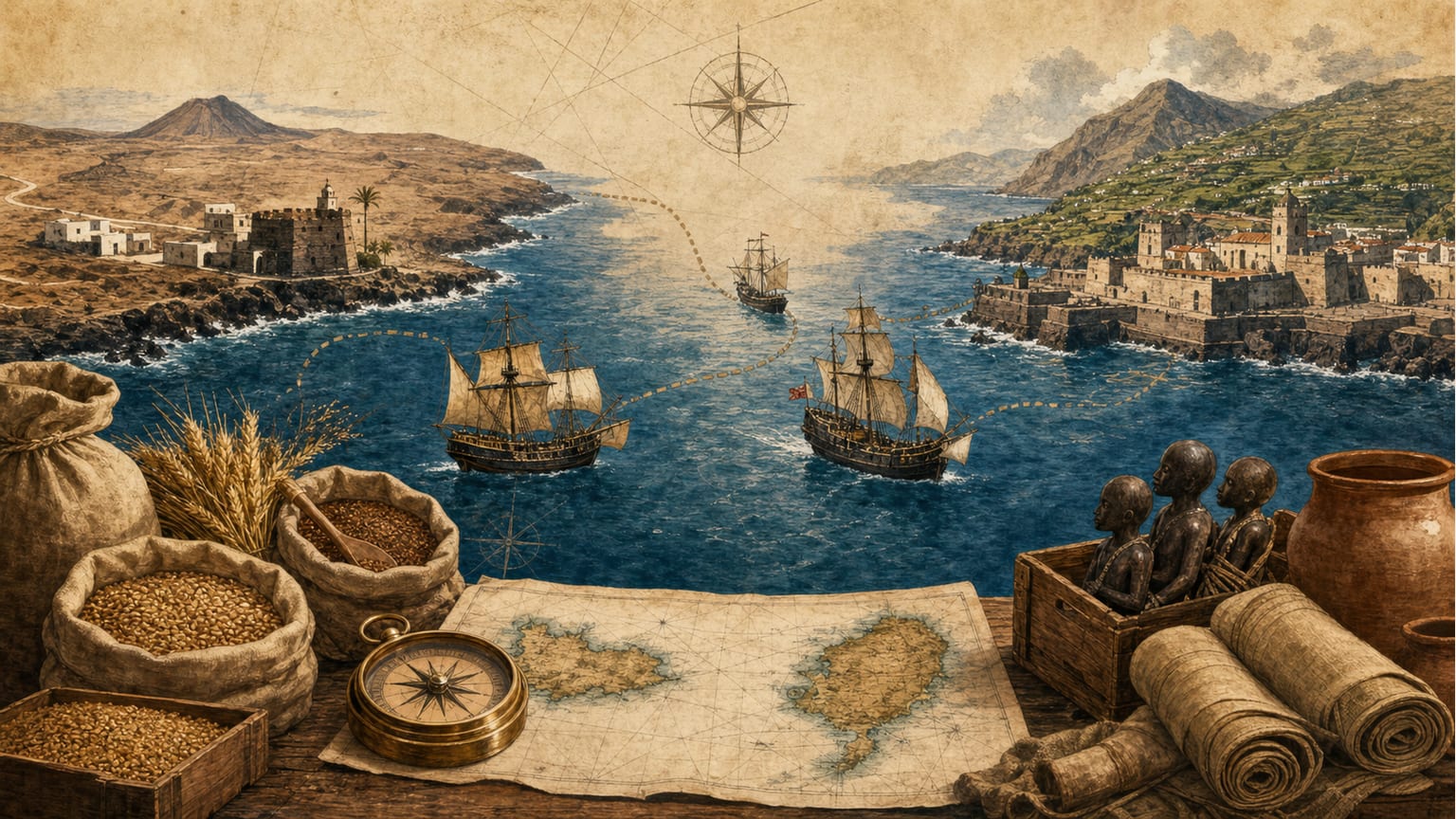
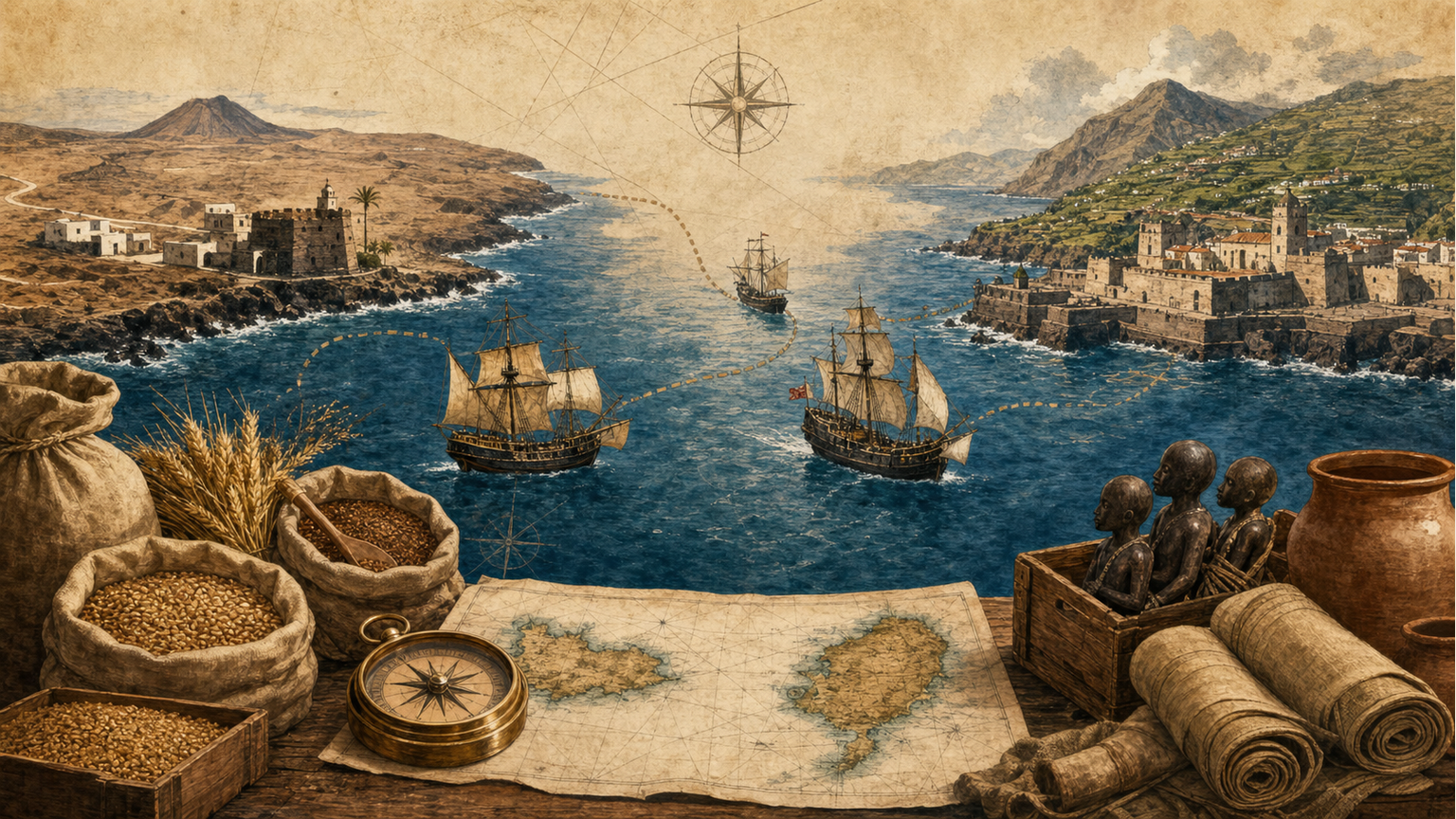
The commercial relationship between Lanzarote and the Madeira archipelago was a key element of the island’s economy during the 16th and 17th centuries. This trade was based on complementarity, with both territories exchanging products according to their needs and surpluses [1].
Geographical proximity facilitated contact, as the journey between Lanzarote and Madeira could be completed in just two days by sea. Furthermore, European ships traveling through the Atlantic often stopped in Madeira before reaching the Canary Islands, which encouraged the exchange of goods between the archipelagos [1].
One of the main exports from Lanzarote to Madeira was cereal, especially wheat and barley. The expansion of sugarcane cultivation in Madeira during the 15th century reduced the area available for cereal crops, making the island dependent on imports from the Canaries. Studies show that between 1550 and 1640, two-thirds of the cereal imported by Madeira came from the Canaries, with Lanzarote playing a particularly prominent role. In the 17th century, Lanzarote supplied up to 77.5% of Madeira’s cereal imports, while Fuerteventura contributed 14.1% [1].
Trade was not limited to cereals. Another central product was the black slave. Since the 15th century, the Castilian islands supplied indigenous slaves to Madeira, and later, Madeira became a source of slaves for Lanzarote and Fuerteventura due to its strategic position in the African slave market. Although the exact number of slaves re-exported is unknown, documentary evidence confirms this trade. For example, between 1619 and 1643, Madeira sent 44 slaves to the Canaries, 43 of whom went to Lanzarote [1].
Lanzarote’s acquisition of slaves was influenced by availability and proximity. However, Lanzarote’s subsistence agriculture did not require large numbers of slaves, so many were employed in domestic service and as status symbols among the elite, such as the Marchioness of Lanzarote, who owned up to 25 slaves [1].
Besides cereals and slaves, the trade included livestock, cheese, hides, and orchilla (a lichen used for dye), exported from Lanzarote and Fuerteventura to Madeira. In return, Lanzarote imported wine, honey, sumac for tanning, and various haberdashery and clothing items from Madeira, although the most sought-after product remained the black slave [1].
The documentary sources for this trade are fragmentary due to the loss of historical archives from attacks and disasters, but notarial protocols and some customs records have allowed researchers to quantify and characterize these relations. Trade between Lanzarote and Madeira exemplifies the integration of Atlantic archipelagos into a regional economic system, where resource complementarity and geographical proximity were essential for economic development during the Early Modern period [1].