

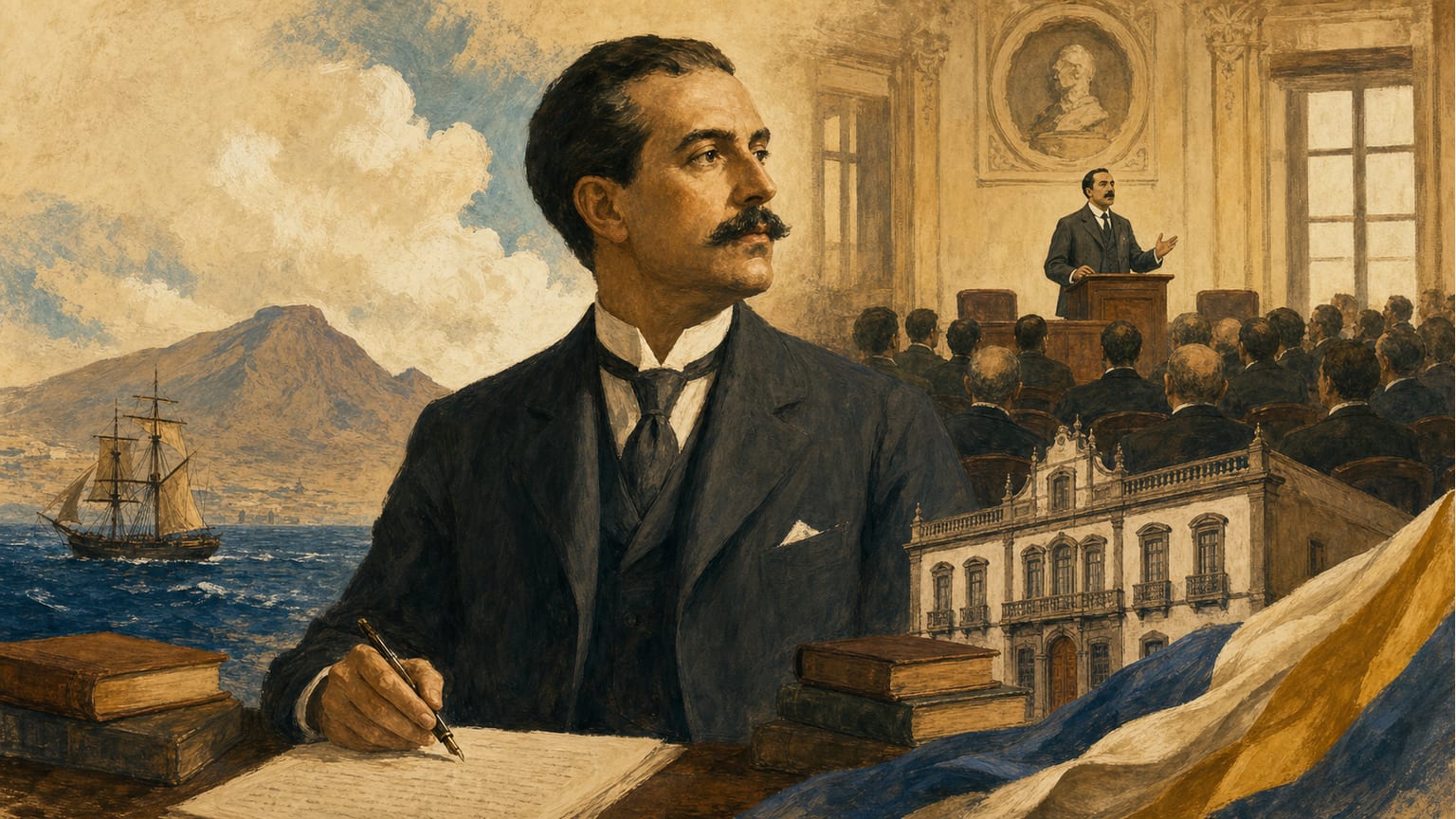
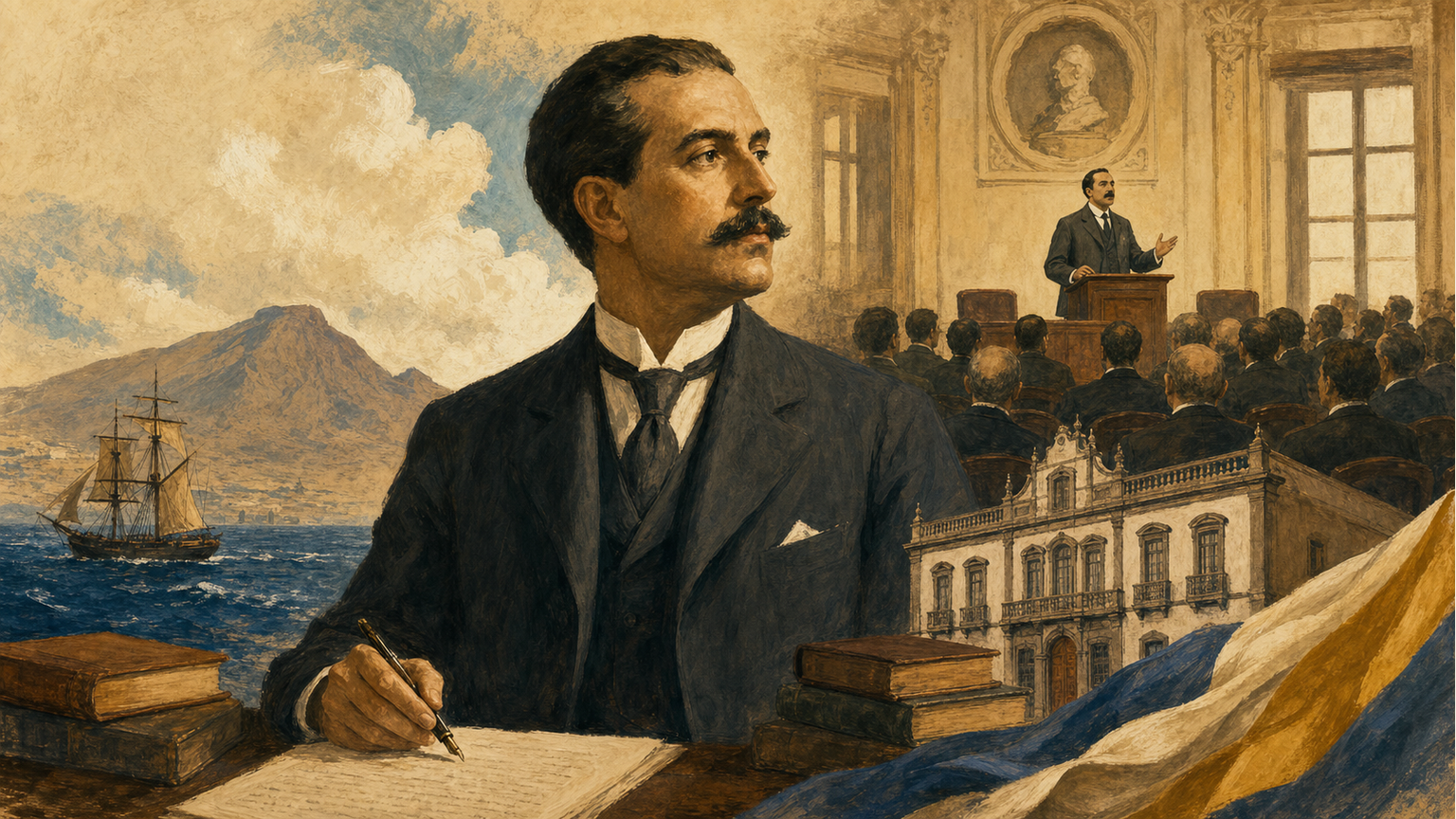
In July 1906, the journalist Leoncio Rodríguez González delivered a lecture titled “El Regionalismo Canario. Bosquejo histórico-social” at the Ateneo de La Laguna. According to Nicolás Reyes González, this event marked a significant moment in the debate about Canarian identity and autonomy during the transition from the 19th to the 20th century [1].
Rodríguez argued that regionalism was essential for awakening the Canarian people and strengthening local civilization. He described regionalism as “a nucleus of latent energies that, properly channeled, must strengthen the block of our civilization.” He further asserted that, in Spain and particularly in the Canary Islands, regionalism was an “urgent necessity” and a “foreseeing and saving measure” for the social and political life of the archipelago [1].
Rodríguez maintained that regionalism did not represent “thinly veiled aims of national disunity nor an antiquarian endeavor,” but was rooted in national consciousness and the history of Spanish regions, which had enjoyed autonomous life and federation compatible with the nation’s growth [1].
He advocated for a plurinational vision of the Spanish state, supporting a federal and republican structure that respected the diverse nationalities and regions. Rodríguez criticized the centralist bureaucracy, which he believed hindered political life, and stated that Spanish provinces, including the Canary Islands, wished to “live in full possession of our energies, our rights, our forgotten traditions,” but not as “pariahs, enslaved by caciques and merchants” [1].
In his lecture, Rodríguez evoked the islanders’ past as a source of regionalism, referencing the chronicles of the conquest and the life of the early inhabitants, whom he described as a “model of strength, loyalty, and selflessness” living in a “happy republic, free from hatred, vanities, and pomp” [1].
The lecture had an immediate impact on the Tenerife press, especially in the newspaper El Progreso, which promoted the spread of regionalist ideas and the creation of a group dedicated to administrative and economic autonomy for the Canary Islands. According to the source, El Progreso’s journalists conducted a survey among island personalities to gather opinions on regionalism and autonomy, reflecting the diversity of views within the archipelago [1].
Thus, Leoncio Rodríguez’s role is central to the early 20th-century debate on Canarian regionalism, advocating for autonomy compatible with national unity and highlighting the value of island identity as a driving force for social and political progress in the Canary Islands [1].