

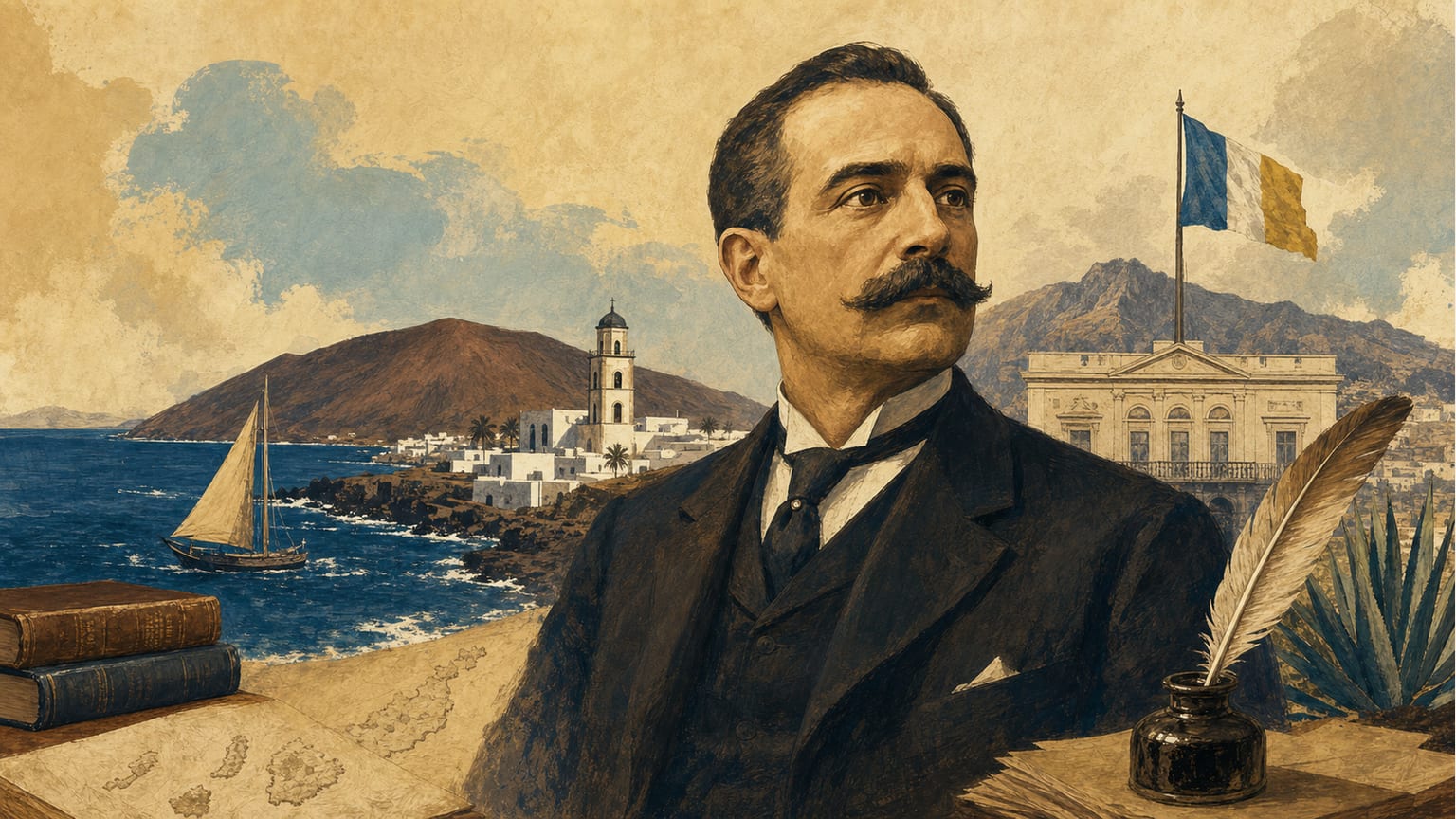
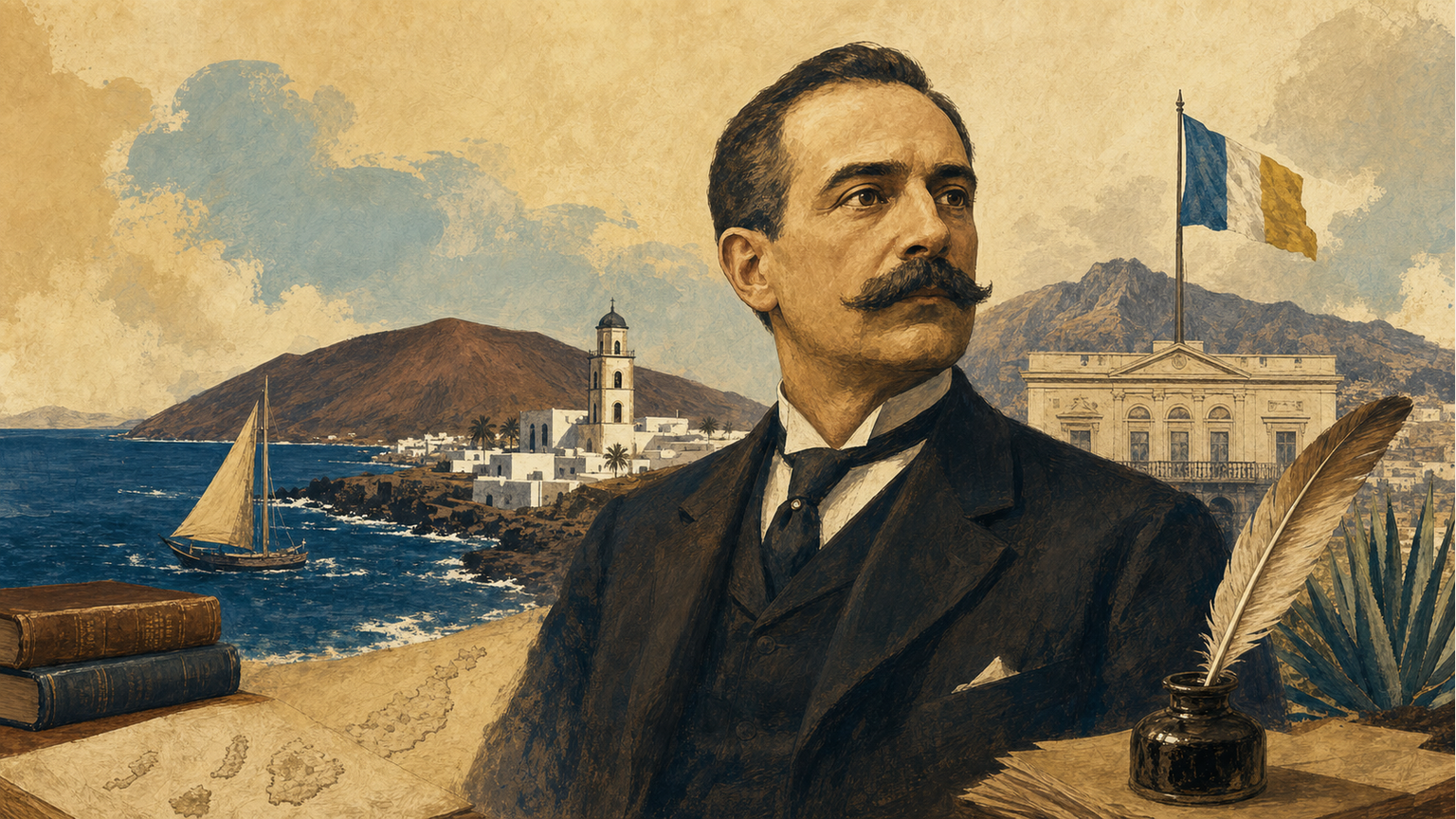
Benito Pérez Armas is highlighted by Nicolás Reyes González as one of the notable figures from Lanzarote who contributed to the historical memory of the Canary Islands, particularly during the 19th and 20th centuries[1]. According to the source, these individuals played a significant role in shaping Canarian identity and were instrumental in the emergence of regionalism within the archipelago[1].
Pérez Armas was born in Lanzarote in the 19th century and, like several of his peers, had a career that spanned both politics and culture. Reyes González includes him among the “conejeros”—natives of Lanzarote—whose contributions deserve to be remembered and studied in their historical context[1]. Alongside other figures such as José Betancort Cabrera (Ángel Guerra) and Manuel Déniz Caraballo, Pérez Armas was actively involved in debates about autonomy, regionalism, and Canarian identity during a period marked by tensions between centralist policies and island aspirations[1].
The environment in which Benito Pérez Armas operated was characterized by institutional neglect of the Canary Islands throughout much of the 19th century, as well as by British economic dominance, which shaped the political and social life of the islands[1]. In this context, the work of figures like Pérez Armas was crucial in articulating proposals for autonomy and the defense of insular rights.
Reyes González points out that most of the individuals who left a lasting mark on Canarian collective memory excelled in fields such as politics, literature, culture, or journalism, and that some, like Pérez Armas, remained on their native island, while others emigrated and later returned to enrich island life with their experiences[1].
The author also emphasizes the importance of collaboration among researchers from different islands to reconstruct the historical and biographical memory of these figures, noting that collective work is essential to understanding the impact of personalities like Benito Pérez Armas on Canarian history[1].
In summary, Benito Pérez Armas exemplifies, according to the source, the role played by Lanzarotean intellectuals and politicians in building Canarian identity and regionalism during the transition between the 19th and 20th centuries, making his study essential for understanding the political and cultural evolution of the archipelago in that era[1].