

Emigration of Notable Lanzarote Figures (19th–20th Centuries): Destinations and Contributions
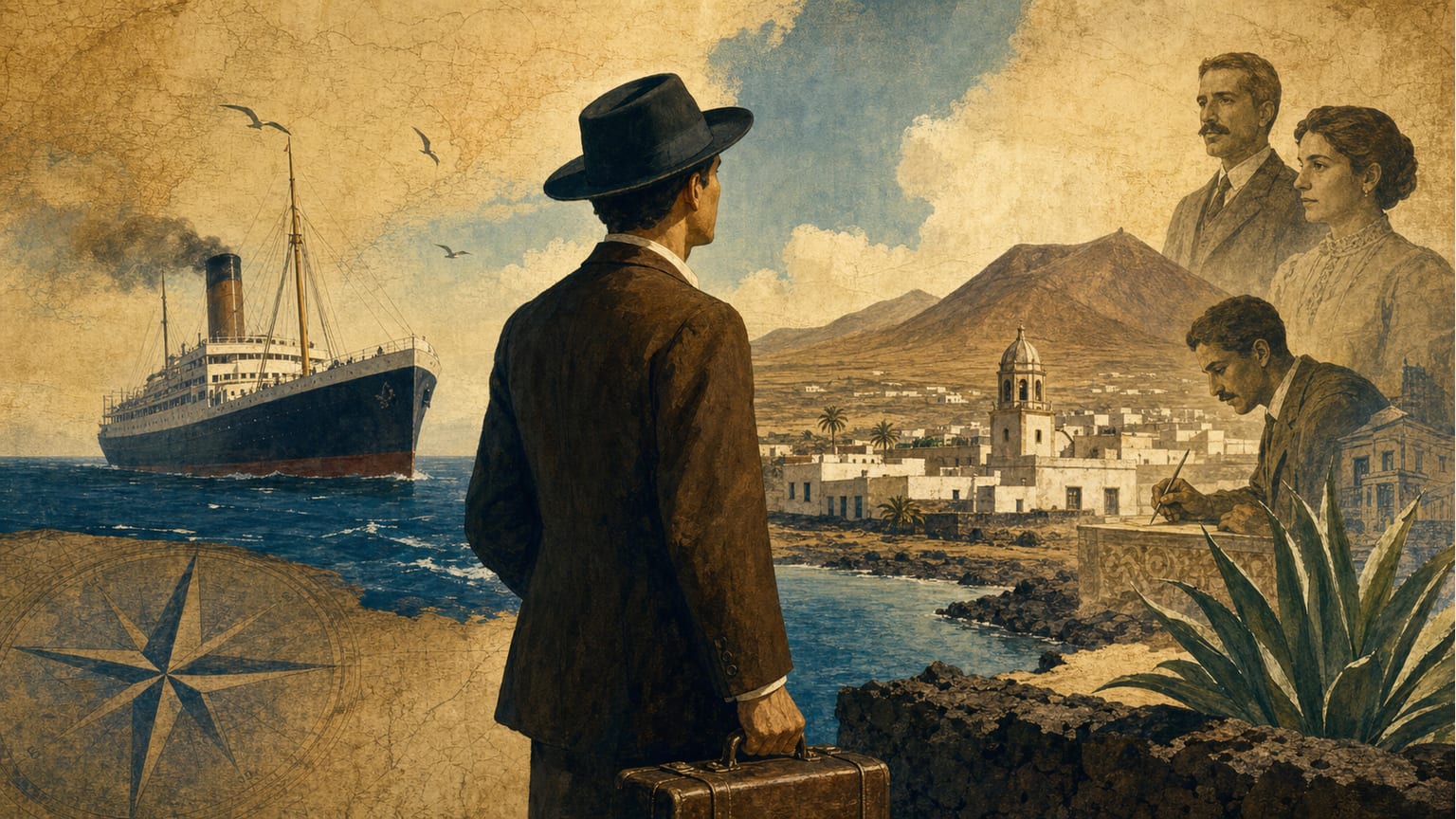
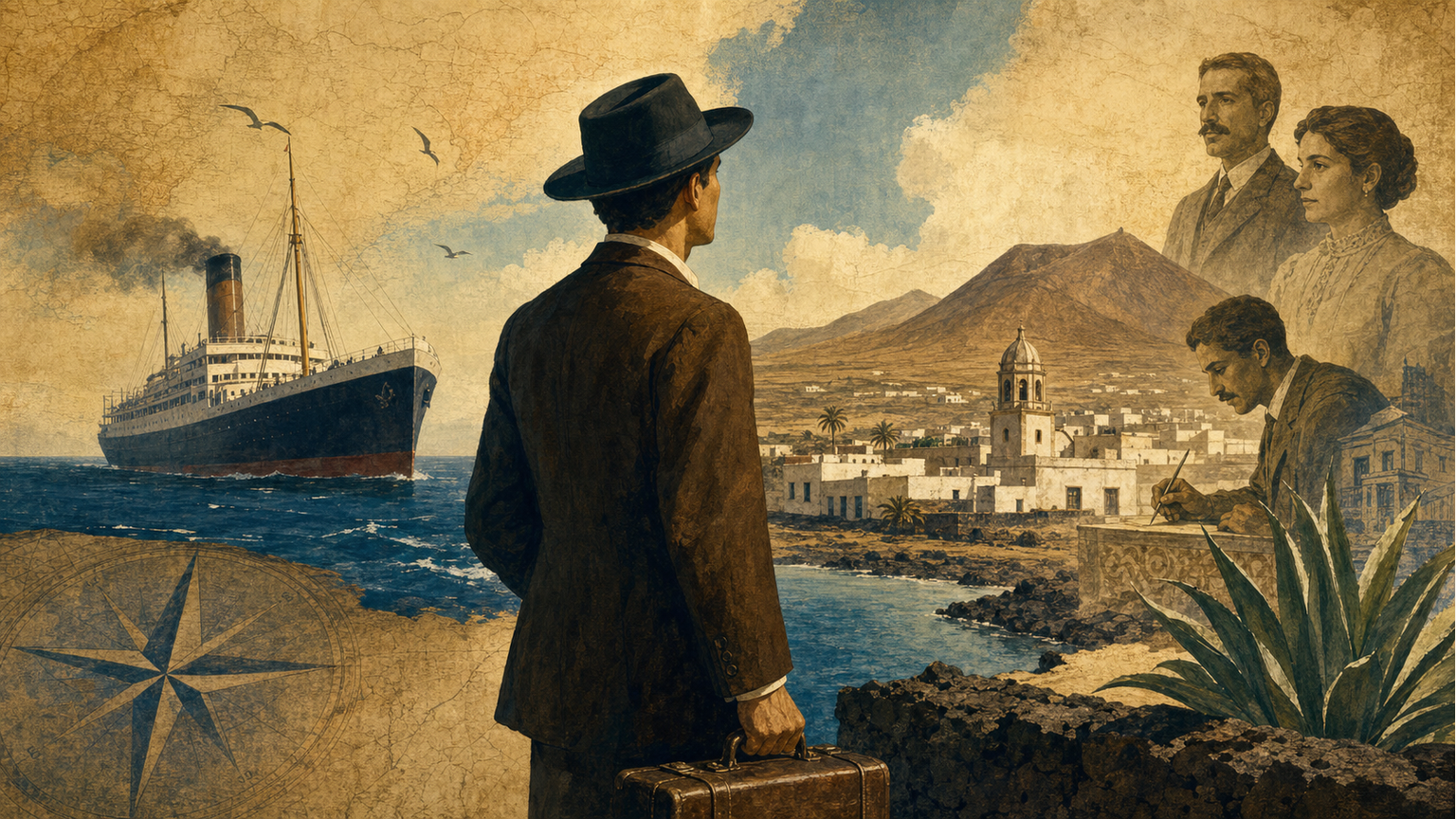
The phenomenon of emigration significantly shaped the lives of many historical figures born in Lanzarote during the 19th and 20th centuries. According to Nicolás Reyes González, many of these individuals, after distinguishing themselves in fields such as politics, culture, literature, or journalism, left their native island in search of new experiences and cultural encounters, mainly heading to Europe or America [1].
The author notes, “Algunos permanecieron en su isla natal, otros se fueron a otra isla o emprendieron viajes a otros países más alejados en busca de otras experiencias y vivencias culturales. Su emigración tiene variados destinos situados principalmente en Europa o América” [1]. This mobility involved not only physical separation but also an exchange of ideas and knowledge that, in many cases, enriched Lanzarotean society upon their return.
In some cases, the absence was prolonged, while others never returned to the islands. However, those who did return made valuable contributions to the development of Lanzarote, living among their fellow islanders until the end of their lives [1]. The memories, affections, and connections with their homeland remained alive, both among forced and voluntary emigrants.
The study highlights, “como siempre sucede con una considerable mayoría de nuestros emigrantes, los forzados y los voluntarios, se mantuvieron vivos sus recuerdos, afectos y vinculaciones con cada uno de sus ámbitos insulares, así como, podemos también detectar las peculiaridades de sus islas que se han transferido al exterior o las aportaciones culturales que se han incorporado tras su regreso” [1].
Among the Lanzarote figures who experienced emigration are José Betancort Cabrera (Ángel Guerra), Manuel Déniz Caraballo, Benito Pérez Armas, Isaac Viera y Viera, the Zerolo Herrera brothers, and Francisco Fernández de Bethencourt [1]. Many were born in the 19th century and died in the 20th, either on the island or abroad, and their migratory paths influenced the shaping of contemporary Canarian identity.
The migratory phenomenon also affected Lanzarotean women, albeit to a lesser extent and with little presence in positions of political, business, or scientific responsibility [1].
In conclusion, the emigration of Lanzarote figures during the 19th and 20th centuries was not only a search for opportunities and experiences but also enabled the transfer of knowledge and values that enriched the island’s cultural and social life over time [1].