

The historical memory of the Canary Islands has often overlooked the contributions of women, especially in official narratives. In his research, Nicolás Reyes González focuses on recovering the stories of women from Lanzarote who played significant roles in the island’s cultural life during the transition from the 19th to the 20th century, yet have remained largely unrecognized by traditional historiography [1].
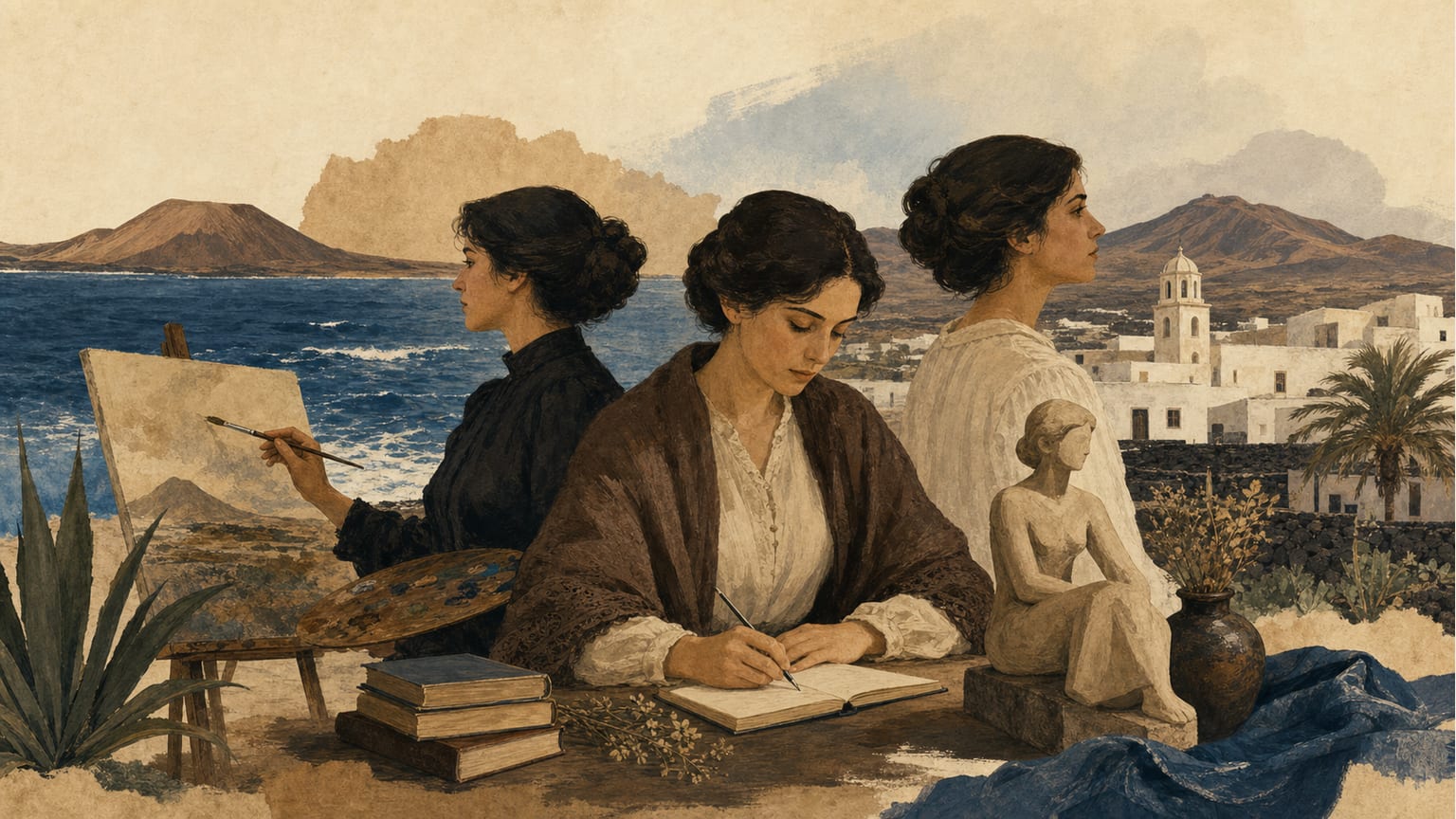
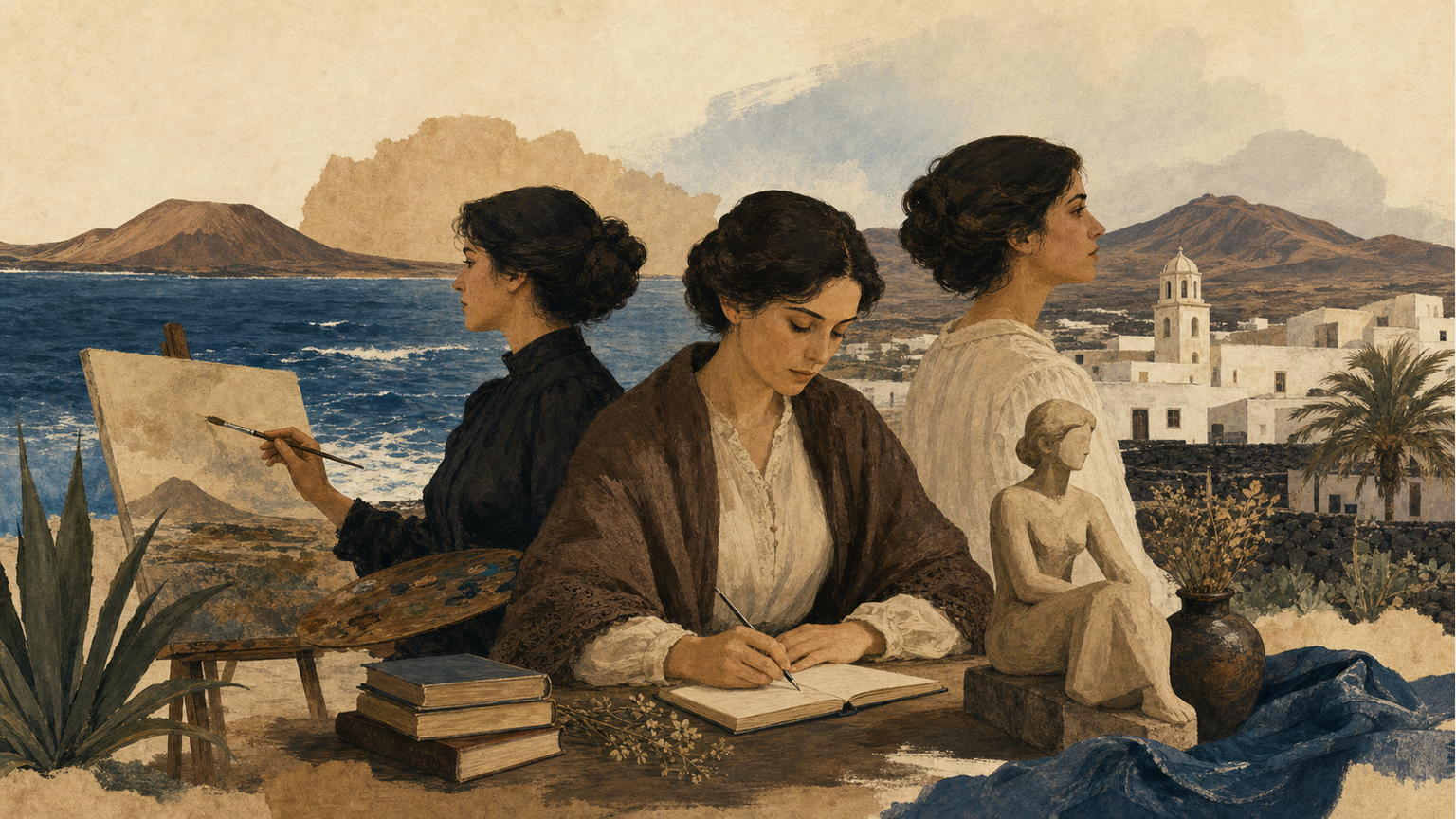
Reyes González highlights several women born in Teguise who stood out in the arts. The Spínola Bethencourt sisters—Dominga (1802-1876), Francisca (1806-1895), and María Rosa (1817-1895)—excelled in painting, sculpture, and literature, respectively. Their achievements illustrate the presence of women in creative fields at a time when female participation in public life was highly restricted [1].
Another notable figure is the painter Catalina Vega Spínola (1823-1913), also from Teguise, whose work was acknowledged in local publications such as El Guanche in 1945. She is joined by Esperanza Spínola Ramírez (1891-1964), also a painter, and the writer Inocencia Aldana Lorenzo (1897-1981), both from the same town [1].
In the island’s capital, Arrecife, the poet Candelaria García Hervás (1832-1879) is mentioned as a representative of Lanzarote’s female poetic tradition. Additionally, in the hamlet of Conil in Tías, Candelaria García Hervás is also recognized, although the source repeats the name, suggesting the need for further research to clarify these authors’ identities and works [1].
Despite their cultural significance, the author notes that no examples were found, in this preliminary survey, of women holding positions of responsibility in politics, business, or science in Lanzarote during this period. This absence reflects the social and structural limitations faced by women at the time, restricting their access to positions of power and decision-making [1].
The recovery of these female figures is part of a collective effort to reconstruct the island’s historical memory. Studying their lives helps us better understand the role of women in Lanzarote’s culture and enriches the historical narrative of the Canary Islands by bringing to light contributions that have long remained outside academic focus [1].