

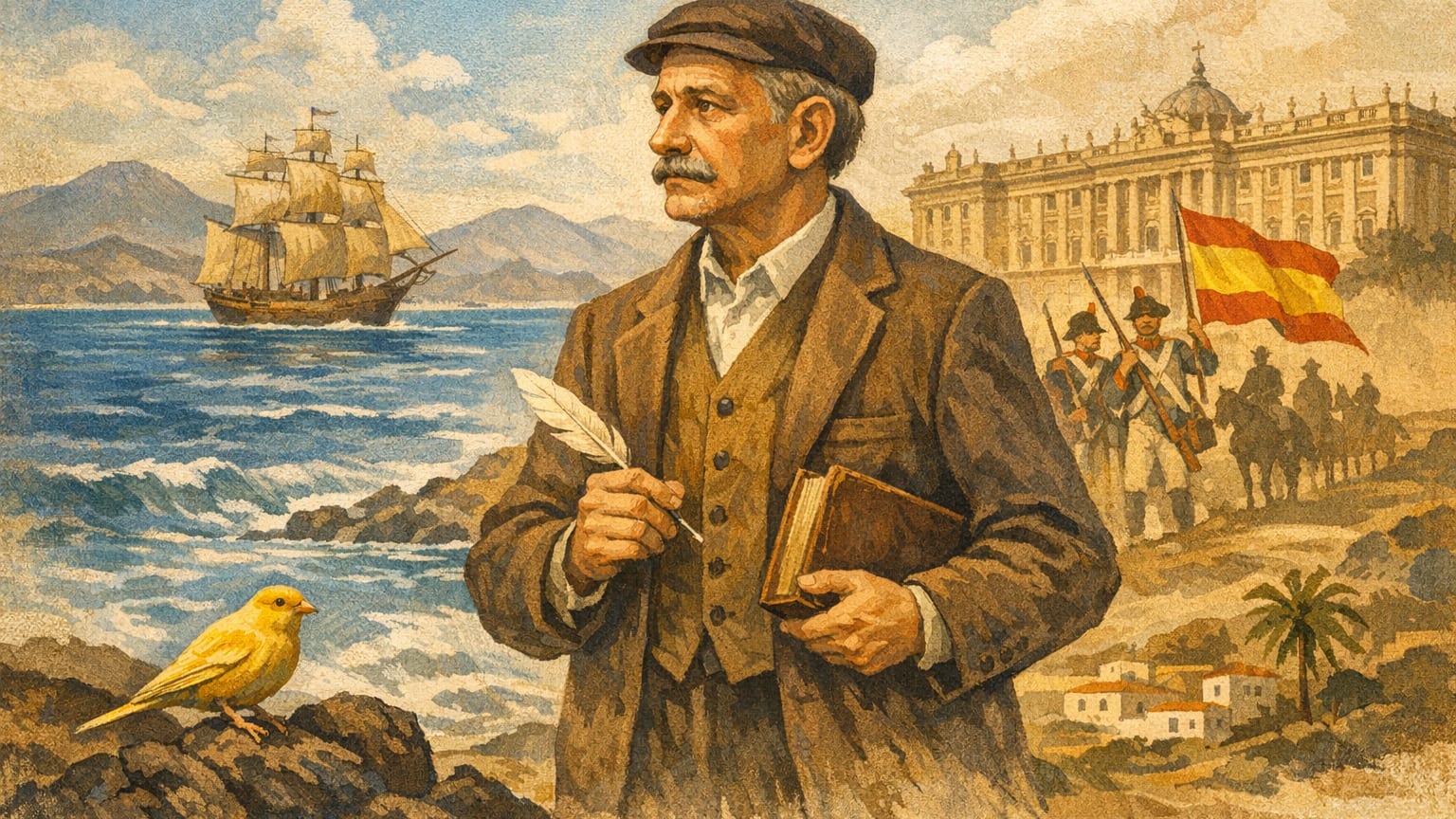
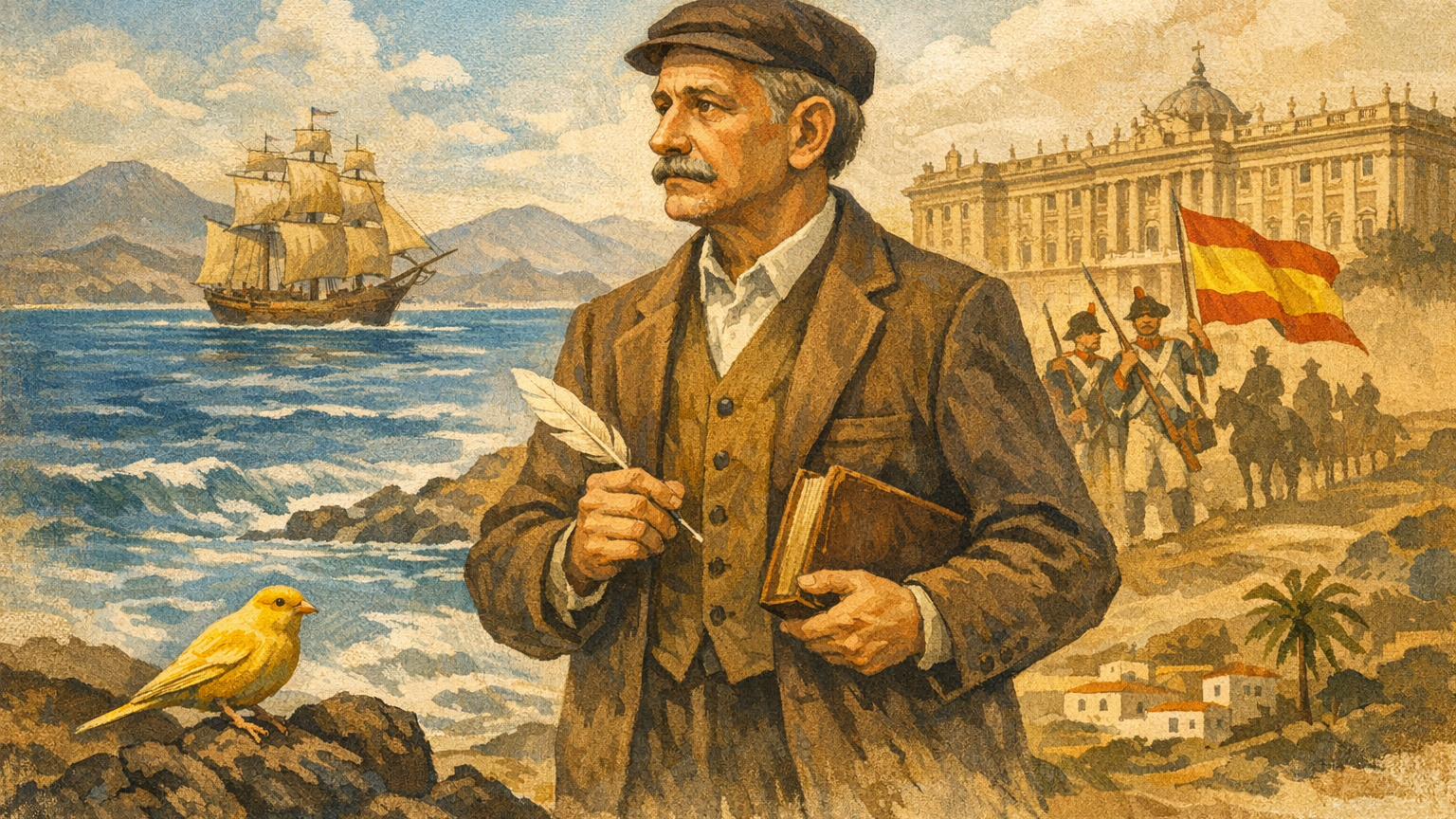
Benito Pérez Galdós’ Episodios Nacionales stand as a monumental literary chronicle of Spain’s turbulent 19th century. Yet, for readers seeking traces of the Canary Islands or its people, the novels present a curious restraint: Galdós, himself a native of Las Palmas, seldom mentions Canarian characters, and when he does, it is with remarkable subtlety[1].
This deliberate scarcity is no accident. As Javier Campos Oramas explains, Galdós established a tacit rule to avoid references to the Canary Islands, its people, and its geography unless absolutely necessary—such as the Numancia’s circumnavigation or the presence of exiled generals before the 1868 revolution[1]. Why this silence? Campos Oramas suggests that Galdós feared rekindling personal memories and anxieties tied to his early years in the islands, especially those involving family and youthful heartbreak.
When Canarian characters do appear, Galdós treats them with notable brevity, in stark contrast to the rich detail he lavishes on other figures. Francisco Monteverde León-Huerta, for instance, is portrayed as a discreet conspirator and friend of General Prim, with little exploration of his military exploits or personal life. Similarly, José Plácido Sansón Grandy—a romantic poet and Galdós’ friend—features more as an anecdotal presence than a historical protagonist[1].
Fernando de León y Castillo, one of the most prominent Canarian politicians, receives only two explicit mentions, with Galdós even omitting his island origins. The same pattern holds for Luis Francisco Benítez de Lugo, Marquis of La Florida, and Antonio Matos Moreno, whose appearances are brief and typically tied to moments of political upheaval.
This approach may reflect Galdós’ pursuit of literary objectivity, but it also reveals a personal tension between his Canarian identity and his role as a national chronicler. In his later Memorias de un desmemoriado, Galdós appears to reconcile with his island past, recalling friendships and memories he had previously avoided[1].
Thus, the subtle presence of Canarians in the Episodios Nacionales not only highlights Galdós’ narrative priorities but also the complexities of his relationship with the Canary Islands—a land ever present in his memory, if seldom at the forefront of his fiction.