

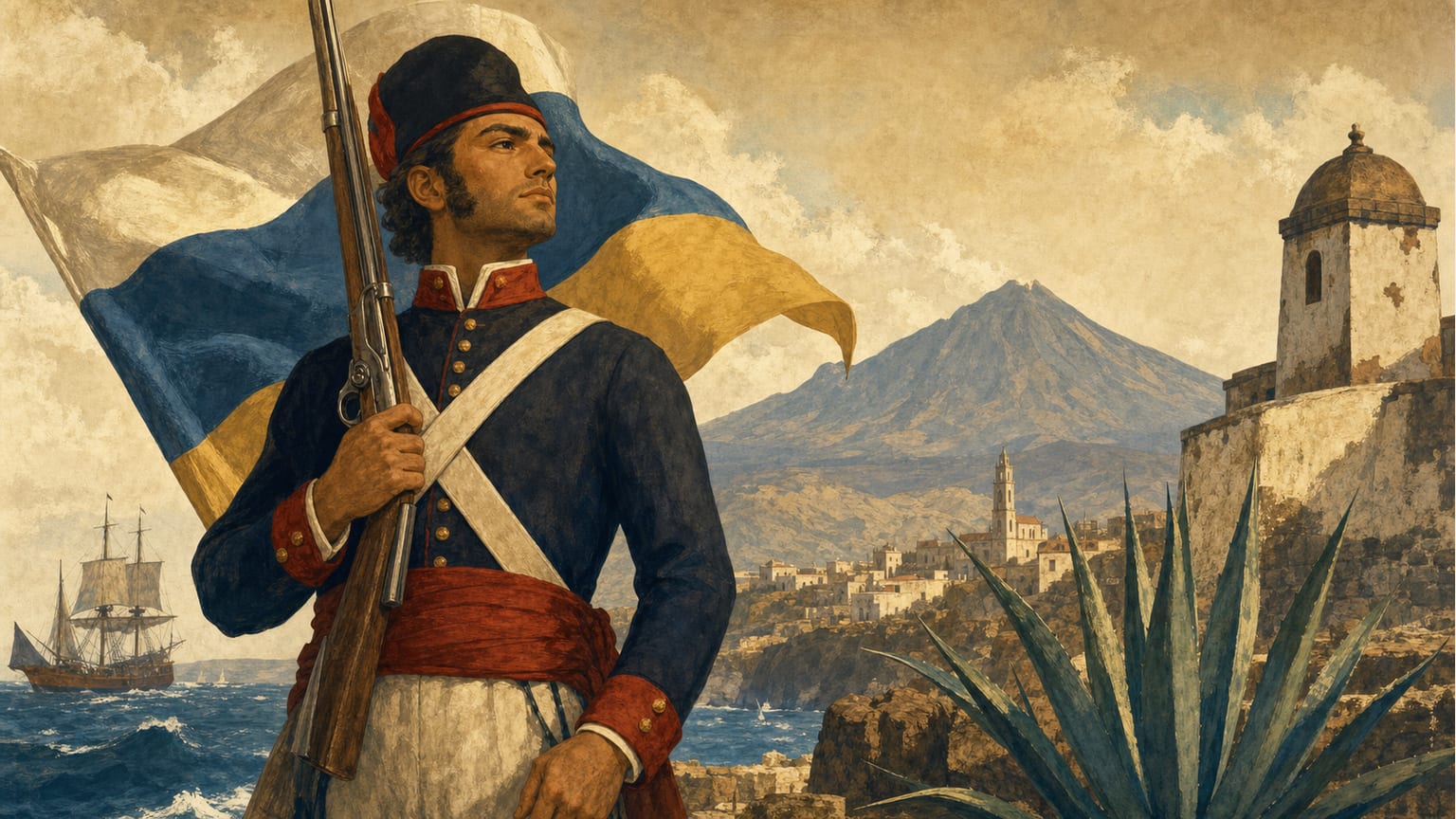
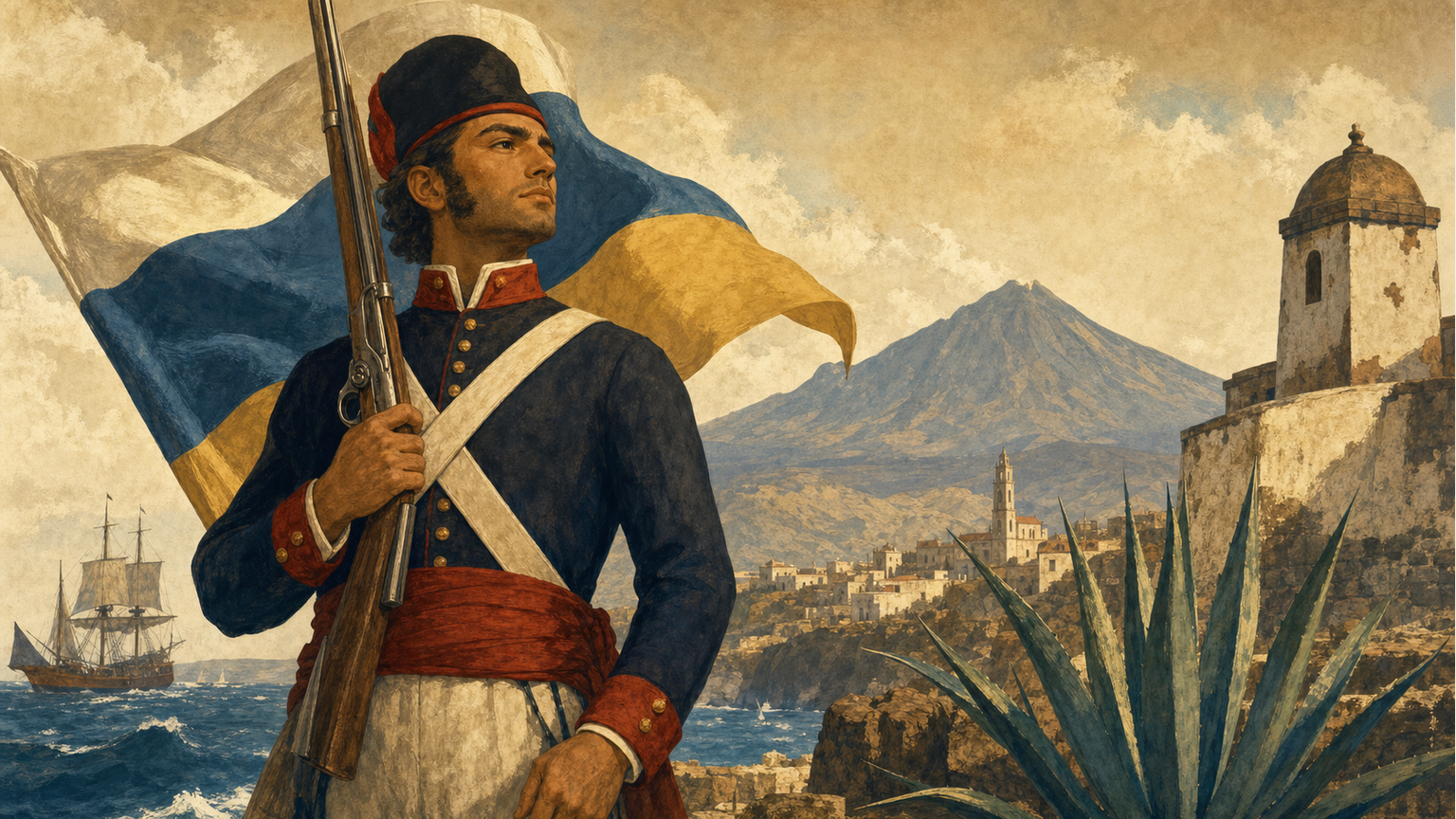
The Canary Militias are among the most distinctive institutions in the history of the archipelago, with origins dating back to the 15th century and a trajectory that deeply marked Canarian identity well into the 20th century [1]. Unlike the national militias that emerged in 19th-century Spain, the Canary Militias were more similar to the municipal militias of late medieval Castile, giving them a unique and differentiated character [1].
According to Nicolás Reyes González, the suppression of the Canary Militias began in 1886 under General Weyler, who implemented a new regulation that integrated their officers into the active infantry and, in part, into the newly created Canary Territorial Army [1]. These reserve battalions were later eliminated in 1903, leaving only a territorial reserve defined by the regulation of October 25, 1907, which was declared extinct from 1918 onwards [1].
The demand for the restoration of the Canary Militias appeared repeatedly in the archipelago’s autonomist and regionalist movements. Whenever autonomy for the Canary Islands was discussed, the restoration of the Militias was among the most important demands, as they represented a unique and exclusive feature of Canarian identity [1]. This institution was seen as a symbol of self-government and local defense, in contrast to the arrival of the Guardia Civil, which was not established in the islands until 1899, replacing the Provincial Guard [1].
In 1906, the Tenerife newspaper El Progreso published an unsigned article advocating for military regionalism, proposing that troops should be exclusively Canarian and their function limited to the defense of the archipelago: “…hemos de expresar nuestra tendencia de que la tropa sea exclusivamente canaria, sin obligación de salir del archipiélago a operaciones de campaña ni a ninguna otra función, quedando reducido a defender la patria y bandera española solo en la región en que ha nacido” [1].
The importance of the Canary Militias in collective memory and in the development of regionalism is reflected in their constant presence in autonomy debates and in the demand for local institutions as fundamental elements of Canarian identity. Their disappearance was perceived as a loss of autonomy and uniqueness, explaining their prominent place in the historical memory of the archipelago [1].