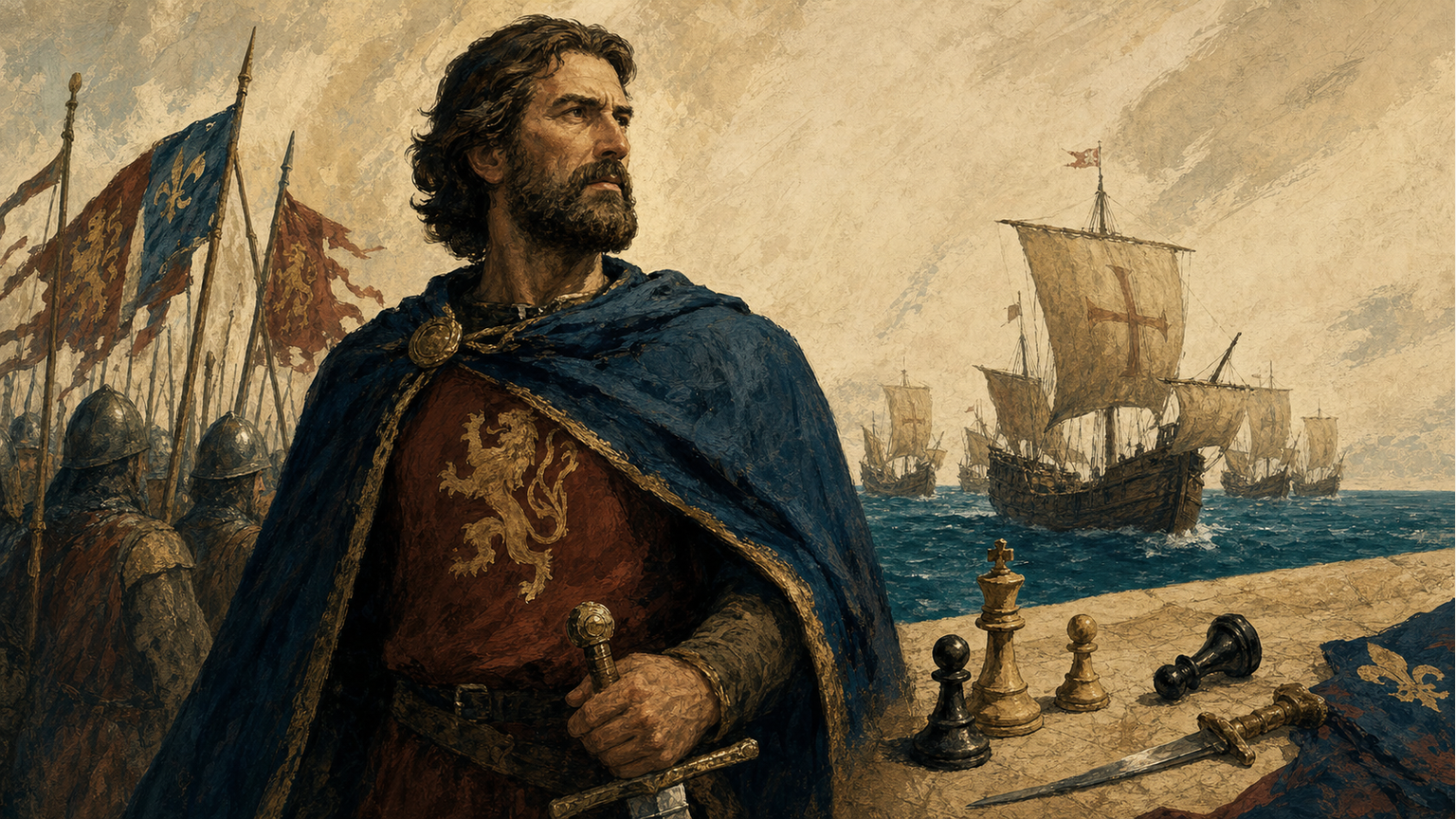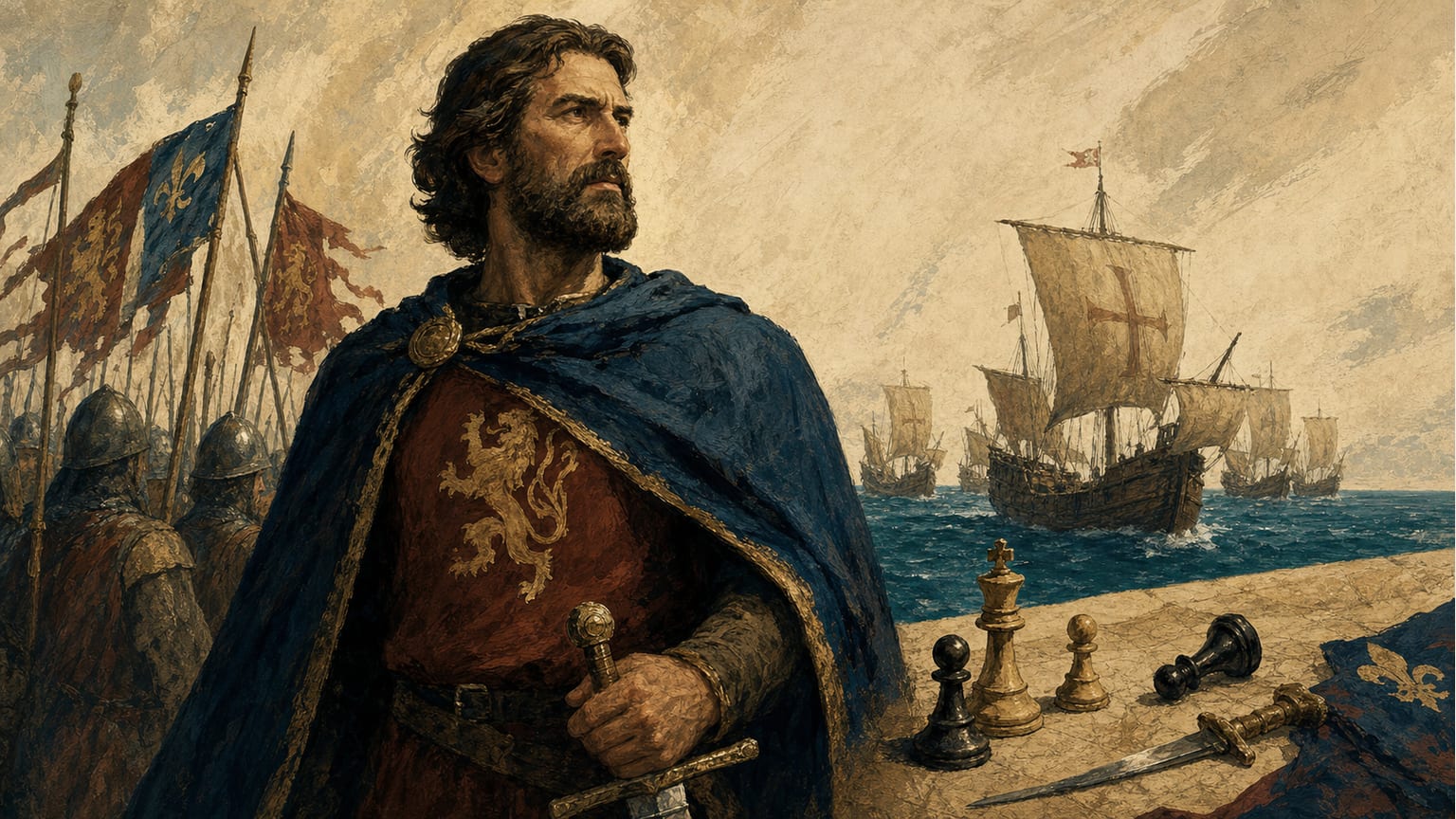

The Franco-Norman expedition to the Canary Islands in 1402, as described by Bonnet, Buenaventura, was led by Gadifer de la Salle, whose role has often been overshadowed by that of Jean de Bethencourt. Bonnet asserts that Gadifer was the true leader, responsible for preparing the expedition, acquiring the ship, and selecting the most experienced men, including his own son Aníbal[1].
The expedition was meticulously prepared: “Oadifer y Bethencourt se encuentran a fines del mes de abril de 1402 en La Rochela… El 1. 0 de mayo la expedición sale con rumbo a las Canarias, llevando ochenta hombres para su conquista” (Gadifer and Bethencourt met at La Rochelle in late April 1402; on May 1, the expedition set sail for the Canaries with eighty men)[1]. Gadifer, according to the source, was the one who acquired the ship and recruited the most skilled and disciplined men, bringing along his son[1].
During the voyage and upon arrival, tensions arose among the expedition members. The crew, fearful and dissatisfied, caused disturbances that eventually led to a mutiny. Bonnet describes how the sailors refused to take the troops aboard at Fuerteventura, only allowing Gadifer and his son as hostages to be transported to Lanzarote[1].
After these incidents, Bethencourt left for Spain to seek reinforcements and supplies, leaving Gadifer in command on the islands. Bonnet highlights that, in official documents of the time, both are listed as equals and allies: “los nombres de los dos jefes aparecen como iguales y compañeros, obrando de consuno en los asuntos referentes a la conquista” (the names of the two leaders appear as equals and companions, acting together in matters of the conquest)[1]. However, Bethencourt was soon proclaimed lord of the Canaries, without recognizing Gadifer’s role or compensating him for his efforts and expenses[1].
Gadifer’s situation was further complicated by internal betrayals, especially that of Bertin de Berneval, who, after gaining Gadifer’s trust, organized the capture and sale of islanders and the theft of supplies and goods from the expedition. Bonnet recounts that Bertin, with the help of Spanish sailors, captured several natives of Lanzarote and stole supplies, leaving Gadifer and his men in a critical situation on the islet of Lobos[1].
Bonnet also notes how later historiography, particularly the manuscript of Juan V, sought to diminish Gadifer’s role, portraying him as an irrelevant adventurer and attributing the initiative and credit for the conquest to Bethencourt[1]. Bonnet points out the contradictions in these sources and reasserts Gadifer as the true leader and driving force of the Franco-Norman enterprise in the Canaries.