

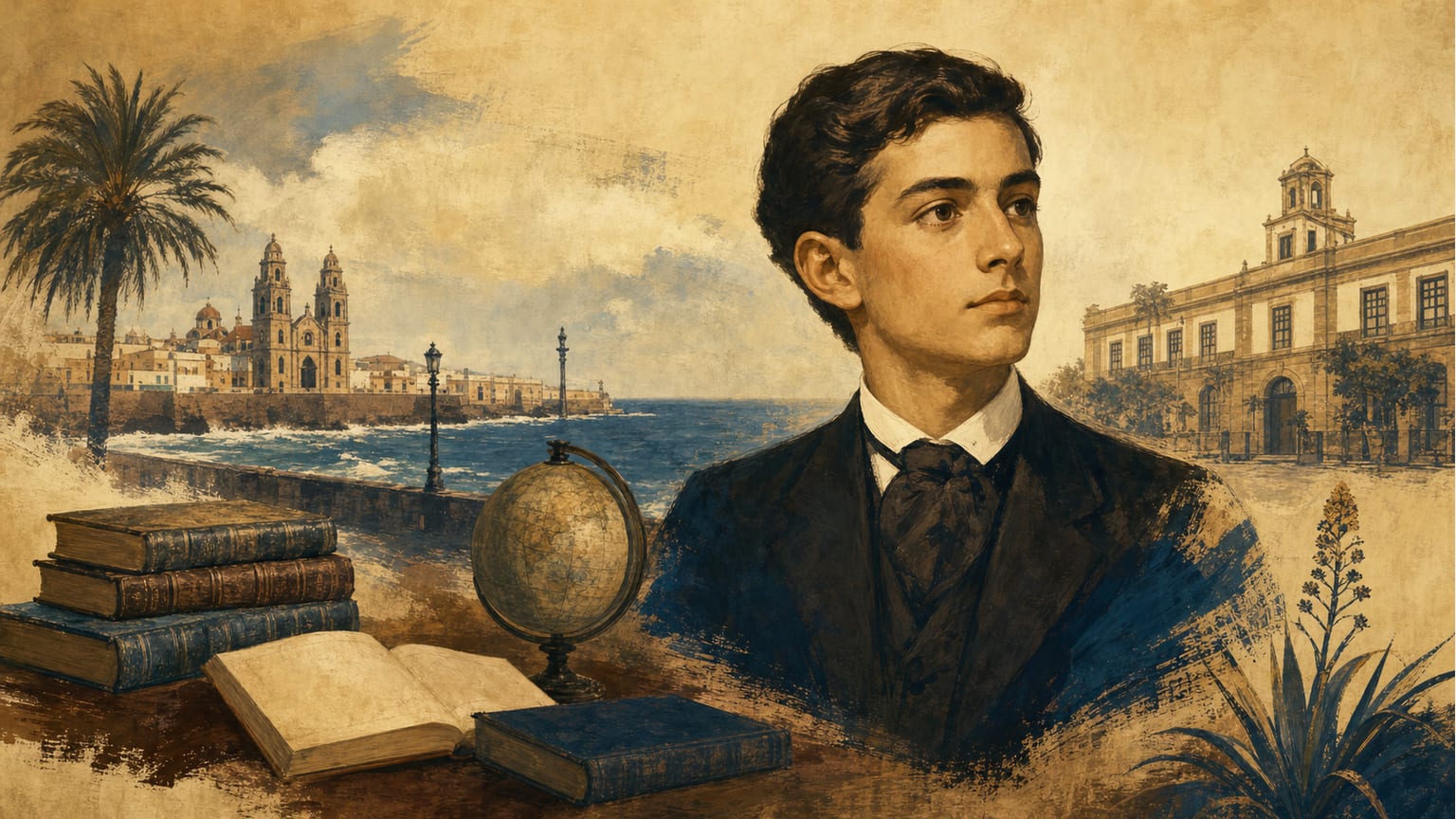
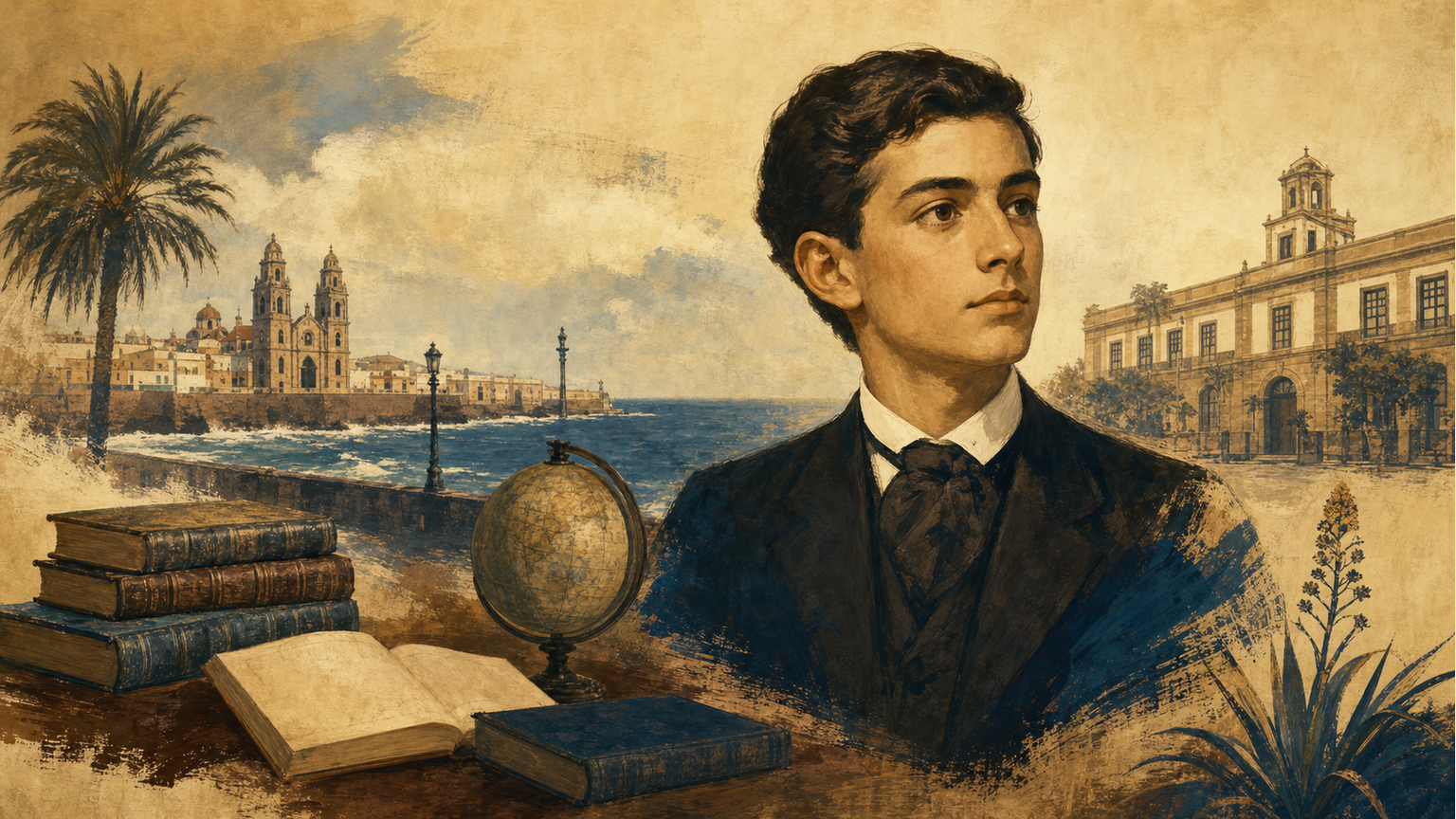
The Childhood and Education of Luis Millares Cubas According to El Museo Canario (1954)
Luis Millares Cubas was born in Las Palmas de Gran Canaria on August 21, 1861, on Calle de la Gloria, today known as Agustín Millares. According to Varios autores in the 1954 edition of El Museo Canario, the family home was purchased by his father, Don Agustín, in 1856 and was gradually expanded as the family grew and resources allowed[1].
The source notes that Luis was the first male child in the family, which led to him receiving especially affectionate treatment from his parents. This contributed to a “rebellious and capricious” character during his childhood. He is described as a “difficult patient” when ill, with his mother sometimes calling the Municipal Guard to ensure he took his medicine[1].
At the age of four, Luis and his brother entered the Escuela de las Niñas de Mesa, located on Calle de la Carnicería. The school was divided into two rooms, “cuarto chico” and “cuarto grande,” and was run by Señá Bernarda and Señá Belén. The source provides detailed descriptions of the school environment, including the furniture, discipline, and customs such as using a small wooden token to request permission to go outside[1].
Despite the kindness of the teachers, the source states that Luis disliked school, though he felt deep respect and gratitude for those who taught him to read. At six, he heard Beethoven for the first time, which, though initially boring to him, later sparked a passion for music[1].
The family environment was described as highly literary and musical, with particular admiration for Beethoven. The source highlights that both innate predisposition and the family environment fostered his talents for literature and music[1].
At seven, Luis entered the Colegio de San Agustín, considered the city’s most important cultural center at the time. The educational regime was strict, with long study hours and discipline. The source details the subjects studied and Luis’s evolution as a student, noting that he became an outstanding pupil and actively participated in cultural and musical activities, such as forming a dramatic society and performing trios and quartets with his father and brother[1].
According to Varios autores, the childhood and youth of Luis Millares Cubas were shaped by a cultured family environment, rigorous education, and an early inclination toward music and literature, which significantly influenced his later professional and cultural trajectory[1].