

Introduction
The tradition of salting fish in the Canary Islands is one of the archipelago’s oldest and most distinctive culinary practices. Among the most notable examples are tollos and jareas, which have enabled island communities to preserve and consume fish over long periods, especially when fresh fish was scarce[1].
Tollos: Technique and Tradition
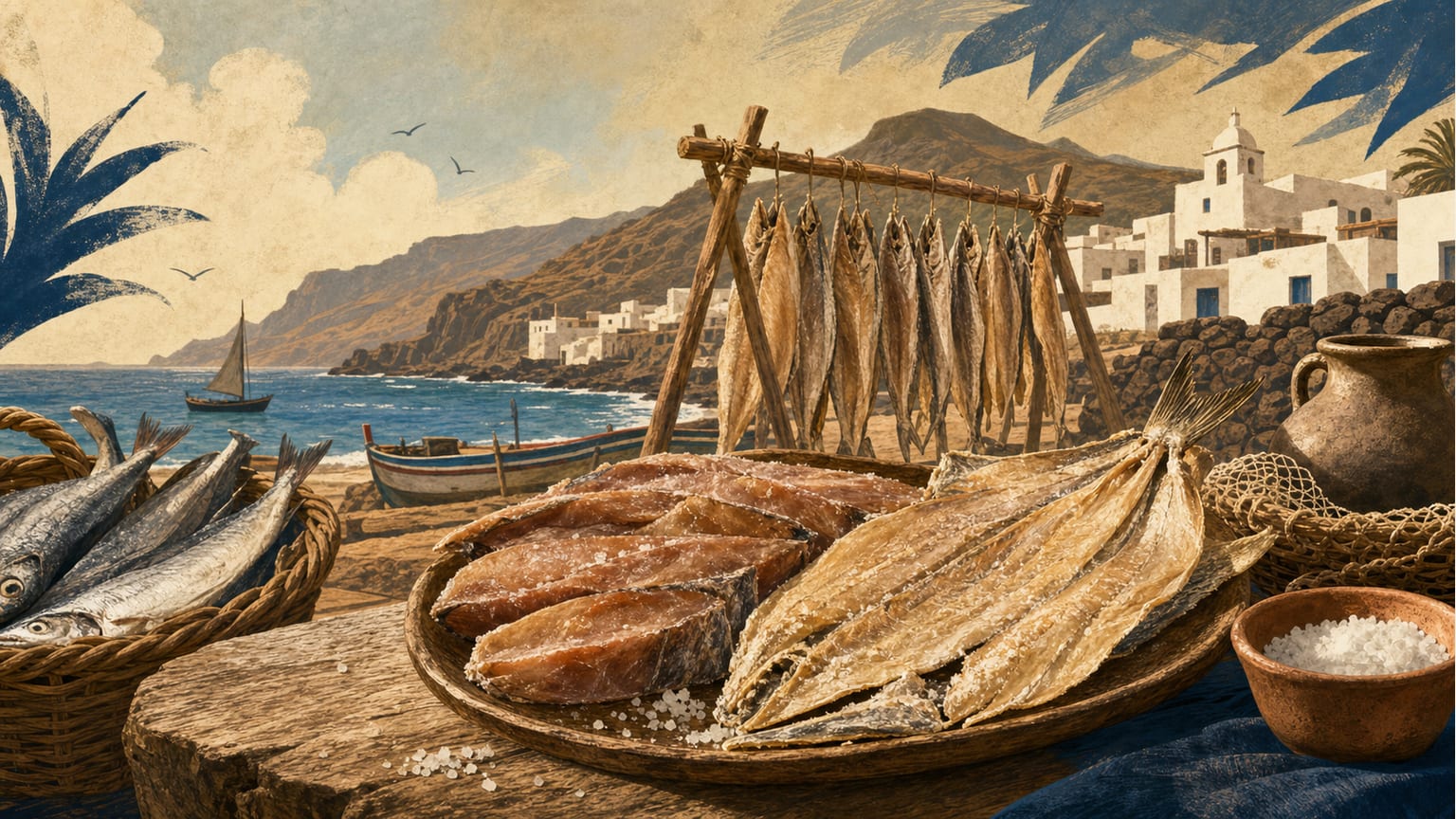
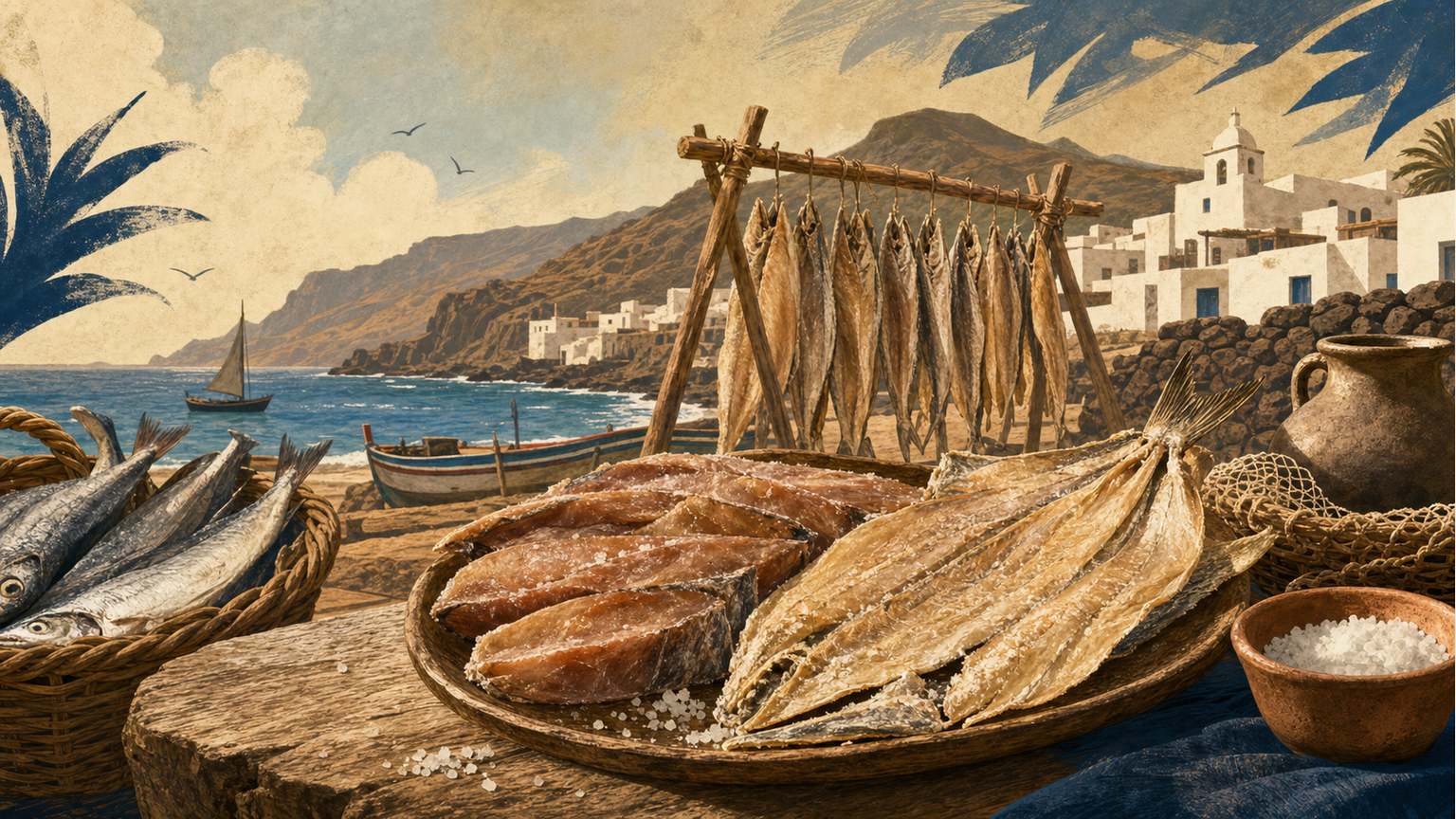
Tollos are dried strips of dogfish (Galeorhinus galeus) or other types of shark, prepared by cutting the fish into strips, hanging them, and letting them dry in the sun. This preservation method, based on salting and drying, was essential in the Canarian diet before the advent of modern refrigeration[1].
Preparation begins by soaking the strips in plenty of water for a full day, changing the water several times. The tollos are then cooked in water with vinegar, bay leaf, and salt, and drained. The accompanying mojo sauce is made by crushing garlic, parsley, cumin, paprika, safflower, and fried bread in a mortar, then mixing with oil and vinegar. The tollos are stewed in this mojo until the sauce thickens and are traditionally served with wrinkled potatoes[1].
Nutritionally, tollos are high in protein (18.01 g per 100 g) and low in fat, making them a healthy option within the island diet[1].
Jareas: Preservation and Consumption
Jareado fish are gutted and opened, usually along the back, salted, and sun-dried. Jareas, especially popular in Fuerteventura and Lanzarote, are made from small fish such as salemas, viejas, or samas, which are tied or hung on strings and dried for about four days[1].
The word “jarea” comes from the Amazigh word “ghar” and was introduced to the Canary Islands by fishermen working in the Canary-Saharan fishing grounds or through the influence of Moorish sailors. This preservation method was crucial for sailors and navigators, allowing them to have fish available during long voyages[1].
In the kitchen, jareas are used in dishes such as “compuesto de jareas,” where the dried fish is boiled, cleaned, and cooked with onion, garlic, tomato, bay leaf, thyme, paprika, and white wine, served with boiled potatoes[1].
Cultural Value and Continuity
Salted fish like tollos and jareas are not only preservation techniques but also reflect the adaptation of Canarian society to its insular environment and available resources. Although their consumption is now occasional, these dishes keep an essential part of the islands’ culinary heritage alive[1].