

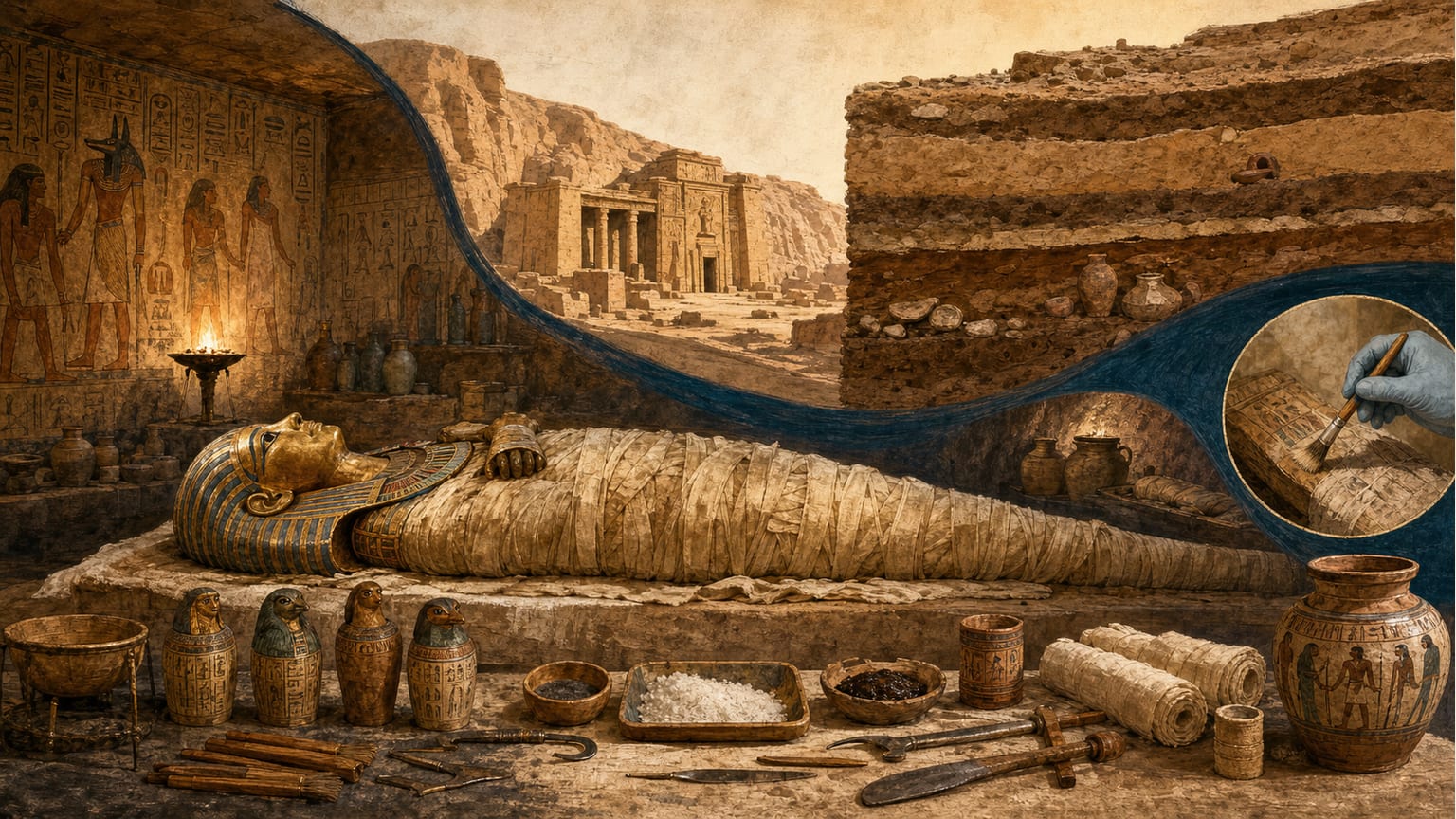
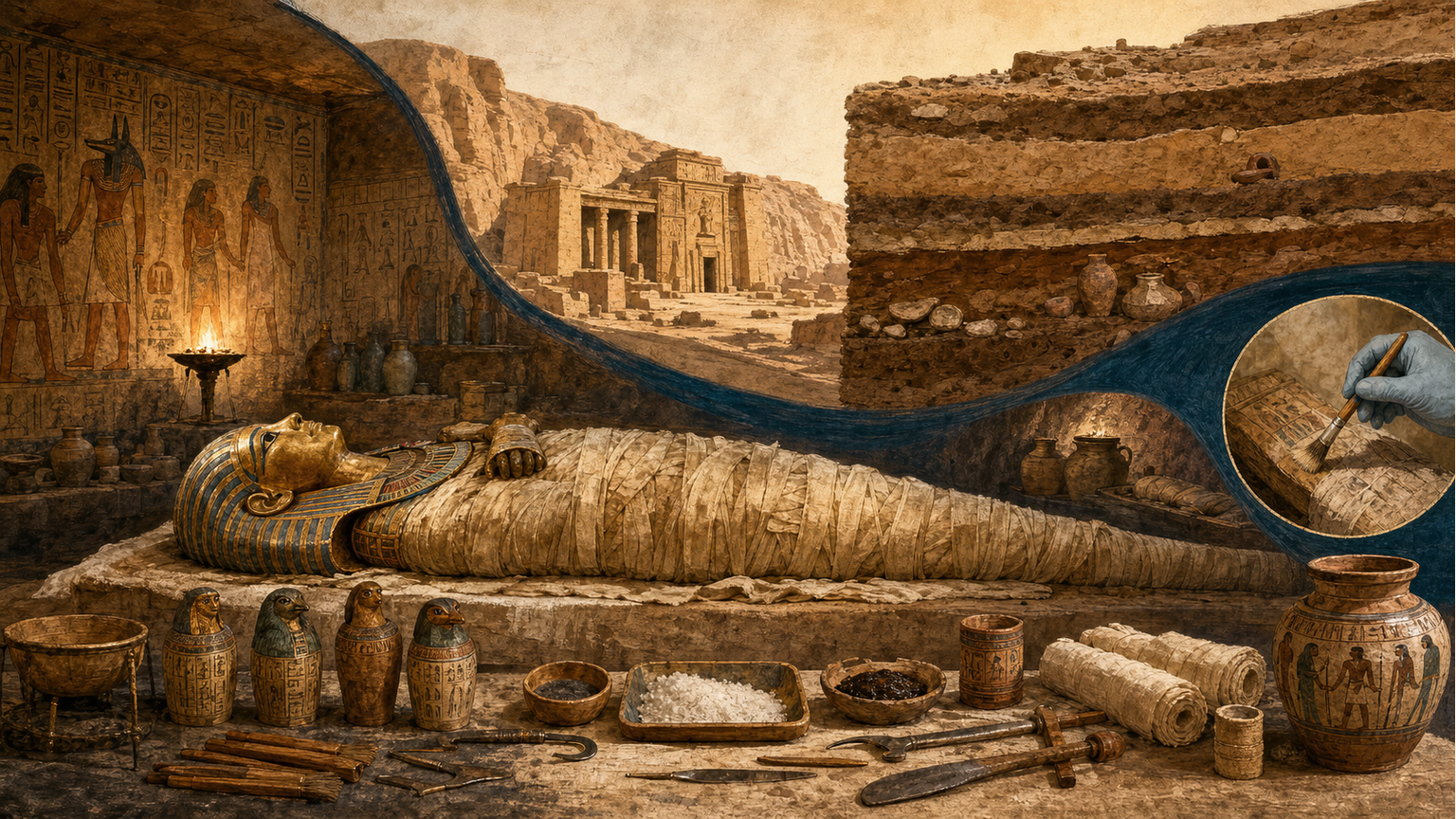
Artificial mummification in ancient Egypt is a subject of great archaeological interest due to the variety and complexity of methods used to preserve human bodies. According to the studies in Eres (Arqueología), Vol. 1, No. 1, intentional preservation involved removing the abdominal organs, which were kept separately for later inclusion in the body or in special jars[1].
Key techniques included dehydration using natron salt, dehydration by placing the body in contact with dry materials like grass or lime, and the application of oils and resins. These methods were often combined, making it difficult to identify the exact technique used in each mummy[1].
The deterioration of Egyptian mummies is a persistent issue in museums and archaeological collections. Contributing factors include poor environmental conditions, physical damage, and harm caused by inadequate conservation attempts. The text notes that while some types of degradation are irreversible, most can be prevented or remedied in early stages[1].
Conservation treatments range from basic environmental controls to advanced techniques such as gas fumigation and irradiation. Environmental control involves maintaining relative humidity between 40% and 50%, not exceeding 55%, and a maximum temperature of 15°C. Sophisticated methods such as inert gas atmospheres in display cases are discussed, though their high cost and complexity limit their use[1].
Gas fumigation, using agents like ethylene oxide and methyl bromide, is employed to eliminate insect infestations, though effectiveness varies depending on the material. Wet sterilization, applying fungicides and insecticides dissolved in alcohol, has proven effective in some cases, such as the use of sodium pentachlorophenate[1].
Irradiation, particularly with gamma rays and electron beams, has been used in notable cases like the mummy of Ramses II in France, though the limited penetration of ultraviolet rays reduces effectiveness in internal cavities[1].
Finally, physical repair of mummies, such as using aluminum splints and bandages for broken limbs, allows for safe and reversible interventions. The text emphasizes the importance of protecting these remains, as they are invaluable sources of information about ancient funerary customs and diseases[1].