Sandra Franco Álvarez
ContemporaryLiterature20th CenturyCanarian children's and young adult literature

Writer and editor

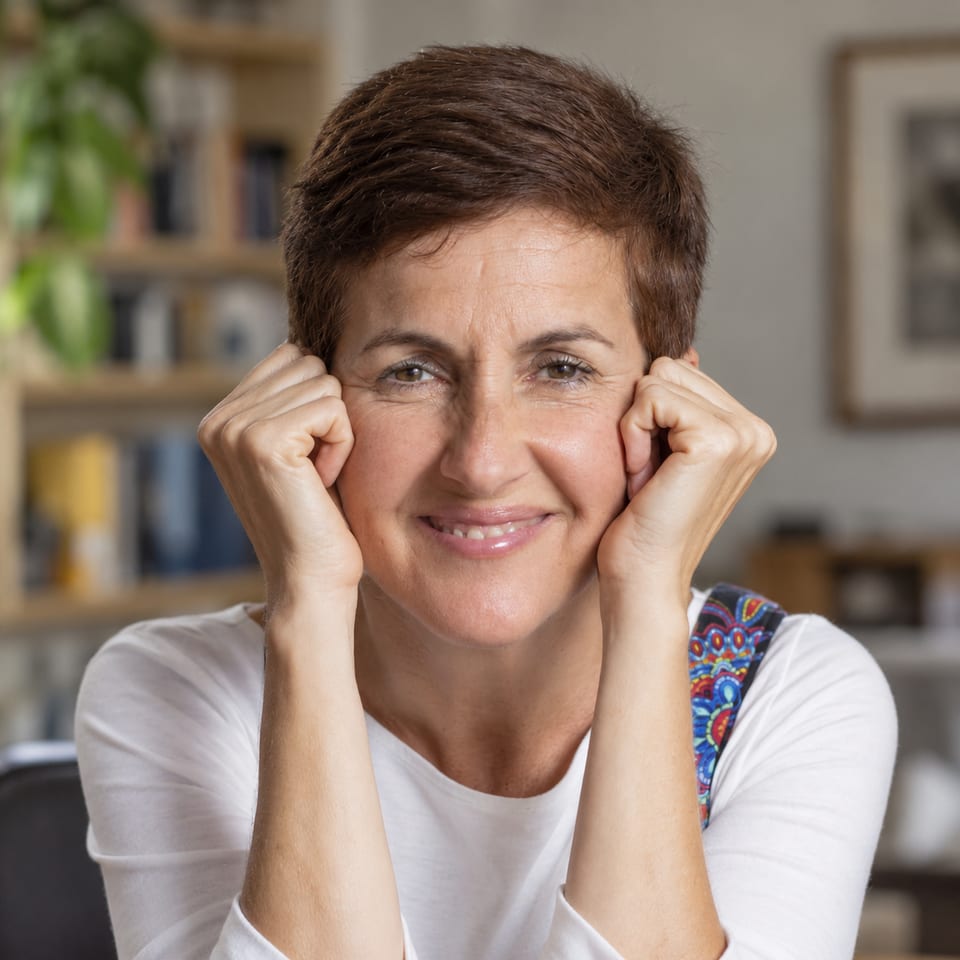
Sandra Franco Álvarez is a writer and editor born in Las Palmas de Gran Canaria on 18 February 1970. Her work includes children's and young adult literature, historical fiction and poetry, with stories that combine fiction, island landscape, memory and values of coexistence.
Early life

Born in Las Palmas de Gran Canaria, Sandra Franco developed an early relationship with reading and writing. She studied Tourism in Madrid and Murcia while keeping writing as a constant practice. Her first short stories appeared in collective publications by emerging authors before her first book, El lagarto de Ansite, was published in 2010.

Historical role

She began writing as a child, using notebooks to record her understanding of the world and her concerns about hunger, war and inequality. As she explained in a 2020 interview, the writing workshops she attended encouraged her to publish and recognise her preference for children and young readers. She defends their literature against its treatment as a lesser genre and regards reading promotion as part of her work as a writer. In that conversation she highlighted creativity, empathy and critical thinking among the values she associates with reading, whatever the format in which readers encounter a text.

Children's and young adult literature forms a central part of her work. Titles such as Pétalo 21, El lagarto de la Fortaleza, TribuLila: la tribu de iguales and Dulcelandia place imagination, friendship, equality and the Canarian environment at the centre of their stories. In 2016, together with Daniel Martín Castellano, she won the fifth Cuentos Solidarios competition run by ULPGC and Fundación Canaria MAPFRE Guanarteme with Wi.

Franco has expanded her work into historical fiction, co-authoring El reloj de Elwinga and Has regresado, viejo amigo with Juan José Monzón Gil. She has also developed photography and haiku projects such as De muros y elixires, and works in children's and young adult publishing through the Alargalavida imprint. The Biblioteca de Canarias lists her work under children's literature, young adult literature, historical fiction and poetry.

Her publishing work at Alargalavida takes place within Bilenio. In 2020 she described it as a daily commitment to children’s and young adult literature, requiring attention to quality and the right team for each project. Photography is another tool in her creative process: she explained that she often imagines scenes first and then translates them into words. This connection between looking and writing relates to her photographic projects and her interest in emotions, nature and human rights, subjects she identifies as close to her own literary voice.

Legacy

El reloj de Elwinga grew out of her interest in Juan José Monzón Gil’s documentary La Sima del Olvido and the testimony of Josefina Expósito featured in it. A visit to Auschwitz broadened the novel’s conception. Franco explained that the two authors linked Poland, Berlin and Agaete through the voices of three children in a narrative set between 1931 and 1945. Historical memory thus became an area of literary collaboration with Monzón. The Biblioteca de Canarias subsequently lists Has regresado, viejo amigo (2021), Dulcelandia (2022) and La memoria de las mariposas (2025), and identifies Ana María Matute, Irène Némirovsky and Virginia Woolf among her reading influences.

Timeline

  1. 1970February 18, 1970Born in Las Palmas de Gran Canaria.
  2. 2010Publishes El lagarto de Ansite.
  3. 2016Wi wins the fifth Cuentos Solidarios competition.
  4. 2019Publishes El reloj de Elwinga with Juan José Monzón Gil.
  5. 2021Publishes Has regresado, viejo amigo with Juan José Monzón Gil.
  6. 2022Publishes Dulcelandia.
  7. 2025Publishes the haiku book La memoria de las mariposas.

Sources and verification