ContemporáneaArt19th CenturyEarly 20th-century Canarian landscape painting

Landscape painter

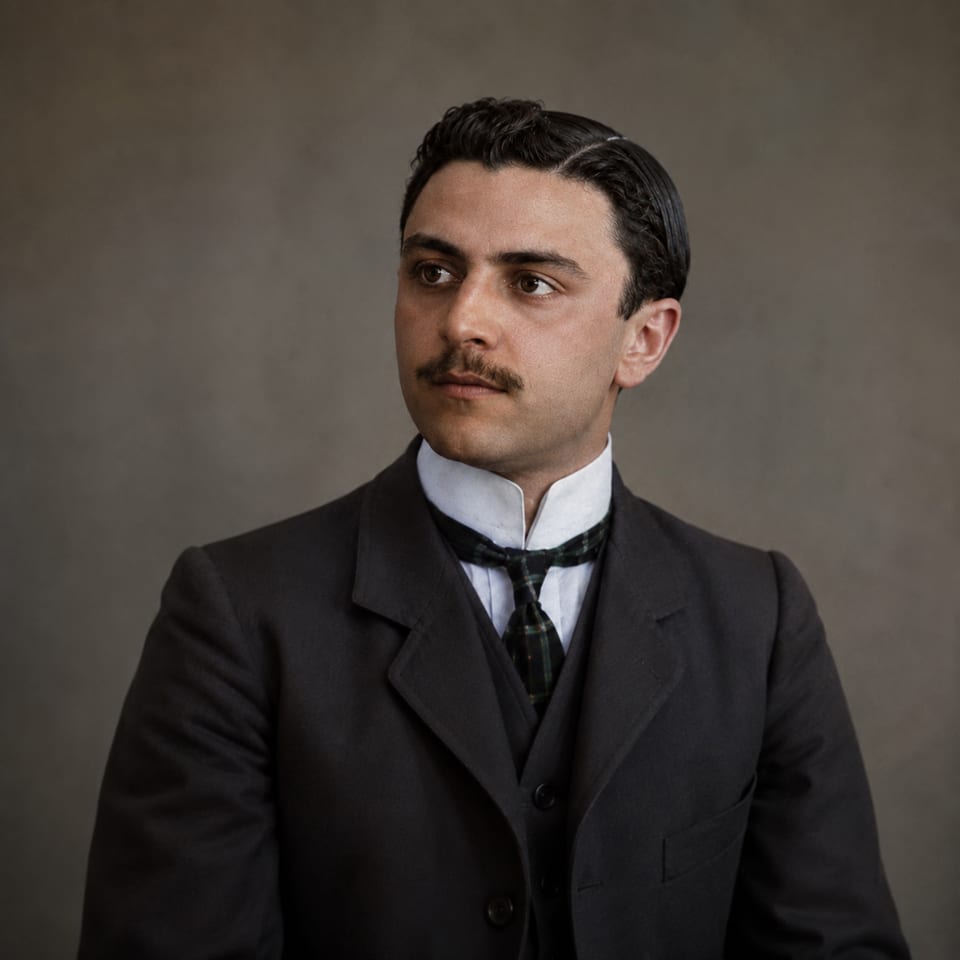
Juan Rodríguez-Botas y Ghirlanda was a painter born in Santa Cruz de Tenerife on 20 August 1882 and deceased in San Cristóbal de La Laguna on 22 September 1917. His landscape painting, developed between the Canary Islands and several European cities, holds an important place in the renewal of Canarian art at the beginning of the 20th century.
Early life

After his schooling in Tenerife, Gran Canaria and La Palma, Rodríguez-Botas began his artistic training in the late 1890s. He studied with Filiberto Lallier and continued at Santa Cruz de Tenerife's Municipal School of Drawing. In Gran Canaria he also attended Eliseo Meifrèn's outdoor classes, an important experience for his attention to light and colour in landscape.

Historical role

From 1905 to 1912 he undertook an extended period of training in Italy, France and Madrid. He worked in Rome, Naples, Capri and Venice, studied the Louvre collections in Paris and, in Madrid, copied works by Velázquez at the Prado Museum. This journey did not replace his Canarian subjects: on his return, the archipelago's landscape became a field for personal experimentation.

Legacy

Most of his documented output consists of landscapes, although he also made portraits and caricatures. Works such as Barranco del Drago, Guayonje, the Capri landscapes and the views of Versailles trace an evolution from a realist basis towards painting concerned with brushwork, reflections and chromatic construction. He died of tuberculosis at thirty-five; the retrospective held in 2017 for the centenary of his death again brought together works from Canarian collections.

Timeline

  1. 1882Born in Santa Cruz de Tenerife.
  2. 1904Santa Cruz de Tenerife City Council grants him a scholarship to continue his studies in Italy.
  3. 1912Returns permanently to Tenerife after his period of training outside the islands.
  4. 1917Dies in San Cristóbal de La Laguna.
  5. 2017A retrospective exhibition marks the centenary of his death.

Sources and verification