
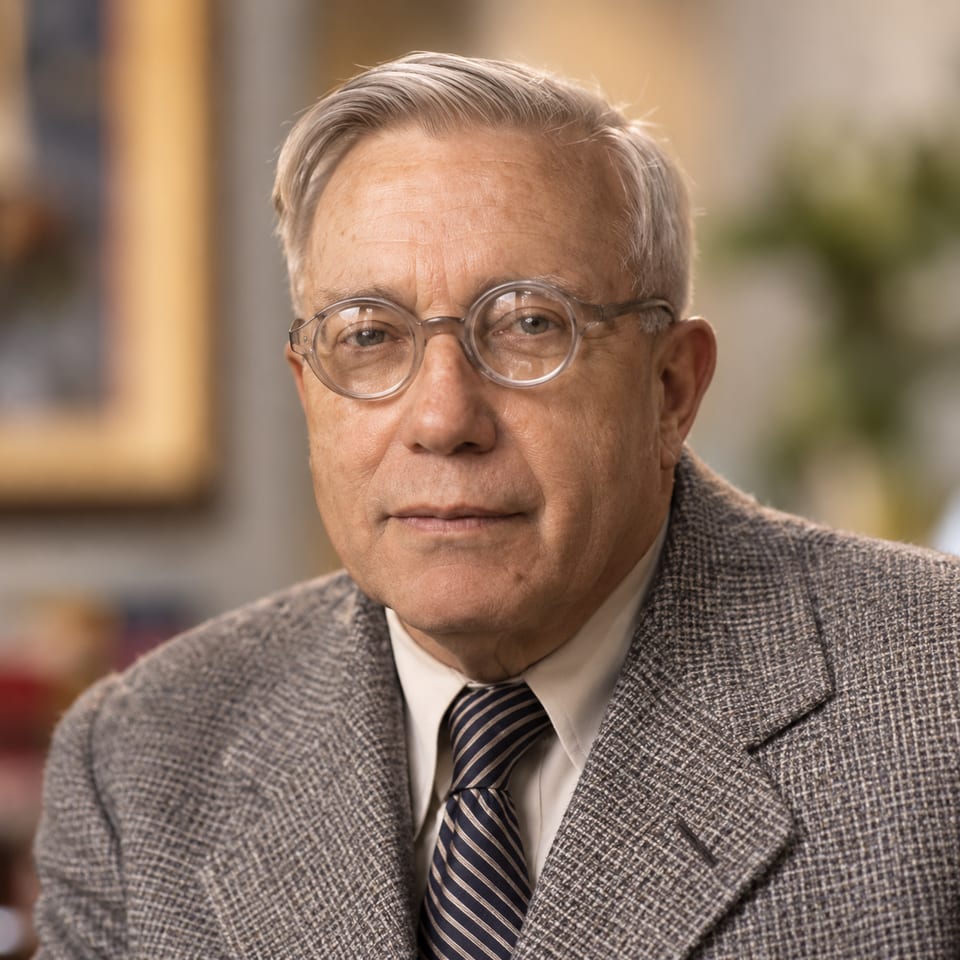
Dominik Josef Wölfel
ContemporaryHistory19th CenturyDocuments and the language of the ancient islanders

Ethnologist and researcher of history and language

An Austrian researcher who assembled documentary sources on the Canary Islands and prepared Monumenta linguae Canariae. His career also involved political positions and racial frameworks requiring critical assessment.
Early life

Dominik Josef Wölfel was born in Vienna on 25 May 1888. He died in the same city on 27 April 1963. An ethnologist and researcher of languages and history, he devoted a substantial part of his work to the Canary Islands. He assembled documents scattered across European archives and studied the surviving evidence of the Indigenous language. His documentary and linguistic contributions had a lasting influence, but they must be considered alongside the racial theories and political positions involved in his career.

Historical role

His education followed an unconventional route. He trained as a photographer, worked as a language teacher and translator, and independently developed his knowledge of languages, history and geography. In 1919 he began attending courses in ethnology, anthropology and prehistory at the University of Vienna. With support from Wilhelm Schmidt he gained admission to doctoral study and obtained his doctorate in 1925 with research on trepanation. He joined Vienna’s Museum of Ethnology in 1927, carrying out curatorial and research work there.

Between 1930 and 1933 he undertook research journeys to archives in several European cities and spent time in the Canary Islands. His method combined documentary investigation with questions about the past of the island populations. He located the manuscript of Leonardo Torriani’s description of the islands and prepared an edition with a German translation published in 1940. The reproductions and materials he gathered formed the Archivum Canarium, a documentary collection intended to facilitate research into the history of the archipelago.

El Museo Canario appointed him its corresponding member in Vienna in 1932 and an honorary member in 1941. He visited its archive between December 1932 and February 1933. He returned in 1953 for a stay lasting from February to June, continuing his research and giving lectures and courses on Indigenous culture and languages. His Monumenta linguae Canariae was published in 1965, after his death, bringing together his extensive study of the linguistic evidence from the islands.

Legacy

His political biography cannot be reduced to his position as a victim of Nazism. In April 1939 the authorities removed him from his museum employment because of his wife’s Jewish ancestry, and he regained his position after the war. However, his 1937 book on the Spanish Civil War expressed support for Franco. Historical research has documented funding for his work from scientific bodies under the Nazi regime, together with racial conceptions in his writings. These aspects require a critical reading of his scholarship rather than an exclusively celebratory account of his career. In 2018 the Institutum Canarium donated his archive to El Museo Canario. Preserving this material makes it possible to investigate both his contribution to knowledge of the Canary Islands and the intellectual and political circumstances in which that contribution was produced.

Sources and verification