

Angiolino del Tegghia de' Corbizzi
Pre-HispanicHistory20th CenturyCompanion of the 1341 expedition

Florentine navigator

Florentine navigator known almost exclusively for taking part in 1341, alongside the Genoese Nicoloso da Recco, in the expedition organised by Afonso IV of Portugal that explored the Canary Islands. His name survives thanks to Giovanni Boccaccio's De Canaria, composed around 1342 from a letter by Florentine merchants in Seville. No dates or reliable details of his life are recorded.

Early life

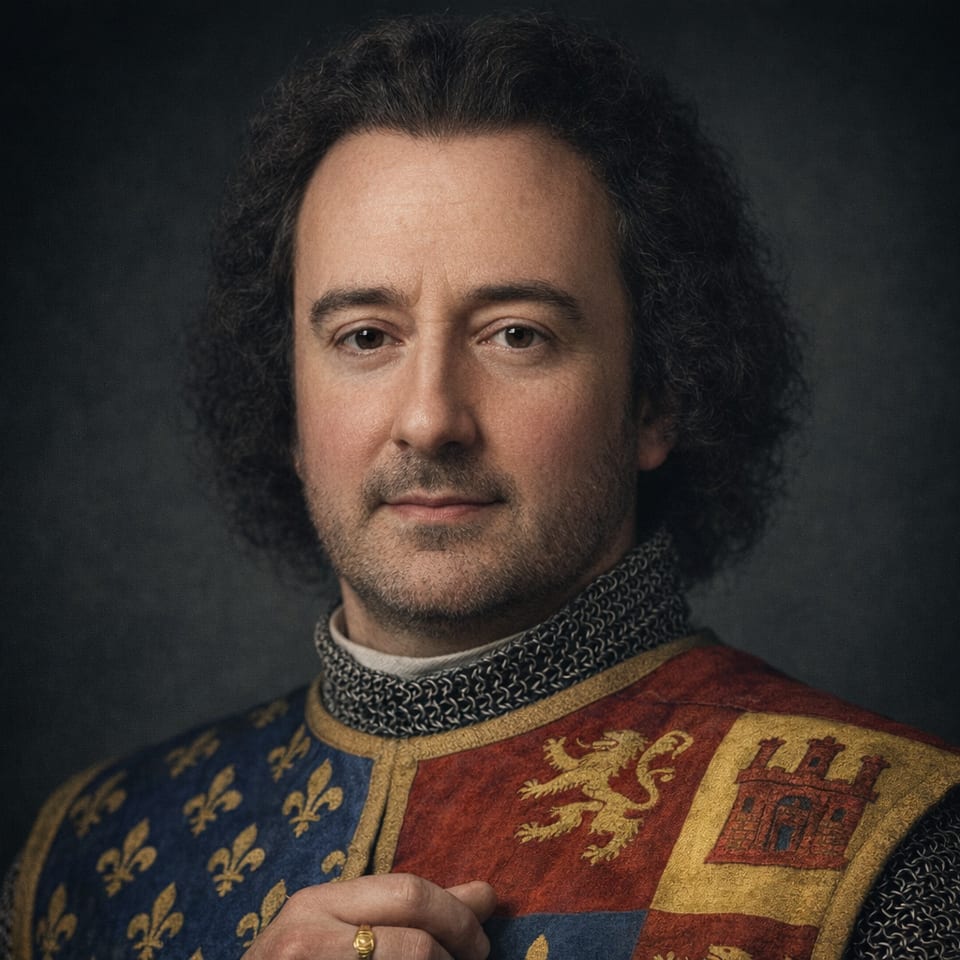
Angiolino del Tegghia de' Corbizzi was a Florentine navigator about whom almost nothing is known beyond a single enterprise: the expedition that explored the Canary Islands in 1341 in the service of King Afonso IV of Portugal. No dates of his birth or death are recorded, nor any reliable news of his family, trade or career; even the spelling of his name shifts between Tegghia, Corbizzi, Corbizi and other variants transmitted by the sources and by historiography.

Historical role

His only documentary window is the De Canaria et insulis reliquis ultra Hispaniam in Oceano noviter repertis, a short treatise in Latin prose composed by Giovanni Boccaccio around 1342 on the basis of a letter originally written in Tuscan by Florentine merchants established in Seville and sealed on 15 November 1341. That letter reported the voyage made by the ships of the King of Portugal under the command of the Florentine captain Angiolino del Tegghia de' Corbizzi and the Genoese captain Nicoloso da Recco, and the weeks the expedition devoted to surveying the archipelago. Manned by Italians, Portuguese and Castilians, the enterprise surveyed the islands, described their inhabitants and returned to Lisbon with news that aroused immediate interest among the merchants of the western Mediterranean.

The historiographical fortunes of del Tegghia depend entirely on that textual tradition. Beyond the De Canaria tradition and the da Recco biography, documentary traces of him are extremely scarce; he only became public when Sebastiano Ciampi published the De Canaria in 1826 and 1827 from the Zibaldone Magliabechiano of the Biblioteca Nazionale Centrale of Florence. Modern scholarship is obliged to present him through his Genoese companion, on whom the notarial documentation has at least allowed a minimal biography to be reconstructed; the entry Enrico Basso devoted to Nicoloso da Recco in the Dizionario Biografico degli Italiani identifies him as the Florentine companion of the expedition, and can hardly add anything more.

Legacy

His case is representative of a group of Mediterranean navigators of the 14th century who operated in the Atlantic under the Portuguese flag and of whom only the reflection of someone else's account survives. The shared command of the 1341 expedition, with a Florentine and a Genoese at the head of the King's of Portugal ships, illustrates the Italian collaboration in the first steps of Europe's Atlantic expansion. And although his figure remains shadowy, his name is forever joined to the first detailed account that Europe received of the Canarian Indigenous societies.

Timeline

  1. 1341He took part with the Genoese Nicoloso da Recco in the expedition organised by Afonso IV of Portugal that explored the Canary Islands.
  2. c. 1342Giovanni Boccaccio composed the De Canaria, the textual tradition that preserves his name.
  3. 1827Sebastiano Ciampi published the De Canaria, and del Tegghia's name reached historiography for the first time.

Sources and verification

  • NICOLOSO da Recco · Dizionario Biografico degli Italiani, vol. 78 (2013), Treccani
  • Monumenti d'un manoscritto autografo di Messer Gio. Boccacci da Certaldo · Florencia, 1827