

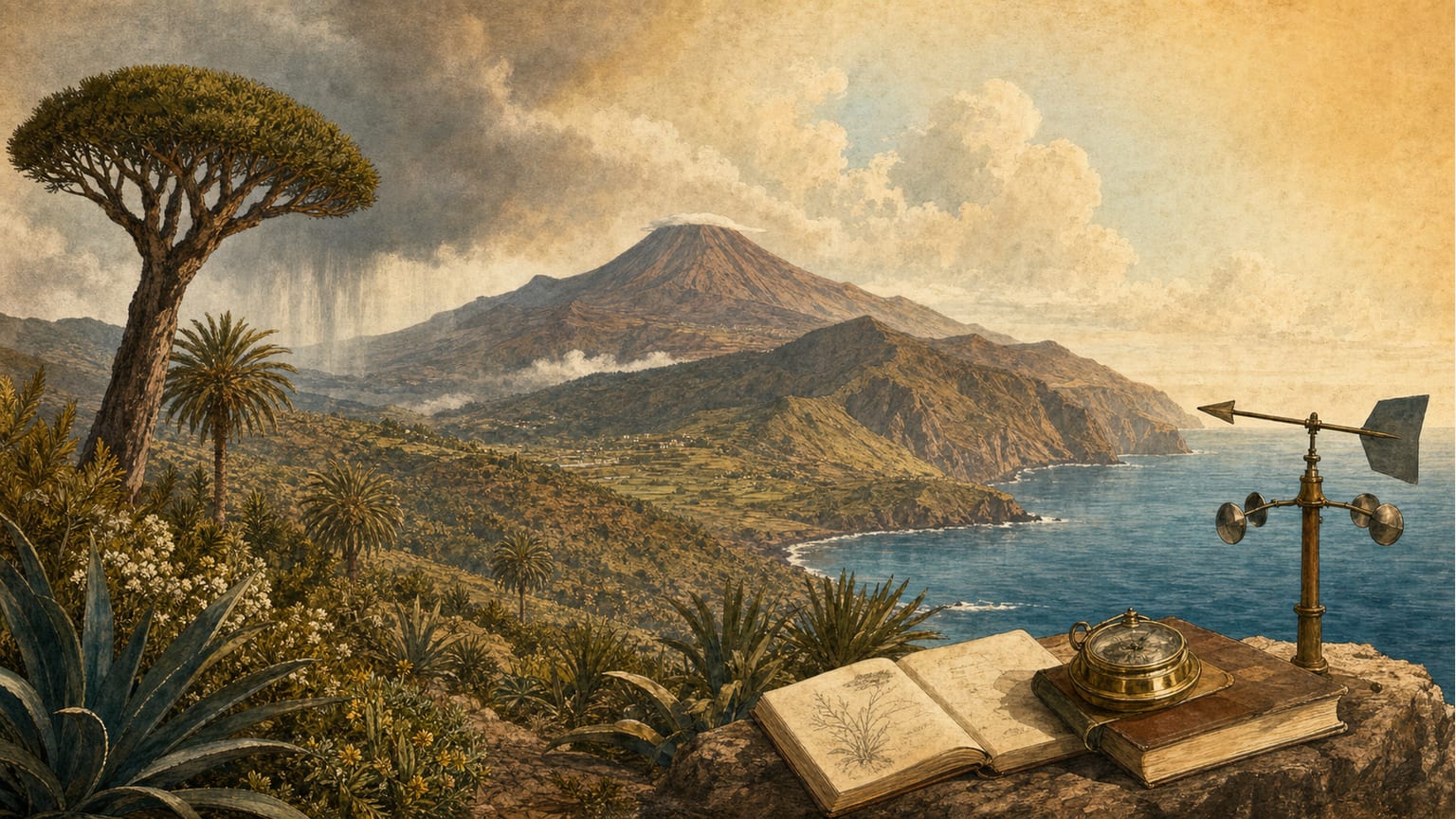
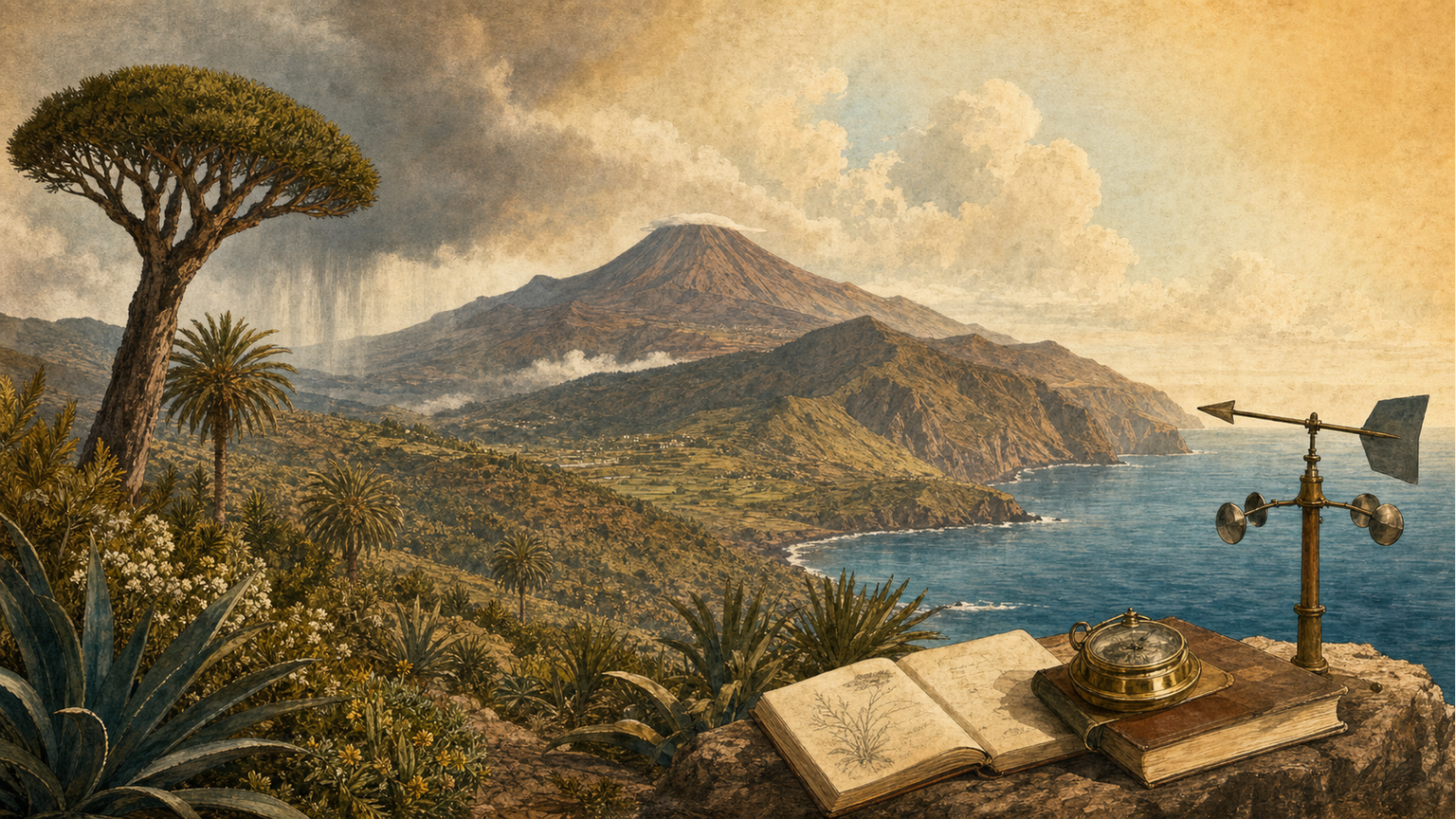
“Histoire naturelle des îles Canaries” describes Tenerife’s climate from direct observations gathered on the island during the 19th century [1]. The result is a portrait of a remarkably mild and stable climate, with clearly defined seasons yet free of the temperature extremes found elsewhere in Europe.
Spring arrives quickly: “Le mois de mars commence à peine, que déjà le printemps s’annonce dans toute sa beauté; nulle part cette saison est plus agréable; une douce, chaleur vient aussitôt ranimer la nature et rendre à la végétation toute son énergie” [1]. During this season the trade winds blow strongly and bring clouds and rain, but these showers are beneficial for crops and barely disturb the island’s pleasant weather.
Summer is tempered by the influence of the sea and the shelter of the mountains, which block the clouds and keep away the scorching heat feared in other latitudes: “Notre été n’a pas moins de charme; le vent de mer en tempère l’ardeur, nos montagnes arrêtent les nuages, et la terrible canicule, ce fléau des vastes plaines, est presque inconnue sur nos côtes” [1].
Occasionally, however, the harmattan arrives: a hot, dry wind from the African desert that raises temperatures and brings dust and aridity. “En été et même au commencement de l’automne des journées accablantes, lorsque souffle Yharmatan, Ce vent du désert, le plus cruel ennemi de nos climats…” [1]. Even so, the Atlantic Ocean’s influence softens its impact, and the harmattan only becomes a serious problem when it coincides with drought and locust plagues.
Autumn and winter are equally mild. Autumn rains and northern winds can bring storms, but these are rare and, on the whole, the climate remains temperate: “En général nos automnes sont douces comme les fruits qu’elles nous donnent et nos hivers sont sans frimas. La neige qui couvre le pic de Teyde pourrait faire croire à un pays moins chaud; mais que de cette région élevée on descende dans les vallées où sont répandues nos habitations et nos cultures, le thermomètre alors parlera pour nous et décèlera un climat privilégié” [1].
After a light rain the atmosphere quickly regains its transparency, the air its purity and the sky its brilliant blue: “Après une pluie légère l’atmosphère reprend aussitôt sa transparence, l’air sa pureté, le ciel son brillant azur et la vie toute sa plénitude” [1]. This picture of Tenerife as a place of exceptionally benign climate reflects the island’s environmental conditions in the 19th century.