

Bencomia: A Botanical Genus Honoring the Last Indigenous King of Tenerife
In their monumental work Histoire naturelle des îles Canaries, Philip Barker Webb and Sabin Berthelot described the botanical genus Bencomia, endemic to the Canary Islands, and explained that its name was chosen to honor Bencomo, the last autonomous king of Tenerife’s indigenous population[1].
Origin of the Name Bencomia
According to Webb and Berthelot, the name Bencomia was selected “en memoriam ultimi Nivariensium autonomorum regis Bencomi, Tinerfii cognomine Magni gentis ut fertur conditoris abnepotis”—in memory of the last autonomous king of Tenerife, Bencomo, said to be the grandson of the founder of his dynasty[1].
The authors recount that Bencomo ruled from the fertile valley of Taoro and the town of Orotava, and that he was esteemed by both his people and the conquerors, who described him as “clemens atque humanus” (merciful and humane) even towards invaders who fell into his hands[1].
Historical Context According to the Source
Webb and Berthelot place Bencomo in the context of the conquest of Tenerife, stating that he fought for two years to defend his territory, achieving victory at the Battle of Acentejo (which gives its name to the municipality of La Matanza), and was ultimately defeated near the present-day municipality of La Victoria[1].
After his defeat, Bencomo and his brother Tinguaro were captured and sent to the Iberian Peninsula, where, according to the source, Bencomo was presented to the Catholic Monarchs and later taken to Rome and Venice, where he died. Tinguaro is said to have taken his own life during the journey[1].
Botanical Description of the Genus Bencomia
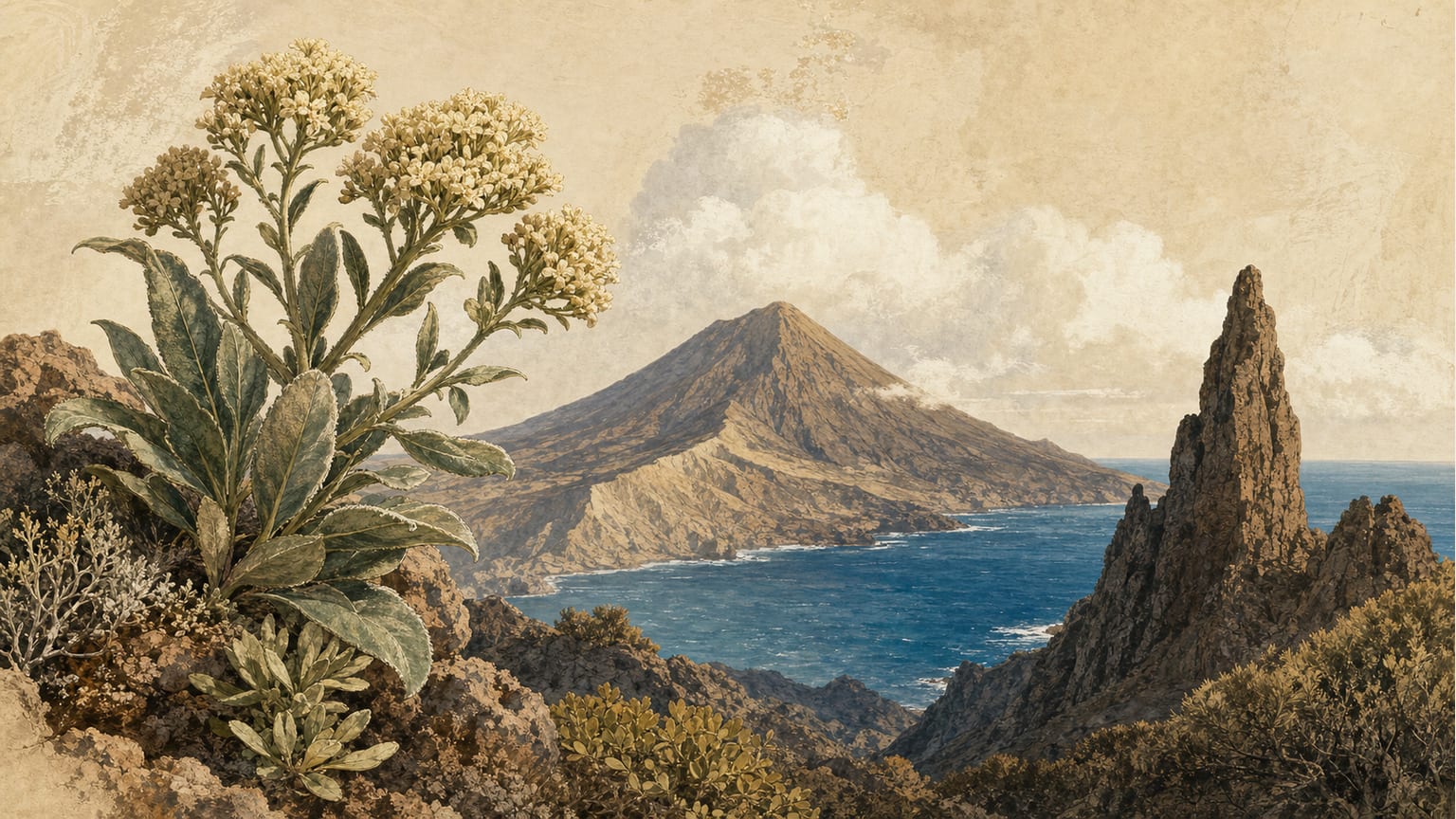
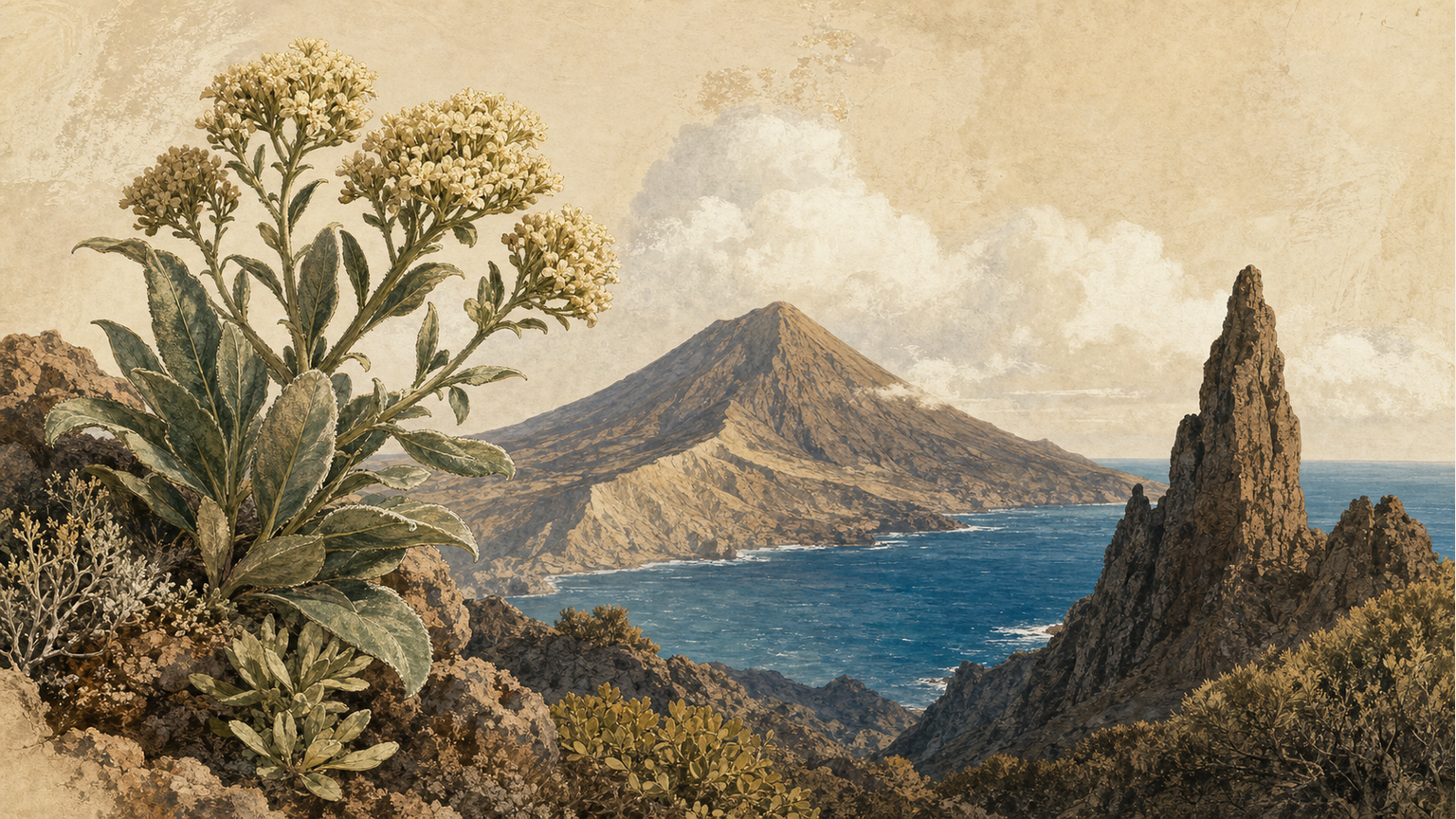
Webb and Berthelot describe Bencomia as a genus of Canarian shrubs with imparipinnate leaves, ovate and toothed leaflets, and long, axillary floral spikes. The authors detail the floral and reproductive morphology, highlighting the presence of dioecious flowers (male and female on separate plants) and fruits in the form of achenes included in the calyx tube[1].
Among the species described are Bencomia caudata and Bencomia moquiniana, both endemic to Tenerife and other islands, inhabiting mountainous and humid valley areas. The description includes details of leaf, inflorescence, and fruit morphology, as well as botanical illustrations accompanying the original text[1].
Scientific and Heritage Significance
Webb and Berthelot’s decision to dedicate this genus to Bencomo reflects the 19th-century naturalists’ interest in linking local flora with the history and notable figures of the islands. The work highlights the uniqueness of Canarian flora and the importance of its study and conservation, always from the perspective and knowledge of its time[1].