

Introduction
Canarina canariensis is one of the most emblematic plant species of the Canary Islands. According to the detailed account by Webb and Berthelot in the 19th century, this perennial plant with tuberous roots and annual stems is found in forests, shaded cliffs, and moist valleys across several islands of the archipelago[1].
Botanical Description
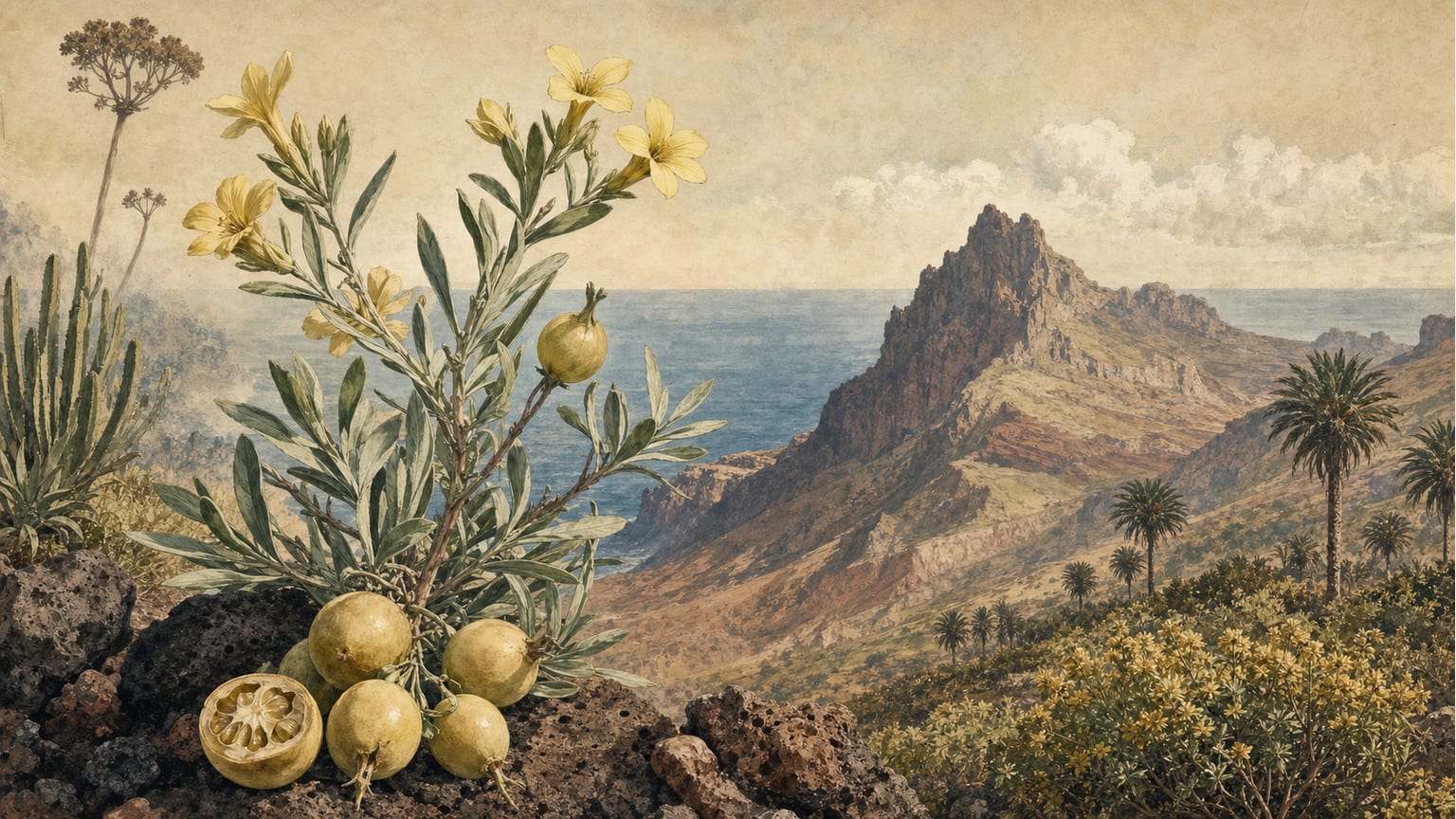
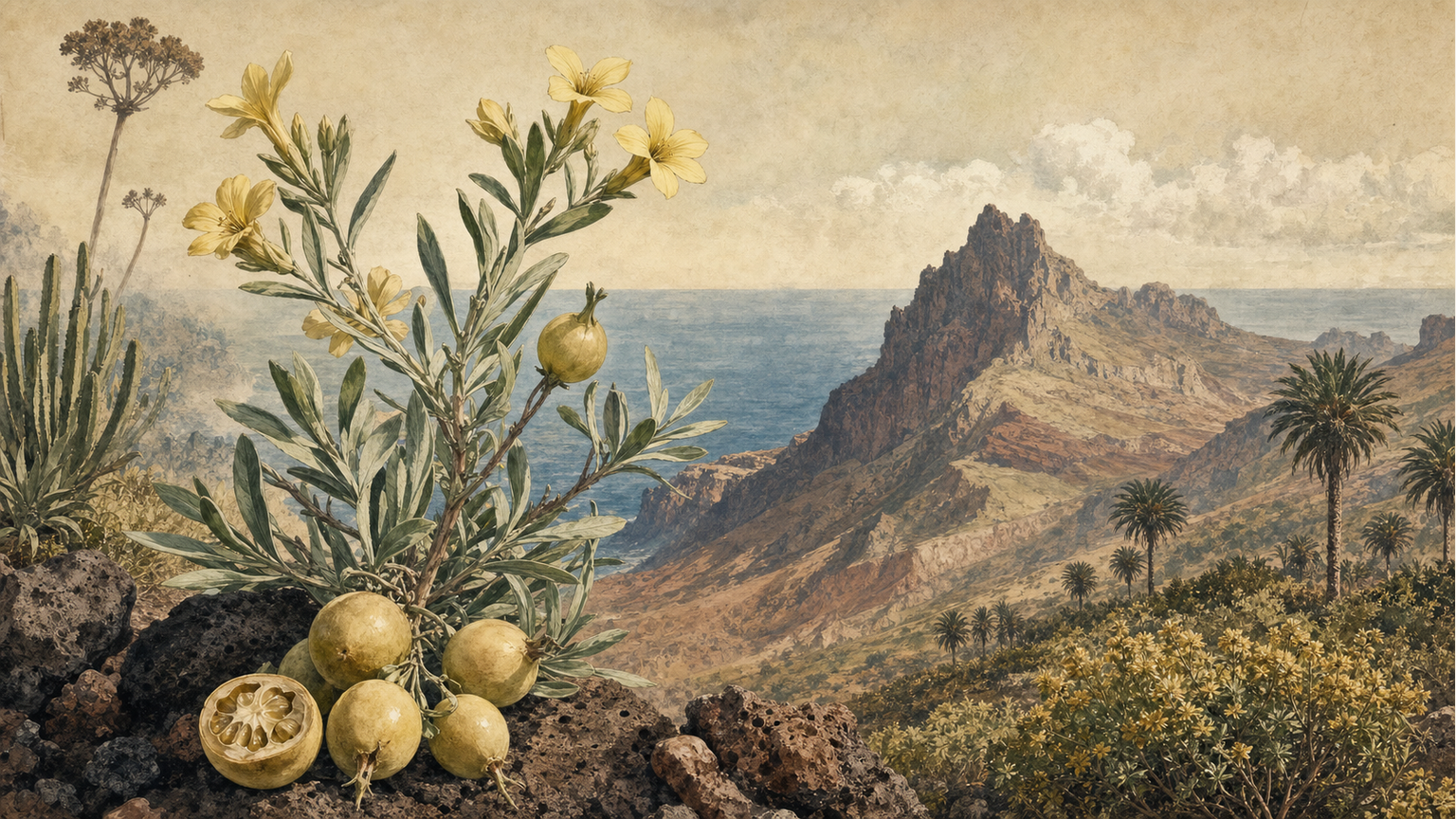
Webb and Berthelot describe Canarina canariensis as a perennial herb with a tuberous root and long, sarmentose annual stems. The leaves are opposite, sometimes in threes, hastate in shape, watery in texture, with marked veins often tinged purple. The solitary, pendulous flowers have a purplish-orange or brick-red corolla, and the fruit is a fleshy, globose or pear-shaped berry with six ribs and numerous seeds inside[1].
Distribution in the Canary Islands
According to the authors, Canarina canariensis is very common in the northern and eastern mountains of Tenerife and is also found in La Palma, near Teror in Gran Canaria, and in other humid and mountainous areas of the islands[1]. Its presence is noted in places such as the “valley of Cuevas Negras” and “Averni or Infierno valley”.
Traditional Uses
Webb and Berthelot highlight that the ripe berries of Canarina canariensis, filled with whitish pulp, are edible and appreciated especially by children and the local population. In the 19th century, these berries were sold in island markets and considered a simple but pleasant food[1]. The authors suggest that this fruit may have been one of those mentioned by Pliny as abundant in the “Fortunate Islands”, though they recognize this identification as hypothetical and note that other fruits like the strawberry tree were better known to the Romans and Mauritanians[1].
Additionally, the stems of Canarina canariensis were used as fodder for horses and livestock, especially in mountainous areas, where it was considered a luxurious feed for these animals[1].
Taxonomic Considerations
The authors note that Canarina canariensis is distinguished from other Campanulaceae by its indehiscent berry fruit and discuss its botanical classification in relation to related genera. They also record various historical scientific names and synonyms used by other botanists, reflecting the complexity of its taxonomic study in the 19th century[1].
Conclusion
According to Webb and Berthelot, Canarina canariensis is a plant of great botanical and ethnographic interest, characteristic of the humid and mountainous environments of the Canary Islands. Its edible fruit and use as fodder link it to both popular diet and the traditional rural economy of the archipelago in the 19th century[1].