

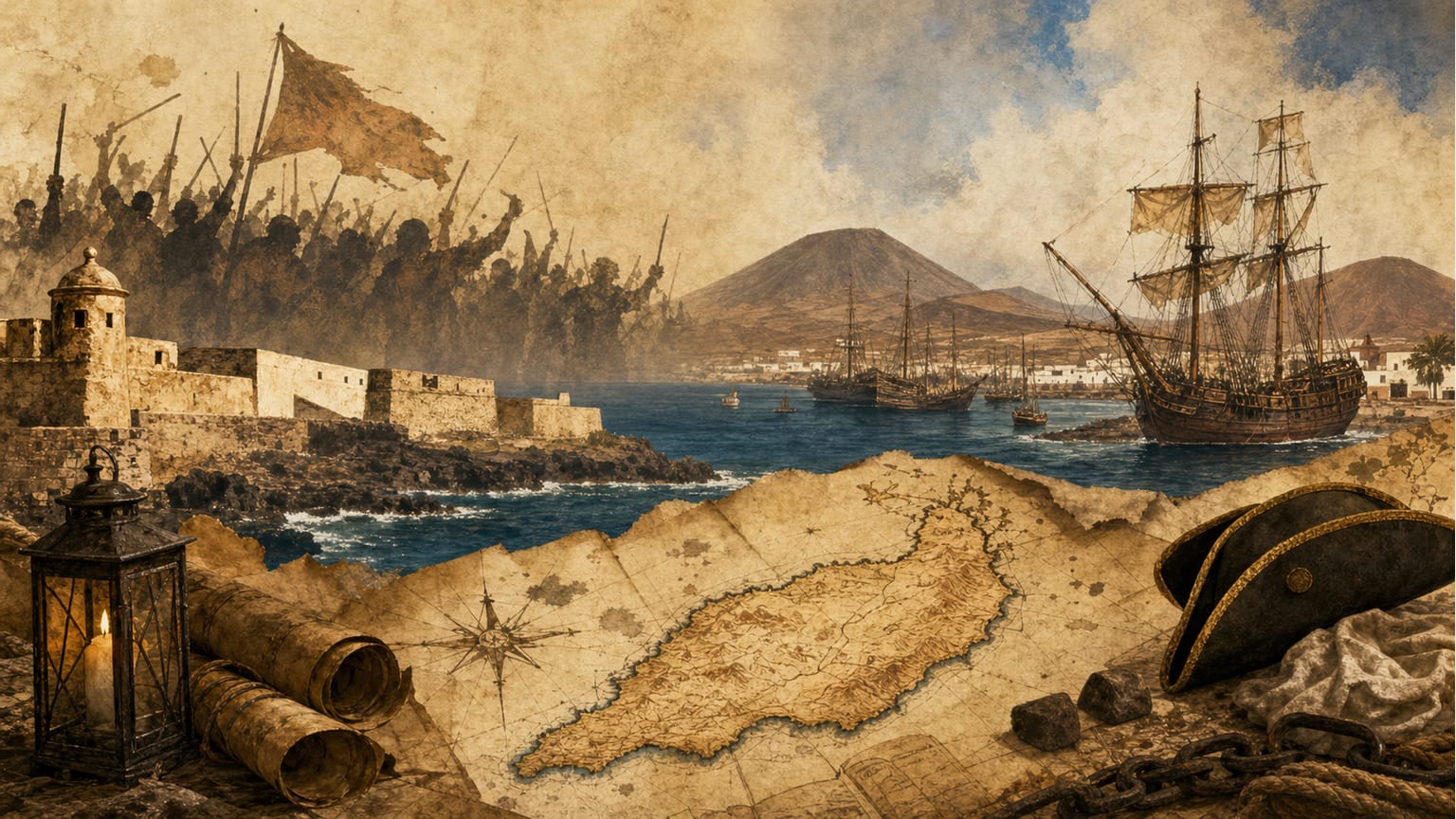
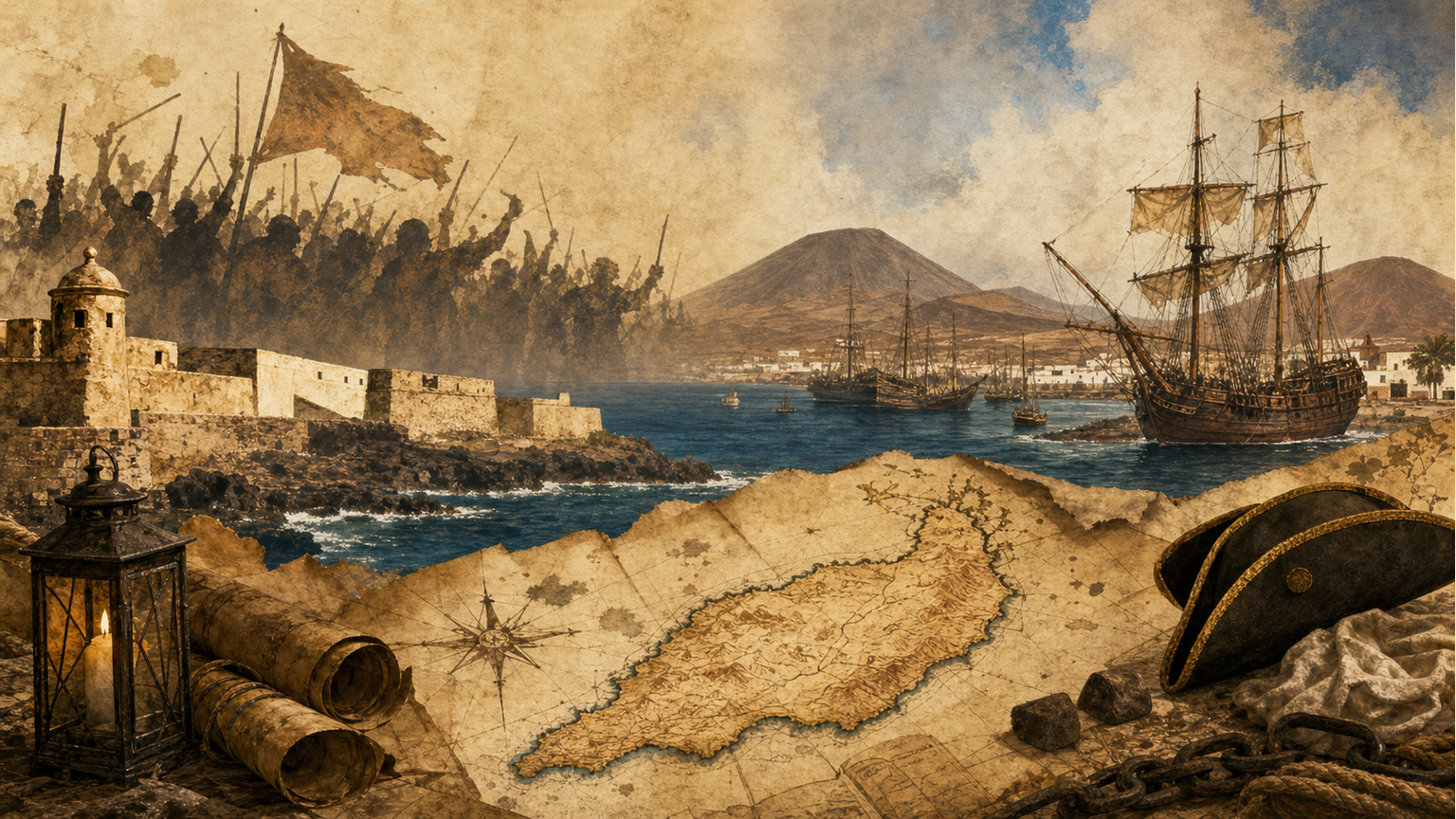
On the night of December 8, 1789, Lanzarote was the scene of a unique event known as the ‘pobrera’ uprising, a disturbance that revealed the island’s social and political tensions during the 18th century[1]. This episode took place amid a deep crisis affecting the entire Canary archipelago, although Lanzarote had experienced fewer social disturbances compared to other islands[1].
The immediate cause of the uprising was the replacement of Lanzarote’s military governor, Captain Juan Creagh Powles, by Francisco Aguilar Martínez. The change was not well received, as Creagh was highly regarded by officers, militiamen, and the popular classes, both for his military competence and his role as judge of pastures[1].
The conspiracy was organized by several militiamen and residents from different localities, who, under the pretext of preventing Creagh’s departure, arranged a meeting in Conil on the night of December 8, knowing that the governor would be staying there before departing for Las Coloradas[1]. The call was spread by word of mouth, and the plan involved gathering a group of men at the Masdame Volcano before heading to Conil. About 80 men participated, many of them militiamen and residents from places such as Yuco, La Vegueta, Tao, and Los Valles[1].
Upon arrival in Conil, the conspirators surrounded the house where Creagh was staying and demanded, in the name of Lanzarote’s ‘pobrera’ (the island’s poor and marginalized), that the captain remain as military governor. The petition was drafted by the scribe Antonio Cuevas Zaldivar, though the original document has not survived[1]. After this act, the participants dispersed peacefully, and no violent incidents occurred.
Subsequent analysis shows that the uprising was largely orchestrated by Creagh himself, who sought to use his prestige and the support of the militiamen to remain in office[1]. However, once his immediate goal was achieved, Creagh distanced himself from the conspirators and avoided direct responsibility[1].
The authorities responded by opening a summary investigation, but the process was slow and only a small number of participants were identified. Jurisdictional conflicts between the Audiencia and the General Command further complicated the case, and eventually Creagh’s responsibility was minimized, with the events considered a simple act of disrespect toward civil authority rather than a serious uprising[1].
This episode illustrates the complexity of power relations in the lordship islands and the use of social mobilization as a political tool in the context of the Canary Islands’ Ancien Régime. The ‘pobrera’ uprising stands out for its limited scope and the attempt to legitimize the action under the banner of the marginalized, although it was actually driven by personal and military interests[1].