

Introduction
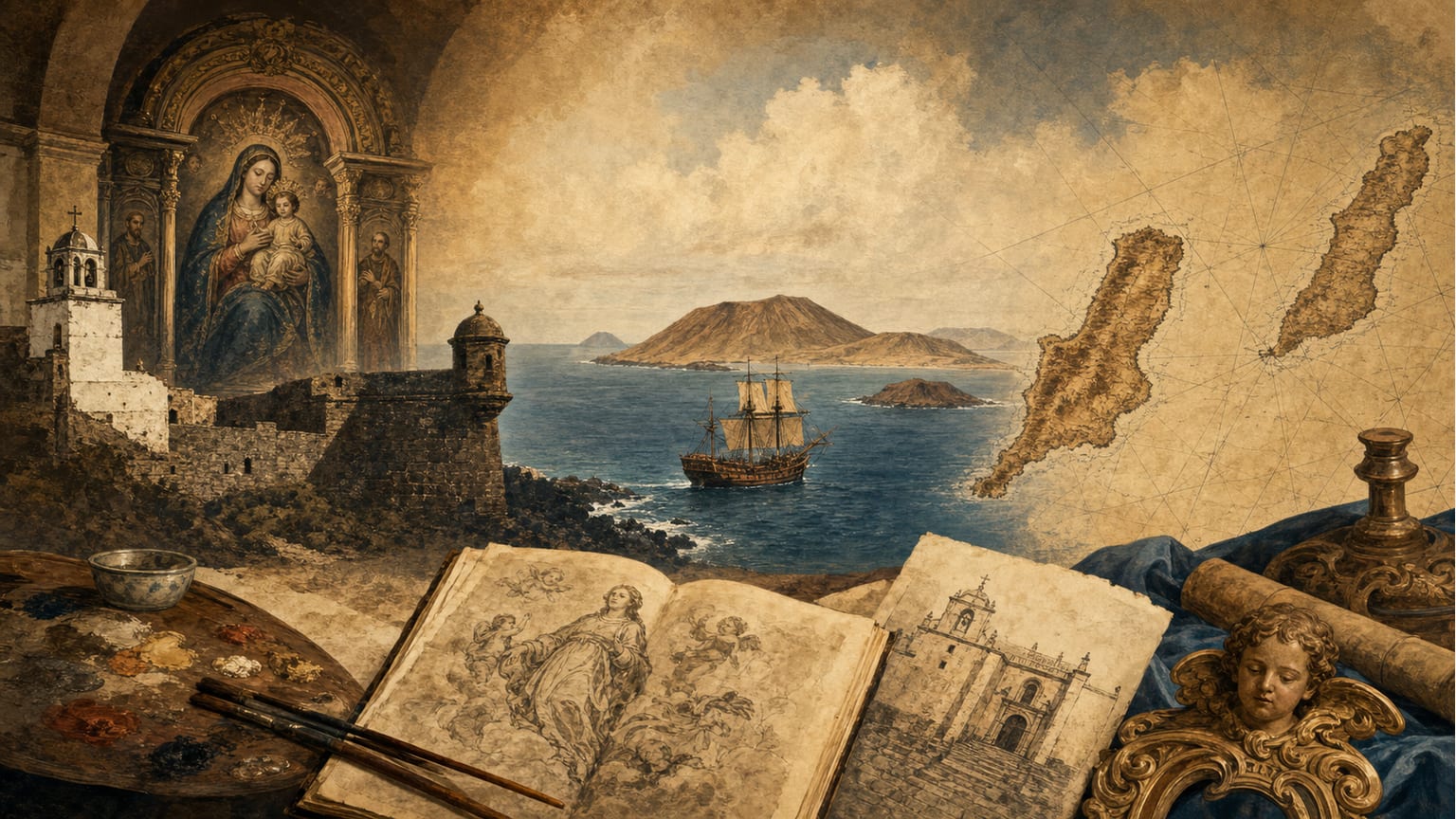
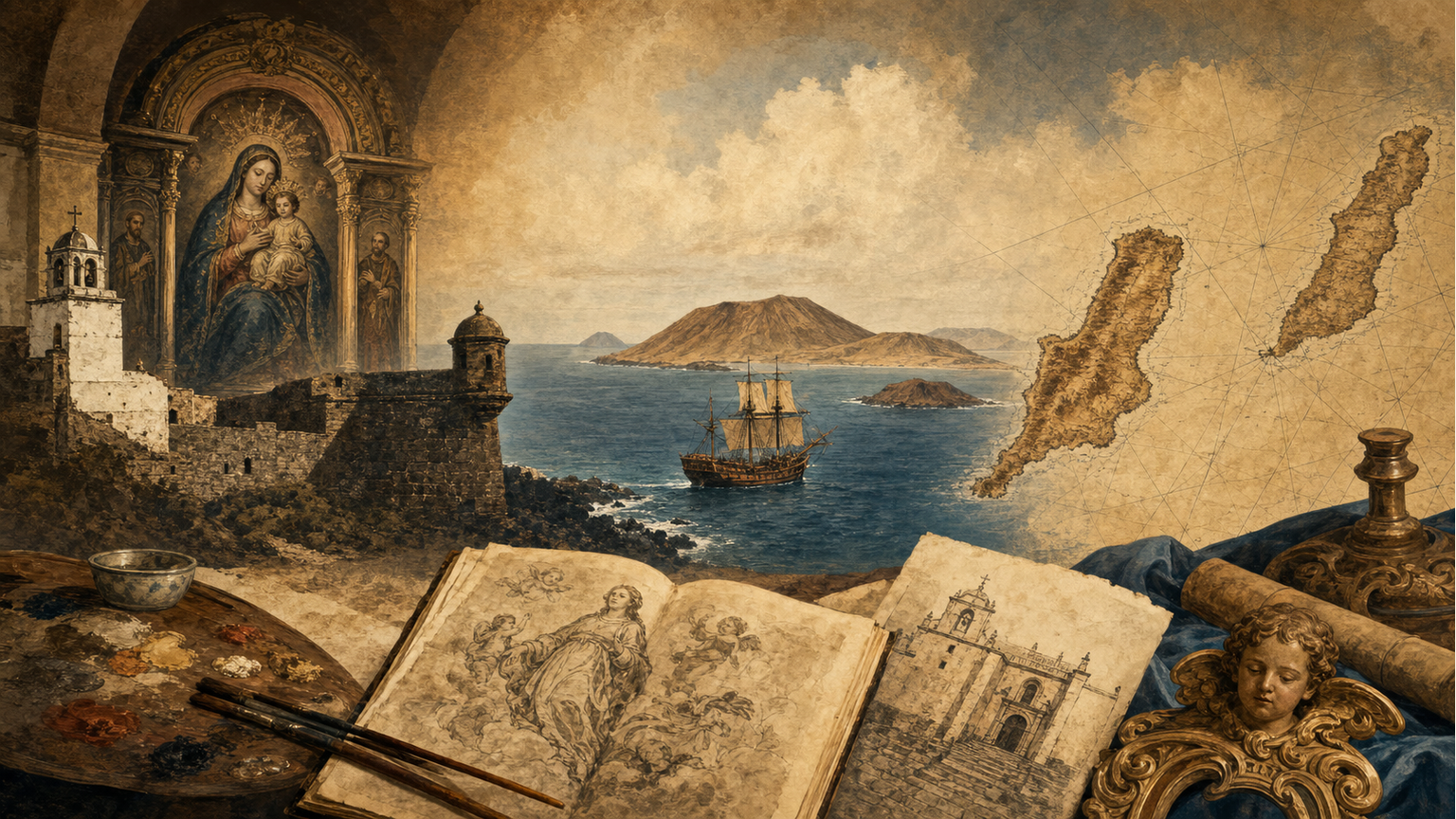
The study of religious painting in Fuerteventura and Lanzarote during the Early Modern period has advanced significantly in recent decades, mainly due to research conducted within the framework of the Jornadas de Estudios and the Tebeto journal[1]. This article examines the main features of pictorial activity on both islands, focusing on the 17th and 18th centuries, the influence of Tenerife workshops, and the preservation of works in island churches.
Scarcity of Information before the Baroque
Documentary sources and the lack of surviving works make it difficult to understand painting in Fuerteventura and Lanzarote before the Baroque period. It is possible, following the patterns of the rest of the Archipelago, that churches possessed painted works, although there is no conclusive evidence[1].
Influence from Tenerife and Local Activity
During the 17th and 18th centuries, the arrival of works and artists from the most active centers of the Archipelago, especially Tenerife, shaped artistic practice in Fuerteventura and Lanzarote. There was also local activity that met immediate religious production needs, although most notable works and masters came from outside[1].
Prevalence of Painting over Sculpture
Both islands show a higher number of paintings compared to sculptures, a phenomenon partly attributed to the narrative effectiveness of pictorial series and mural ensembles in the context of the Counter-Reformation, which favored the didactic function of churches[1].
Conservation and Loss of Heritage
The current pictorial heritage is only a small fraction of what once existed, due to renovations motivated by changing tastes and economic improvements. Many works were considered utilitarian goods and lost their patrimonial value over time, except for images of collective devotion, which favored their preservation[1]. Examples such as the church of San Pedro de Alcántara in La Ampuyenta allow for a visual and cultural approach to this past.
Masters and Workshops
Artistic evolution was marked by the temporary presence of masters such as Cristóbal Hernández de Quintana, Juan de Miranda, and Luis de la Cruz y Ríos, whose art left fundamental examples on the islands. Local and lesser-known artists also participated, responsible for a largely anonymous production[1].
Iconographic Themes and Pictorial Programs
Most of the preserved works date from the 18th century, motivated by the renovation or creation of new churches. The predominant themes are scenes from the lives of Jesus and the Virgin, such as the Adoration of the Shepherds, the Epiphany, the Flight into Egypt, and the Immaculate Conception. The series in the sacristy of the church of Santa María de Betancuria stands out for its unique iconographic program in the Archipelago, although it presents technical difficulties in spatial treatment and canon[1].
Conclusion
Religious painting in Fuerteventura and Lanzarote during the Early Modern period reflects the interaction between external influences, especially from Tenerife, and local production, as well as the importance of the didactic and devotional function of works in the island context[1].