

The Jable of Lanzarote: Historical Transformations and Aboriginal Settlement
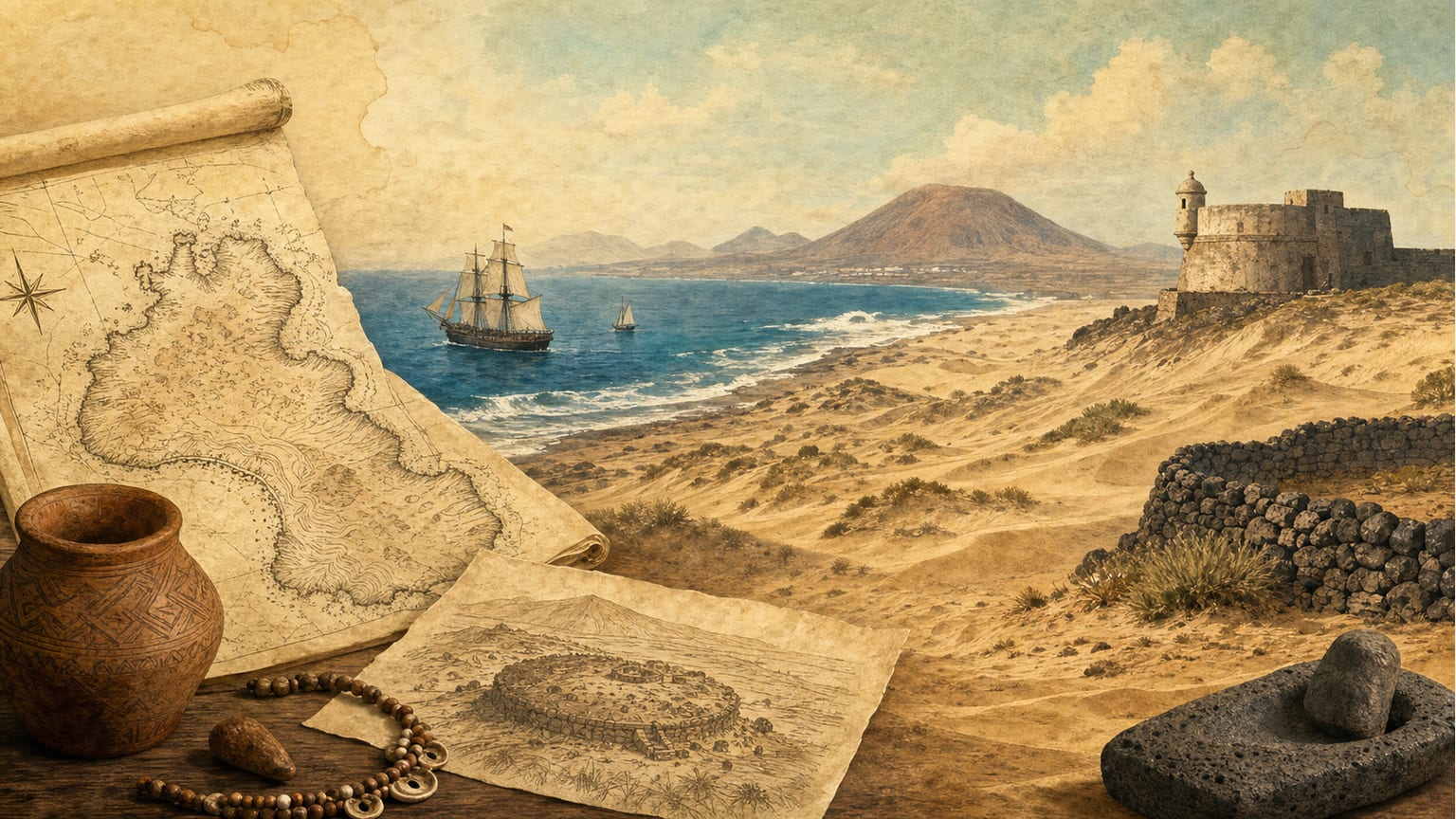
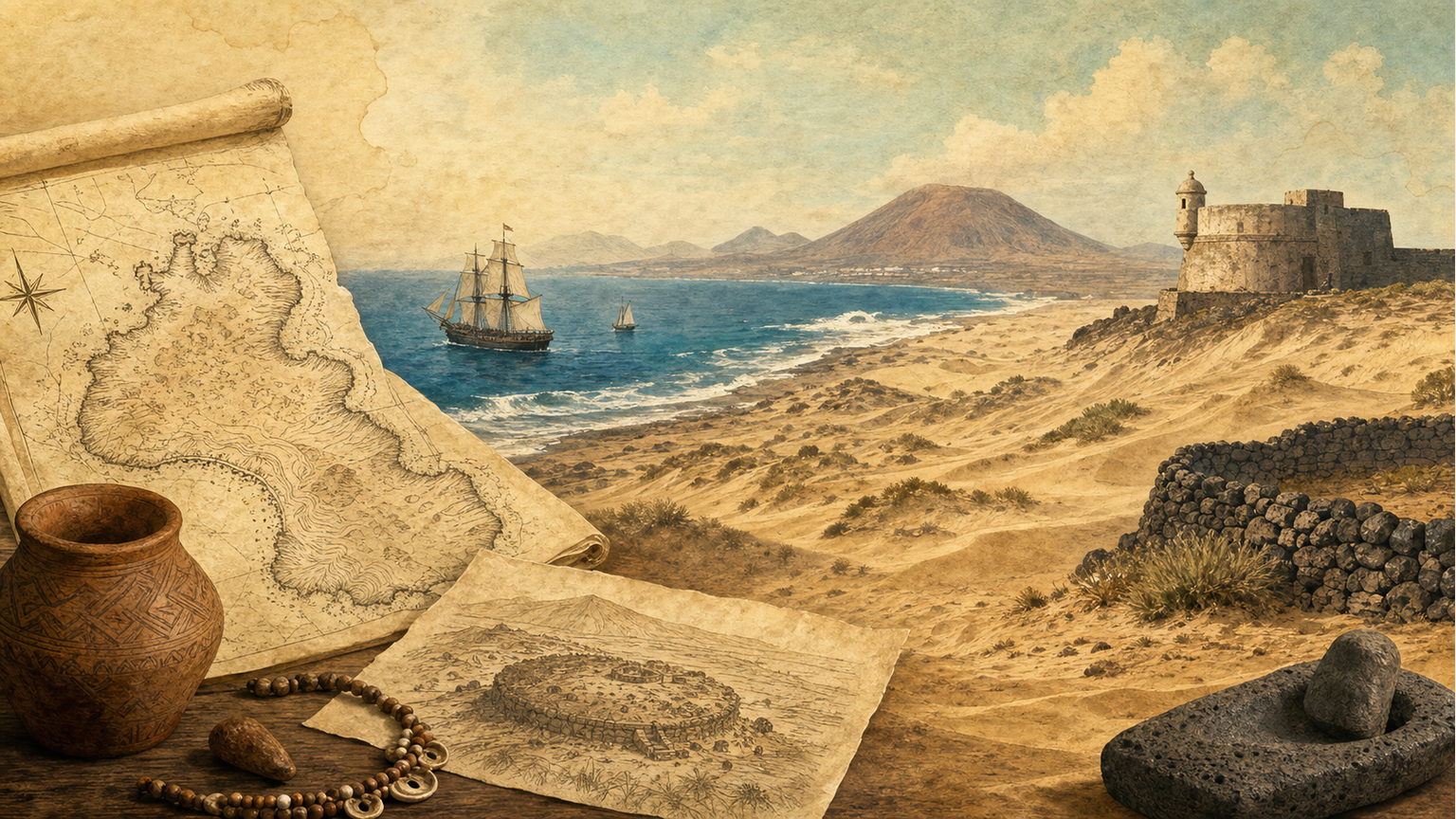
The Jable is a large central area of Lanzarote, defined by its marine sedimentary surface, mainly composed of mobile sands, shell fragments, foraminifera, and calcareous granules[1]. This zone stretches from the Bay of Penedo and Famara Beach to the central-eastern coast, forming a band about 5 km wide that crosses the island from north to south[1].
The composition and thickness of the Jable vary by location. In areas like Soo and Famara, the sand is whiter and purer, while further south it mixes with volcanic ash and Saharan dust[1]. Vegetation cover and human activities have influenced the Jable’s expansion over time. For instance, the cutting of shrubs such as aulagas and codesos allowed the sands to advance, prompting local authorities to ban deforestation to protect the vegetation and prevent the Jable’s movement[1].
Throughout history, the Jable has undergone significant changes due to natural phenomena and human intervention. Disasters like the 1825-30 sandstorm caused the sands to overrun fertile lands, burying settlements and crops, as documented in the Teguise town council records and contemporary testimonies[1]. In 1830, the parish priest of San Bartolomé described how the Jable’s sands rendered fertile lands useless and displaced entire populations, such as Mozaga and Fiquinineo, whose archaeological remains and historical references confirm their existence and later abandonment[1].
Oral tradition and historical documents record the disappearance of entire villages beneath the Jable, such as Fiquinineo, Los Bebederos-Las Cruces, and Muñique, as well as the migration of their inhabitants to areas not affected by the sands[1]. In the mid-19th century, Pascual Madoz noted ruins and settlements buried in the Jable, highlighting the importance of these sites in the island’s history[1].
The Jable has been used in various ways over the centuries. From aboriginal herding to dryland agriculture and the extraction of resources like barrilla, the Jable has been vital for the survival of local communities[1]. However, recent human pressure, urban development, and speculation have endangered both the ecosystem and the archaeological and ethnographic remains of the area[1].
In summary, the Jable of Lanzarote exemplifies how natural and human factors have shaped the island’s landscape and history, affecting settlement, economy, and culture from aboriginal times to the present[1].