

Demographic Transition in Fuerteventura (1970–1991): Youth and Social Change
Between 1970 and 1991, Fuerteventura experienced a significant demographic transition that reshaped its population structure and society. According to Alejandro González Morales, as presented in the VII Jornadas de Estudios sobre Fuerteventura y Lanzarote, this period is defined by the shift from a traditional demographic regime—characterized by high birth and death rates—to a more modern one with lower rates and a changing social fabric[1].
The expansion of the capitalist mode of production, driven mainly by the introduction of tourism in areas such as Morro Jable, Corralejo, and Caleta de Fuste, was the main catalyst for these changes. This led to a process of de-agrarianization and tertiarization of Fuerteventura’s economy, causing significant population shifts from rural, subsistence farming areas to new tourist centers and the island’s capital, Puerto del Rosario[1].
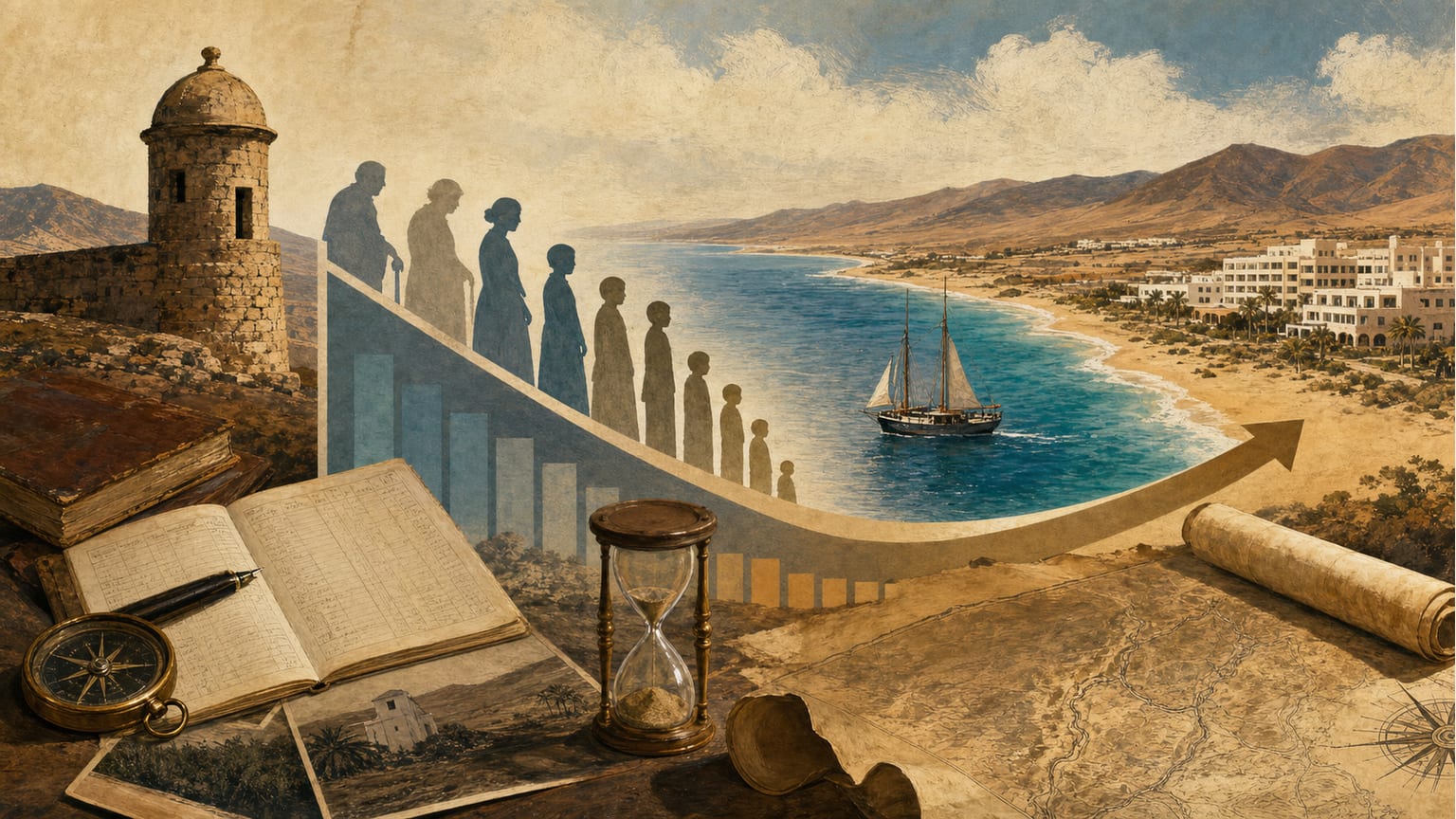
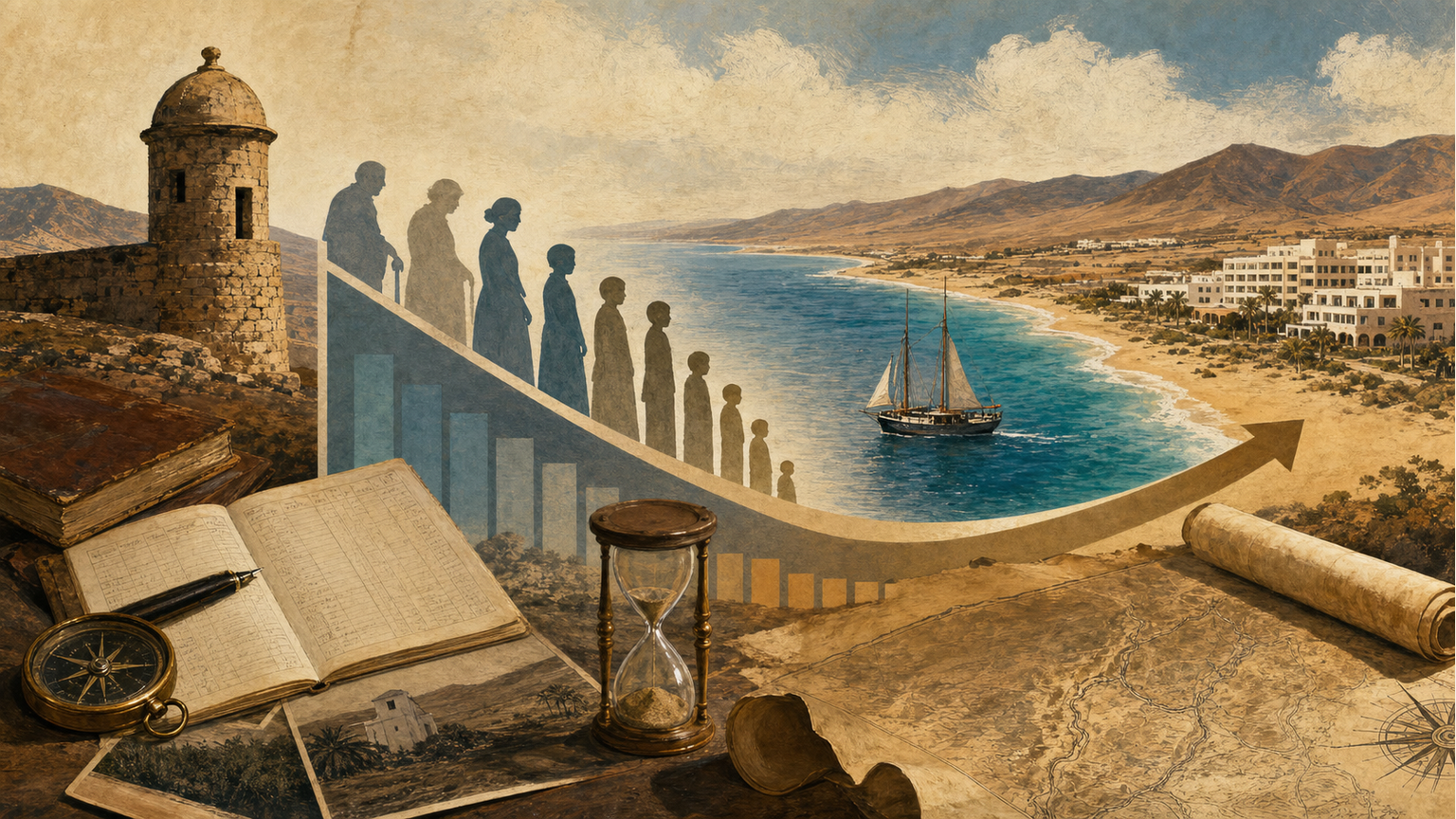
Population pyramids from 1975 show a broad base and narrow top, indicating a predominantly young population. However, between 1975 and 1991, the proportion of elderly decreased in most municipalities, while the share of adults increased, especially due to immigration linked to the tourism boom and the establishment of the III Tercio de la Legión in the capital[1].
In municipalities like Betancuria, rural exodus led to some population aging, while tourist and urban centers maintained a youthful demographic profile. Real population growth remained considerable due to the onset of immigration, replacing the traditional emigration to other islands or the African continent[1].
The demographic transition is also reflected in the evolution of population pyramids: in 1975, the base was broader than in other eastern islands, but by 1991, a “urn” shape emerged, signaling the shift toward more modern demographic practices[1]. Nonetheless, Fuerteventura lagged behind other areas in this process, due to later adoption of birth control and modern practices.
The tertiarization process not only altered the age structure but also the sectoral composition of the active population. Until the 1950s, most people worked in the primary sector, but from the 1970s onward, services and tourism became dominant, displacing agriculture and livestock[1].
Despite improvements in schooling in recent decades, educational levels remained low compared to the rest of Spain, especially among adults and the elderly. Illiteracy, though declining, remained a distinguishing feature of Fuerteventura’s population during this period[1].
In summary, Fuerteventura’s demographic transition between 1970 and 1991 was marked by declining birth and death rates, the rise of tourism, immigration, and a predominantly young population, with signs of future aging. These changes laid the groundwork for a society in the midst of modernization, but still dependent and facing significant social and educational challenges[1].