

Mass Emigration Due to Crisis and Eruptions: Lanzarote and Fuerteventura in the 17th and 18th Centuries
Throughout the 17th and 18th centuries, Lanzarote and Fuerteventura experienced significant migratory movements, mainly caused by agricultural crises, prolonged droughts, and catastrophic events such as the Timanfaya volcanic eruption. These phenomena deeply affected the demography and social structure of both islands, creating a constant flow of emigrants to other islands in the Canary archipelago, especially Gran Canaria and Tenerife[1].
Subsistence crises, resulting from a lack of rainfall and poor harvests, were recurrent. For instance, between 1626 and 1632, a severe crisis particularly affected Lanzarote, leading to the emigration of many inhabitants to Fuerteventura and Gran Canaria. In 1628, the Gran Canaria council recorded the arrival of around two thousand poor people, children, women, and elderly from Lanzarote and Fuerteventura, many of whom died during the journey[1].
Emigration intensified during years of poor harvests. In 1676, agricultural production was null, causing a notable population decline. Between 1682 and 1685, the widespread flight of inhabitants to Gran Canaria was reflected in Fuerteventura’s population drop from 4,064 in 1683 to just 2,127 in 1684. In 1693, after further poor harvests, almost the entire population of Fuerteventura moved to Gran Canaria, although many migrants died there or on their return[1].
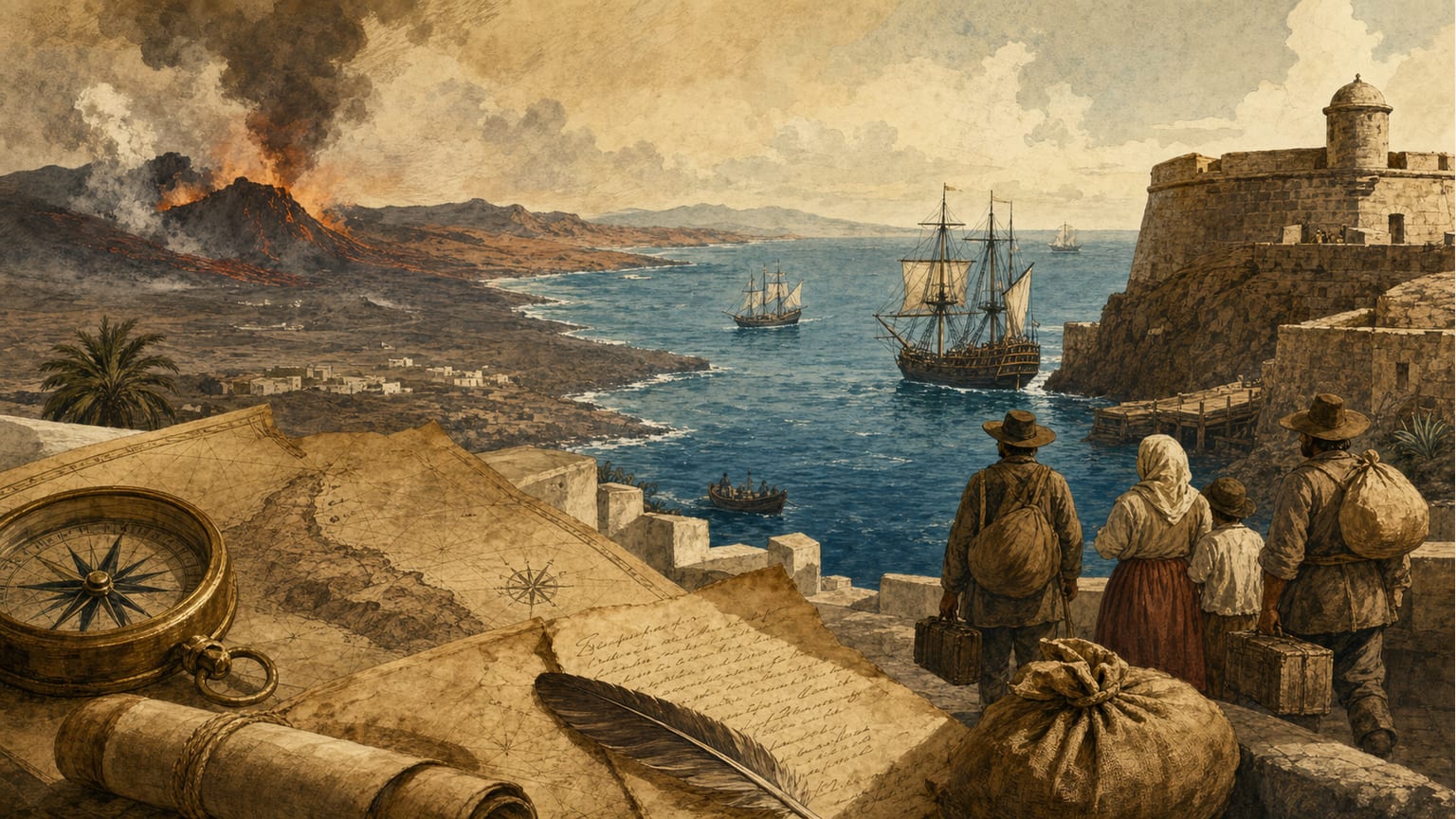
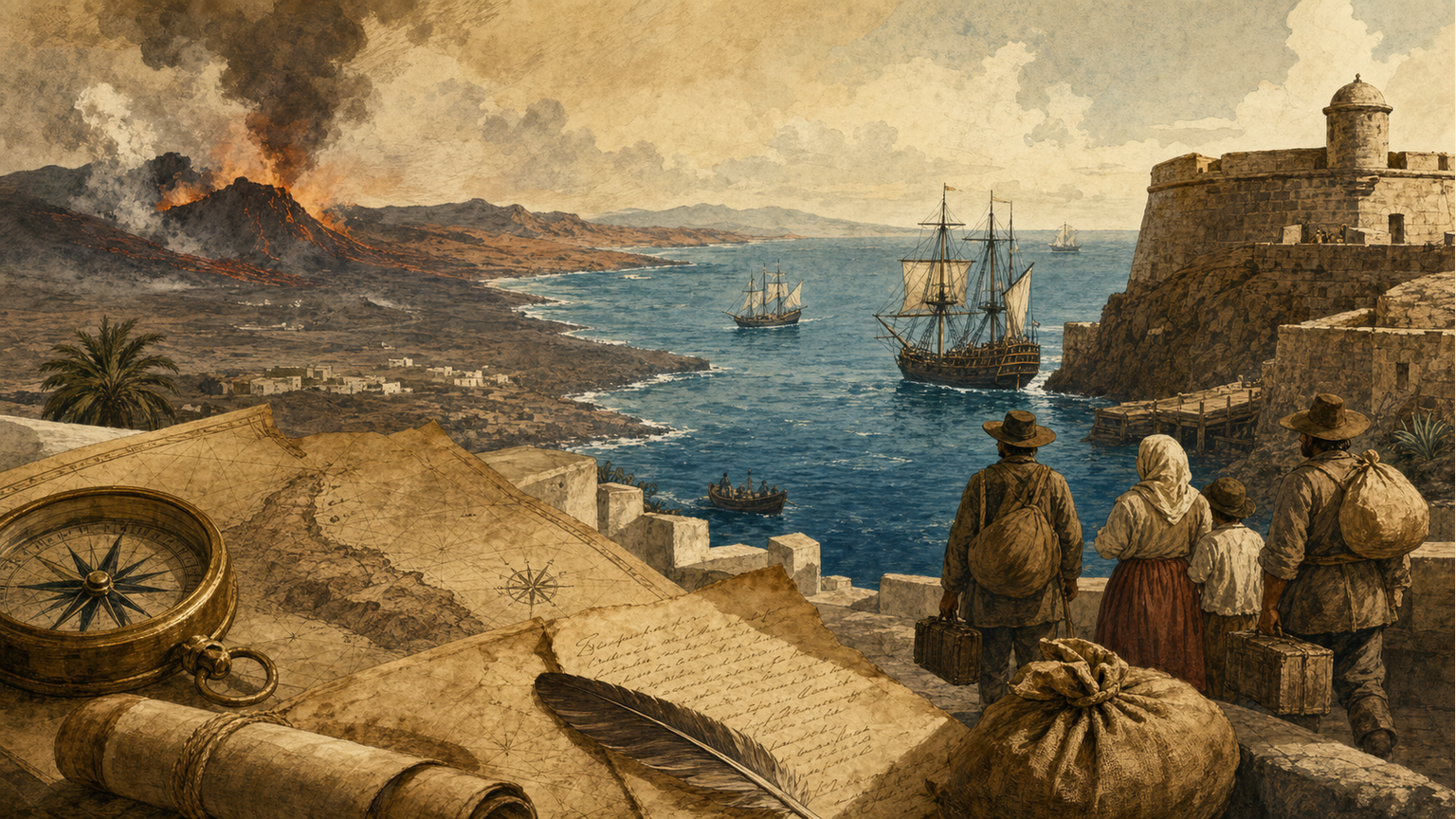
One of the most significant episodes was the Timanfaya eruption in Lanzarote (1730-1736). According to the source, the volcano affected about 57% of the island’s population. Many emigrated to neighboring islands, especially Fuerteventura, where by November 1731, around 363 people from Lanzarote had arrived. Later, the Audiencia authorized the emigration of about 400 households, equivalent to approximately 1,848 people, representing 44% of the island’s population at the time[1].
The massive arrival of emigrants generated tensions in the receiving islands. In Gran Canaria, for example, the council agreed in 1721 not to admit more emigrants from Fuerteventura and Lanzarote than the three thousand who had already arrived. In Tenerife, it is estimated that in La Laguna, about 200,000 food rations were served between 1771 and 1772 to aid the poor from Lanzarote and Fuerteventura[1].
Despite orders from authorities to limit emigration and prevent depopulation of the eastern islands, the lack of resources and the severity of the crises forced many inhabitants to seek refuge and sustenance elsewhere. In some cases, such as after the Timanfaya eruption, some emigrants did not return, settling permanently in the receiving islands[1].
These migratory movements, documented in parish records and council acts, reveal the vulnerability of island societies to environmental and economic crises, as well as the importance of inter-island mobility in the history of Lanzarote and Fuerteventura during the Early Modern period[1].