

Introduction
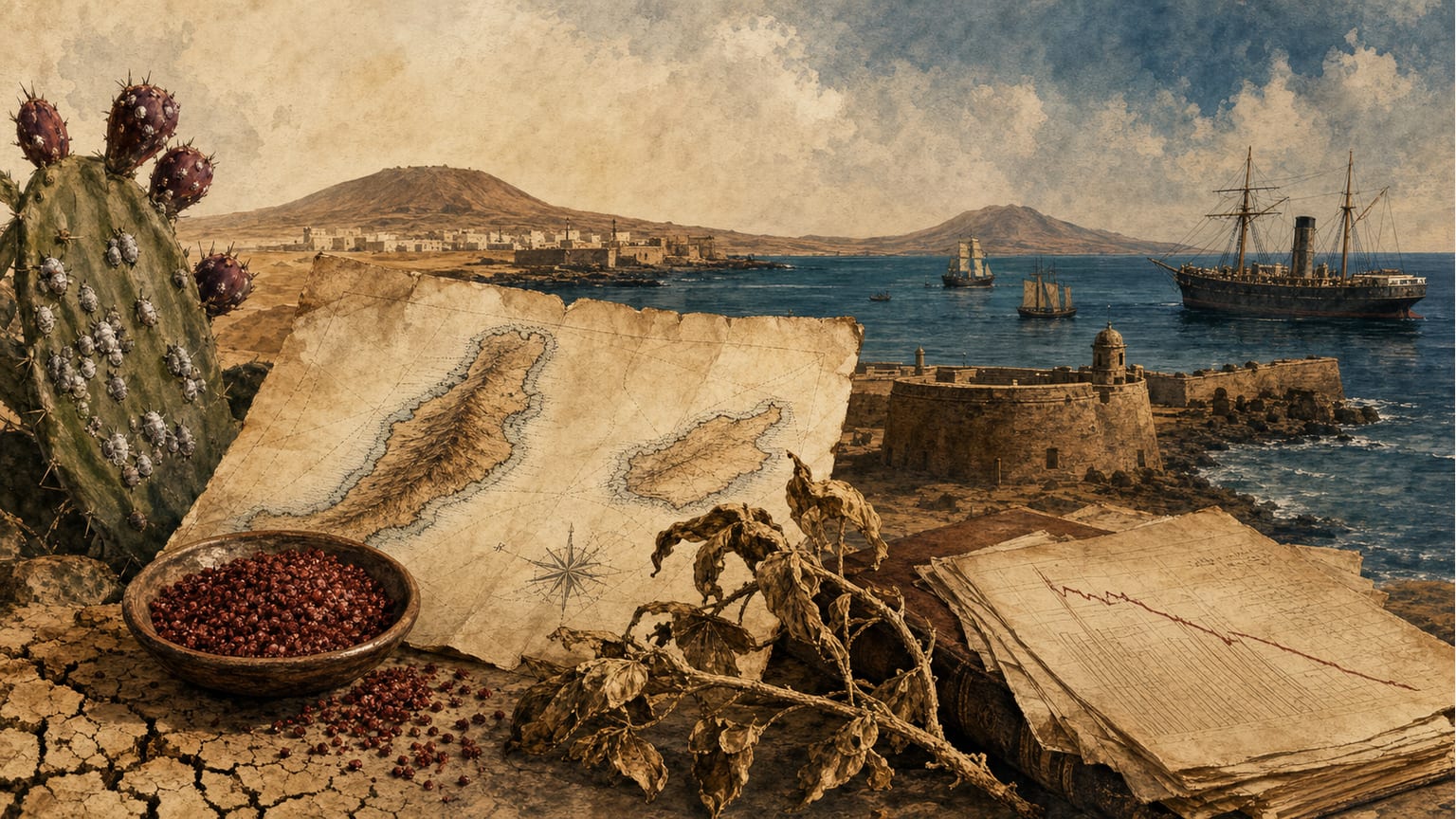
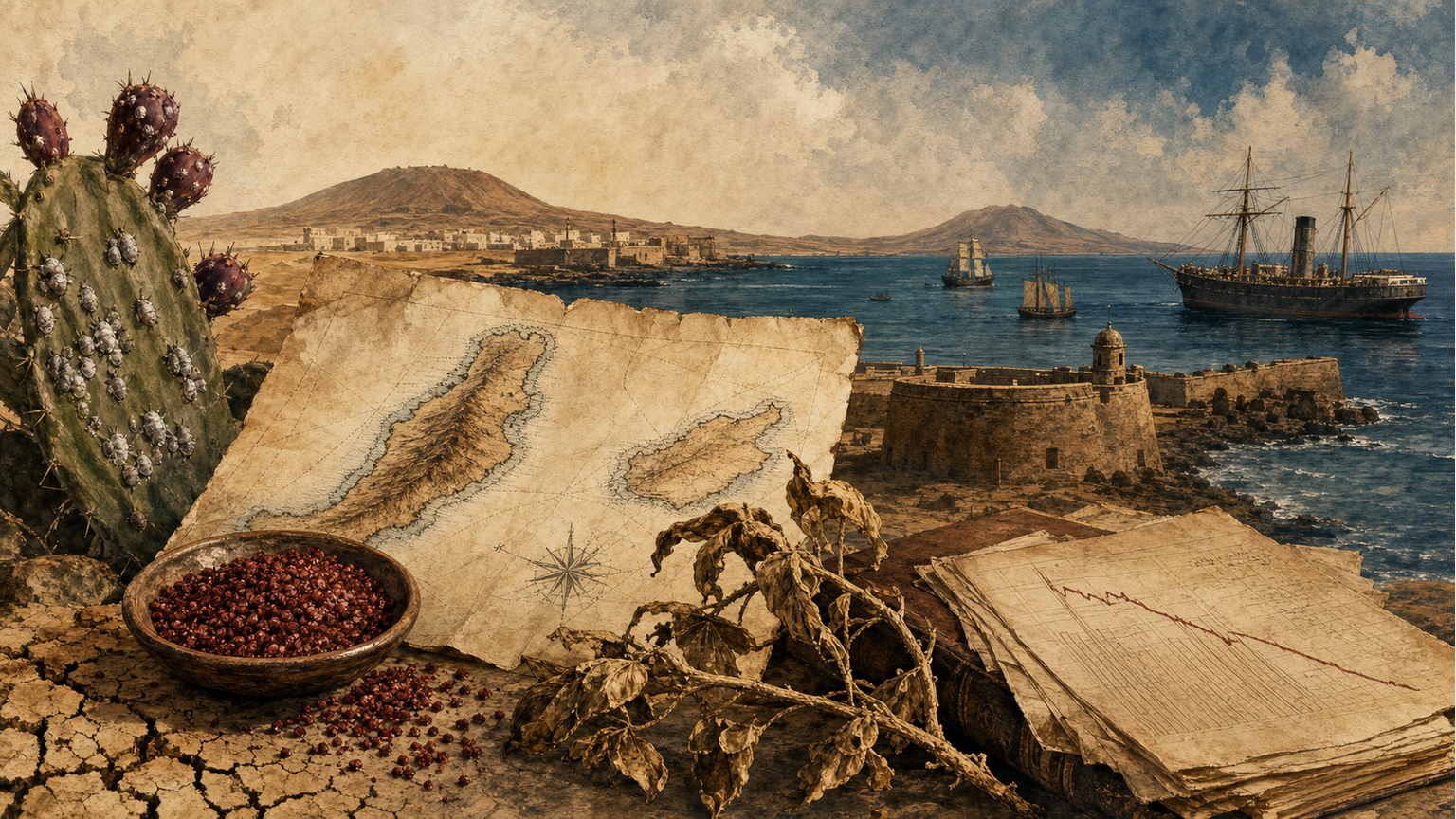
In the final quarter of the 19th century, Fuerteventura and Lanzarote experienced one of the most severe crises in their history, triggered by the collapse of the cochineal market and a prolonged drought. This period saw both islands suffer economically and demographically, with significant emigration and population decline[1].
Rise and Fall of Cochineal
Cochineal, a natural dye, became the main economic driver for Lanzarote and Fuerteventura after the decline of the barrilla industry. However, from 1875 onward, the international cochineal market collapsed due to the rise of synthetic anilines, causing prices to plummet. In La Antigua, for example, the average price per kilogram of cochineal dropped from 5.30 pesetas in 1878–79 to just 1.30 pesetas in 1882–83[1].
The Arrecife town council stated in 1882 that the maximum price of 2.75 pesetas per kilogram was “not even enough to cover cultivation costs”[1]. This loss of profitability left farmers without viable economic alternatives.
Agricultural and Subsistence Crisis
The cochineal crisis coincided with a prolonged drought that severely affected cereal harvests, the traditional staple of both islands. From 1877 to 1884, rainfall was scarce or absent, resulting in crop failures and livestock deaths due to lack of pasture[1].
Cereal prices, such as wheat and barley, reached very high levels. In Arrecife, barley remained around 7.50 pesetas per fanega for several years, making basic foodstuffs expensive and impacting laborers and smallholders in particular[1].
Demographic Impact
The severity of the crisis was reflected in population decline. Between the 1877 and 1887 censuses, Lanzarote lost 6.3% of its population and Fuerteventura 12.4%, the only islands in the archipelago to experience such a decrease during this period[1]. Municipalities like Betancuria saw their population nearly halved, and both internal and external emigration intensified.
In Puerto de Cabras (now Puerto del Rosario), the demographic crisis was especially acute, with a population drop that set the town’s development back decades[1].
Institutional and Social Responses
Local authorities requested government aid and tax relief, but the measures taken were insufficient. Public works and reforestation projects were proposed as solutions, but had little real effect[1].
The crisis also led to the ruin of many landowners, with foreclosures and land concentration in the hands of lenders and large estate owners. However, there were no significant peasant uprisings; social unrest mainly manifested in isolated thefts and robberies[1].
Conclusion
The collapse of the cochineal market and the drought of 1875–1884 marked a critical episode in the modern history of Fuerteventura and Lanzarote, with profound economic and demographic consequences for both islands in the decades that followed[1].