

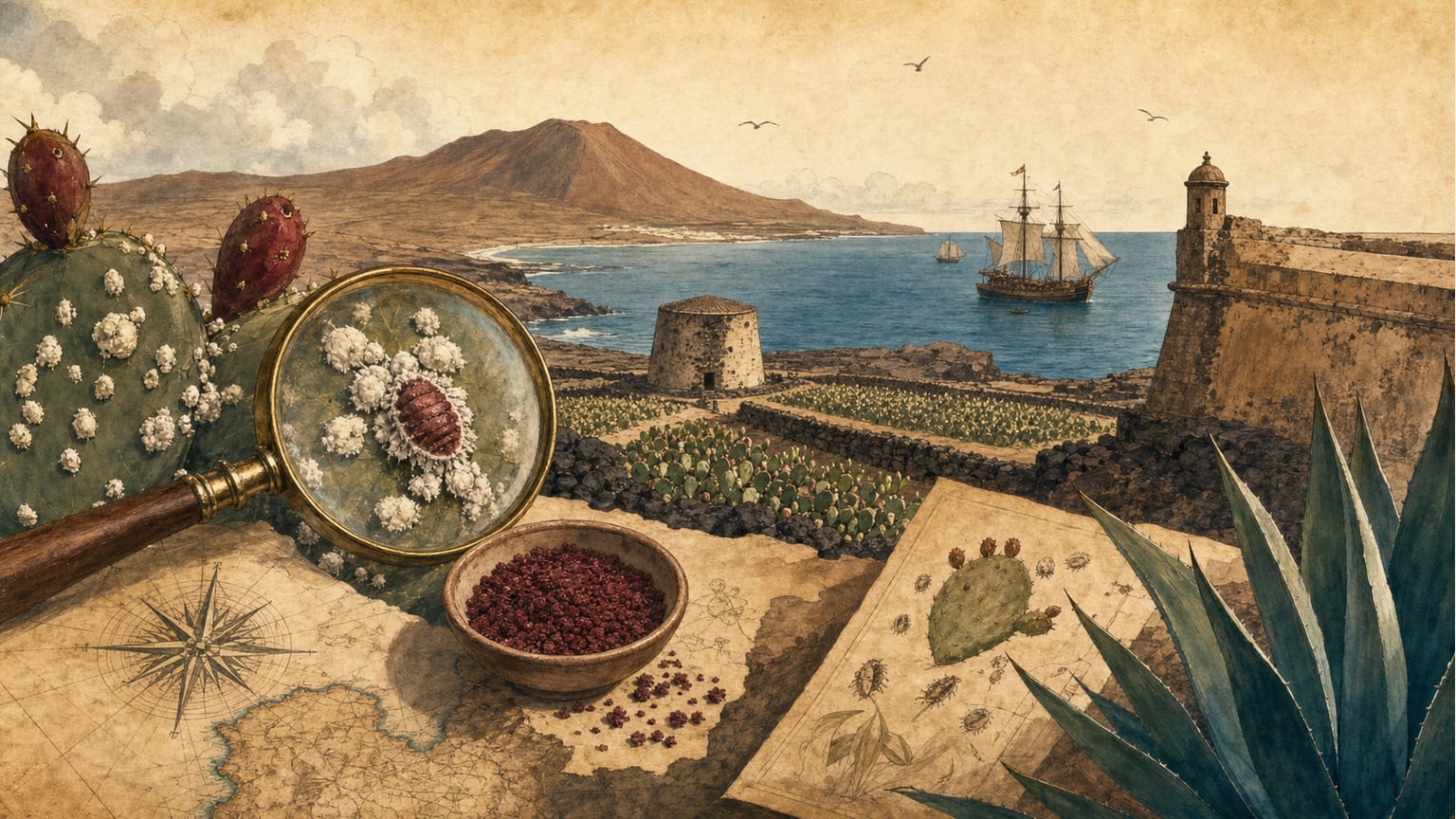
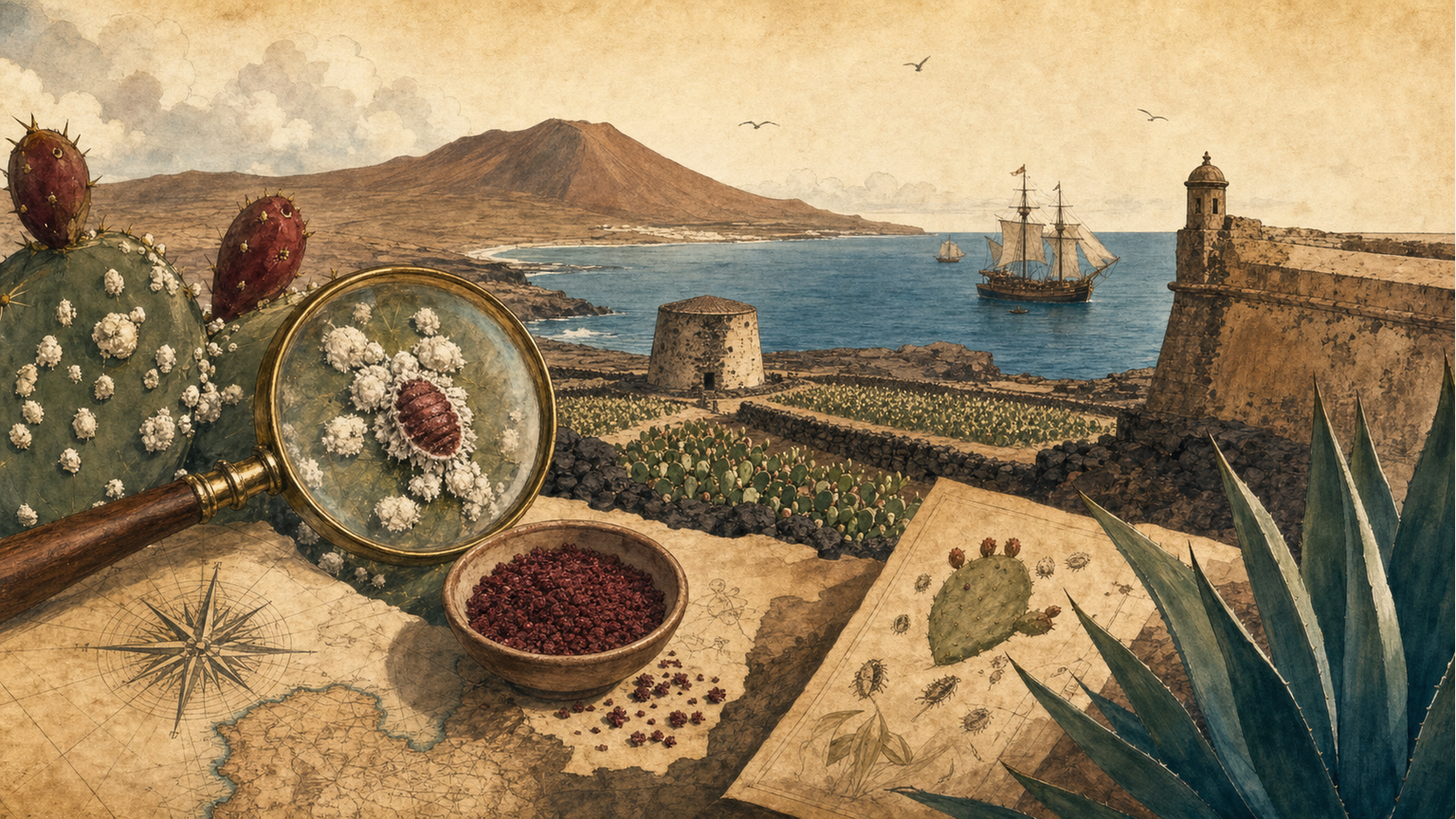
The cultivation of cochineal in Lanzarote stands out as a unique agricultural and economic phenomenon in the history of the Canary Islands, especially during the 19th century[1]. Cochineal, an insect scientifically known as Coccus cacti, thrives on the stems of prickly pear cacti, forming a beneficial infestation visible as white patches on the plants[1].
The success of cochineal cultivation in Lanzarote is due to a combination of geographic and climatic factors. The island, located in the tropical zone near the African coast, has an arid climate with average annual rainfall of only about 140 mm and strong sunlight year-round. However, the Canary Current moderates temperatures and maintains a relative humidity above 60%, creating ideal conditions for cochineal development on the cacti[1].
The most suitable areas for cultivation are found on Lanzarote’s northeast coast, particularly in the villages of Mala and Guatiza. Here, cacti are planted in rows during winter, using prickly pear pads that, after a year of growth, are inoculated with cochineal. The process involves placing mesh bags containing adult female insects on the pads to deposit eggs. After ninety days, the cochineal is ready for weekly harvesting, a task requiring about one person per hectare and coinciding with the summer months[1].
After collection, live cochineal undergoes agitation and sun-drying, followed by cleaning before being packed in porous sacks for export. The main destination was the dye industry, especially for carmine, which was highly sought after in international markets during the 19th century[1].
Cochineal cultivation in the Canaries began in the early 19th century, gaining momentum after its presentation at the Royal Economic Society of Cádiz in 1820. In Lanzarote, the crop became established thanks to ingenious agricultural techniques and the use of marginal lands, allowing even the poorest sectors of the population to benefit from this activity[1].
During the 1850s and 1860s, cochineal production peaked, accounting for up to 90% of the Canary Islands’ export value, with the British market as the main buyer. However, from 1873 onwards, factors such as the Franco-Prussian War and the advent of synthetic dyes caused a deep crisis in the sector, drastically reducing the cultivated area and the economic importance of cochineal[1].
Despite the crisis, in places like Mala and Guatiza, cochineal cultivation has persisted, maintaining traditional techniques and an aging demographic among growers. This ongoing practice is a living testimony to Lanzarote’s agricultural adaptation and economic history[1].