
The Cenobio de Valerón: Description and Function Debates in El Museo Canario (1880)
The Cenobio de Valerón, located on the island of Gran Canaria, was the subject of detailed attention in the 1880 issue of El Museo Canario, which collected observations and debates about its nature and function. According to the source, the first significant description is attributed to D. Pedro Agustín del Castillo, who visited the site and recounted his experience in his work Descripción Histórica de las Islas de Canaria[1].
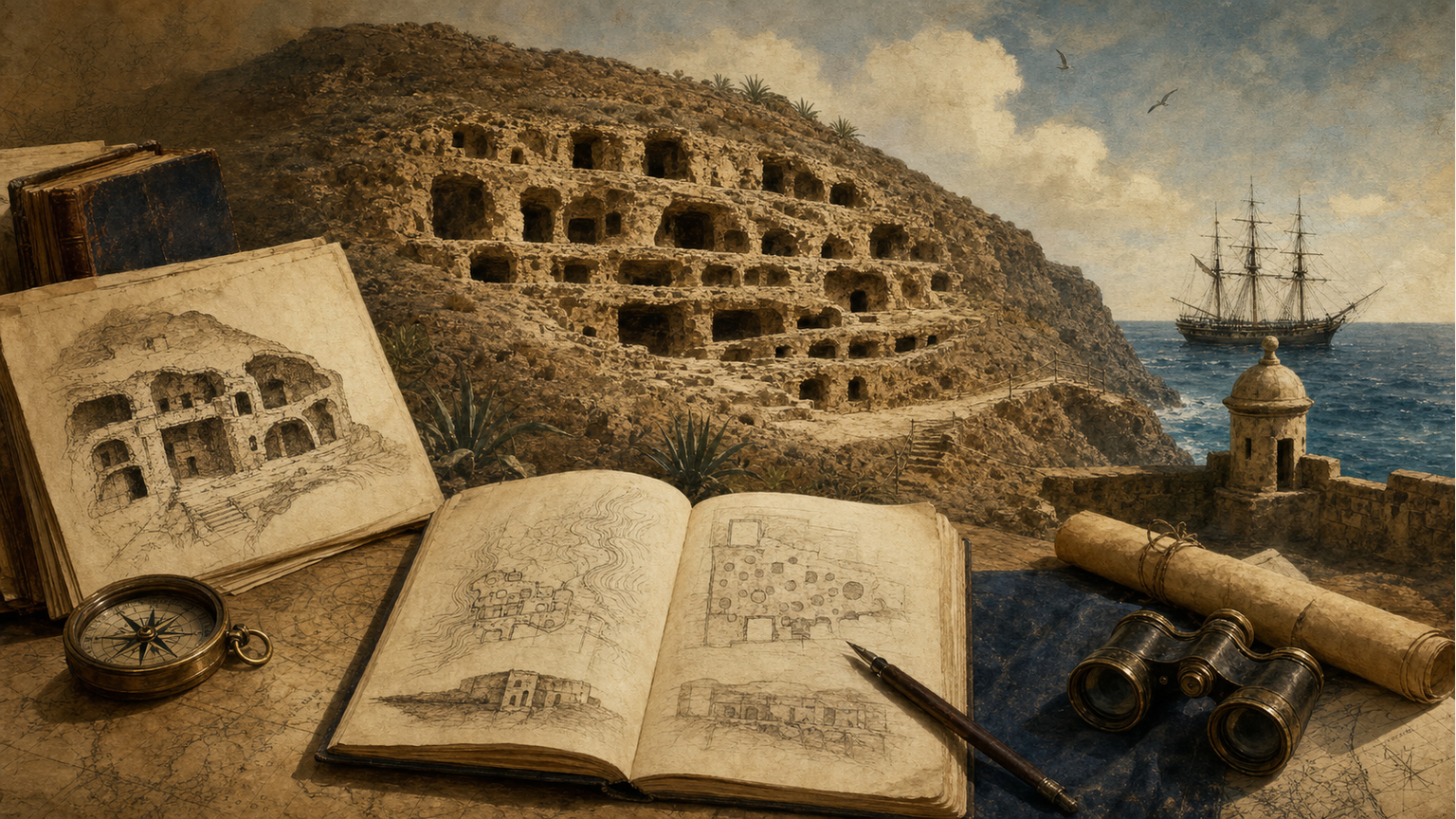
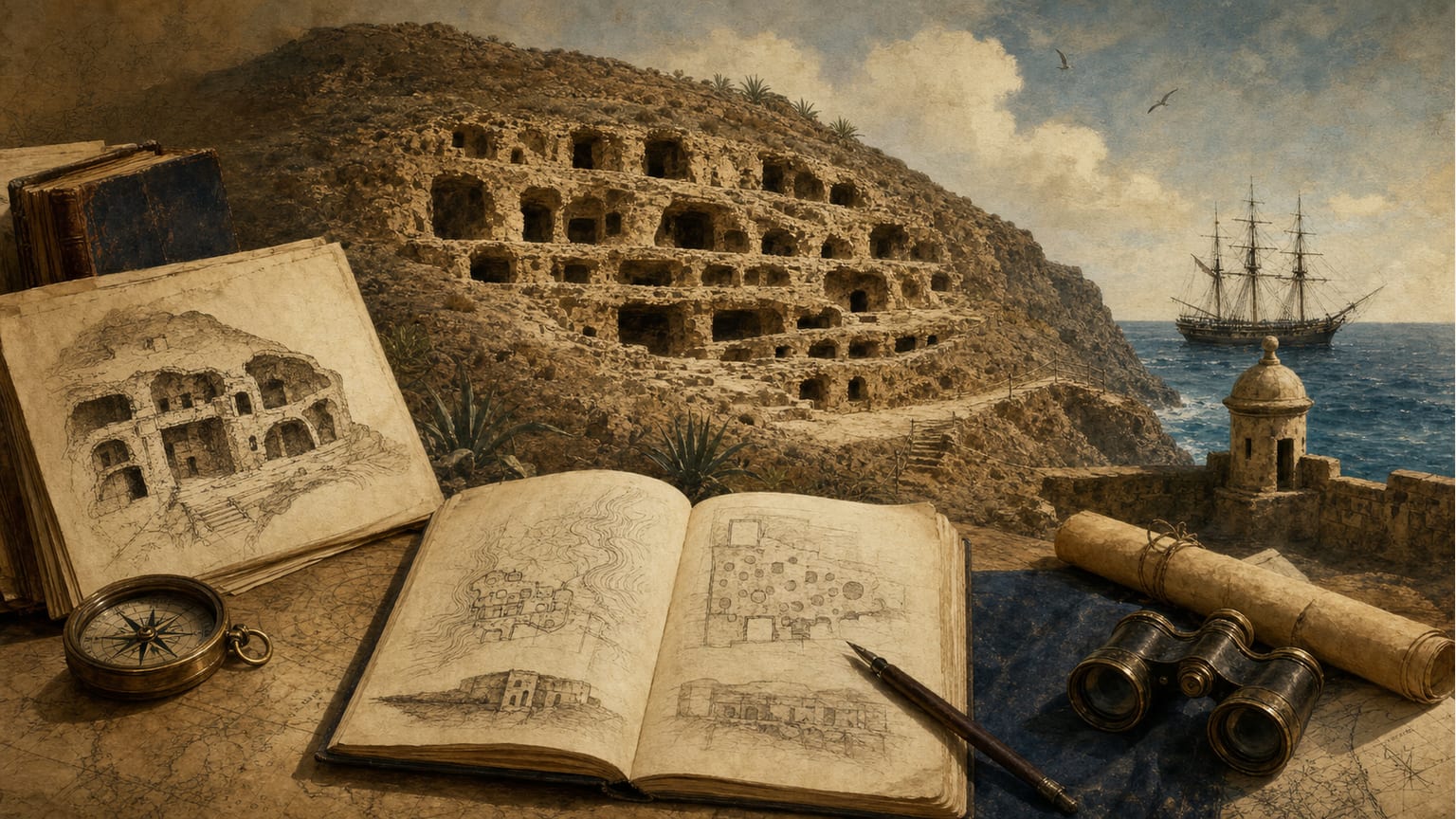
Del Castillo described the Cenobio as a structure carved into a cliff above the Valerón ravine, accessible only with difficulty. He noted the presence of numerous cells or rooms, arranged on several levels and connected to each other, with small windows and structures resembling towers at the entrance. According to his account, the construction was carried out without metal tools, using stone axes attached to sticks[1].
El Museo Canario states that after Del Castillo’s visit, access to the Cenobio became even more difficult due to erosion and the passage of time, making later inspections challenging. The article describes the location in detail, including the surrounding landscape, ravines, and the area’s rugged topography. It also notes that the opening of a new road in the late 19th century made access easier at the time of publication[1].
Regarding the structure, the source describes a giant shell-shaped excavation with an uneven floor and numerous caves of varying sizes, some interconnected and others isolated. The Cenobio is compared to other caves on the island, such as the Cueva de los Pilares in Umuava and the Cuatro Puertas near Gando, which have also been linked to possible religious or residential functions[1].
On the function of the Cenobio de Valerón, the source presents two main hypotheses: one suggests it was a convent for harimaguadas (Canarian priestesses), while the other considers it simply a cluster of dwellings for an indigenous tribe. The article notes that there is no conclusive evidence for either option and that the most relevant aspect is that the site demonstrates the tendency of the ancient Canarians to form large social groups[1].
The source also mentions that during the 1880 inspection, no archaeological objects were found, as previous visitors and road workers had already removed the artifacts. Additionally, the origin of the name “Valerón” is discussed, suggesting it may derive from a later settler rather than from the indigenous language[1].
In conclusion, the article states that, regardless of its original function, the Cenobio de Valerón stands as evidence of the collective life of Gran Canaria’s ancient inhabitants, reflecting their sociability and ability to organize into large groups, as seen at other sites on the island[1].