

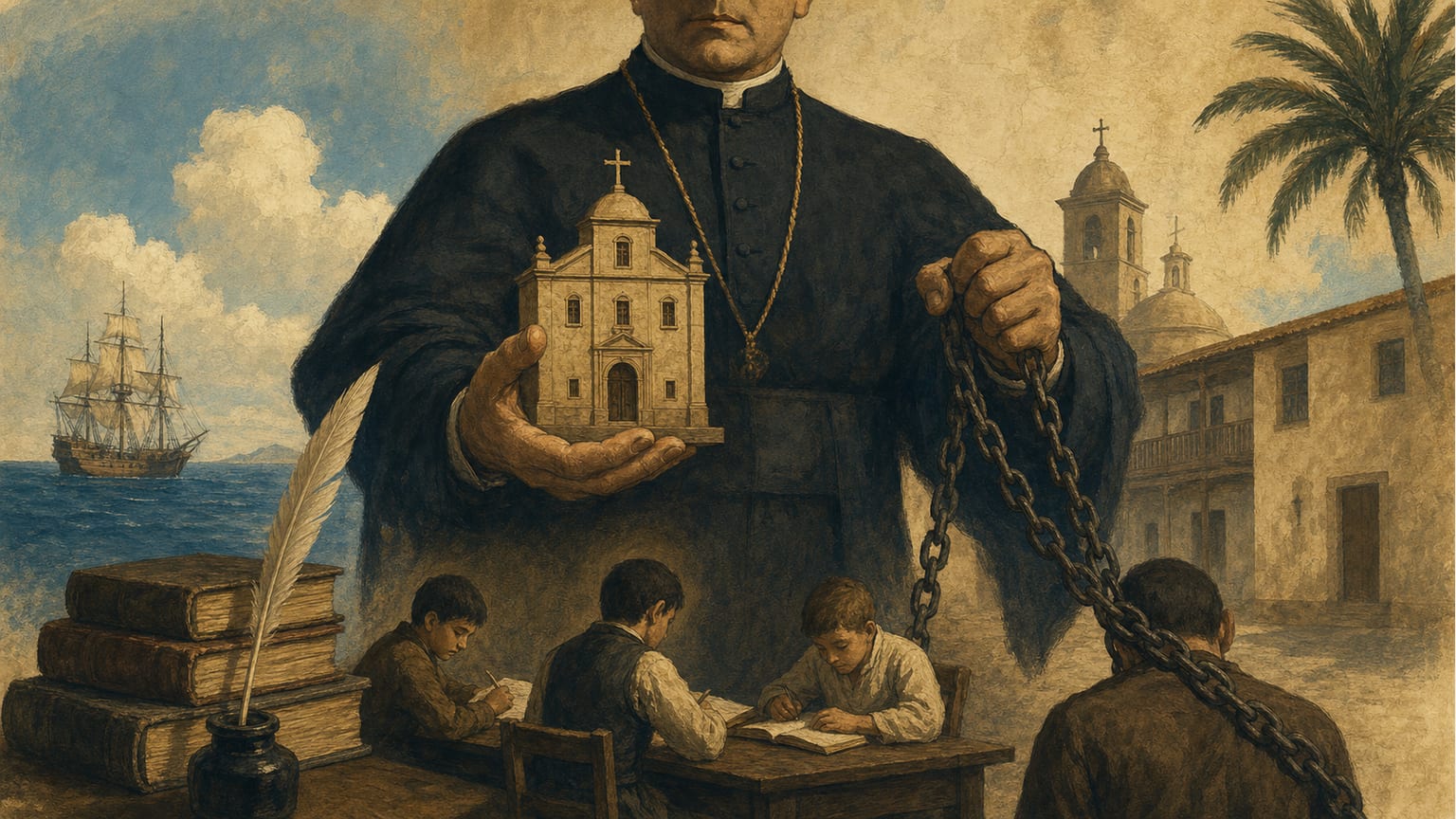
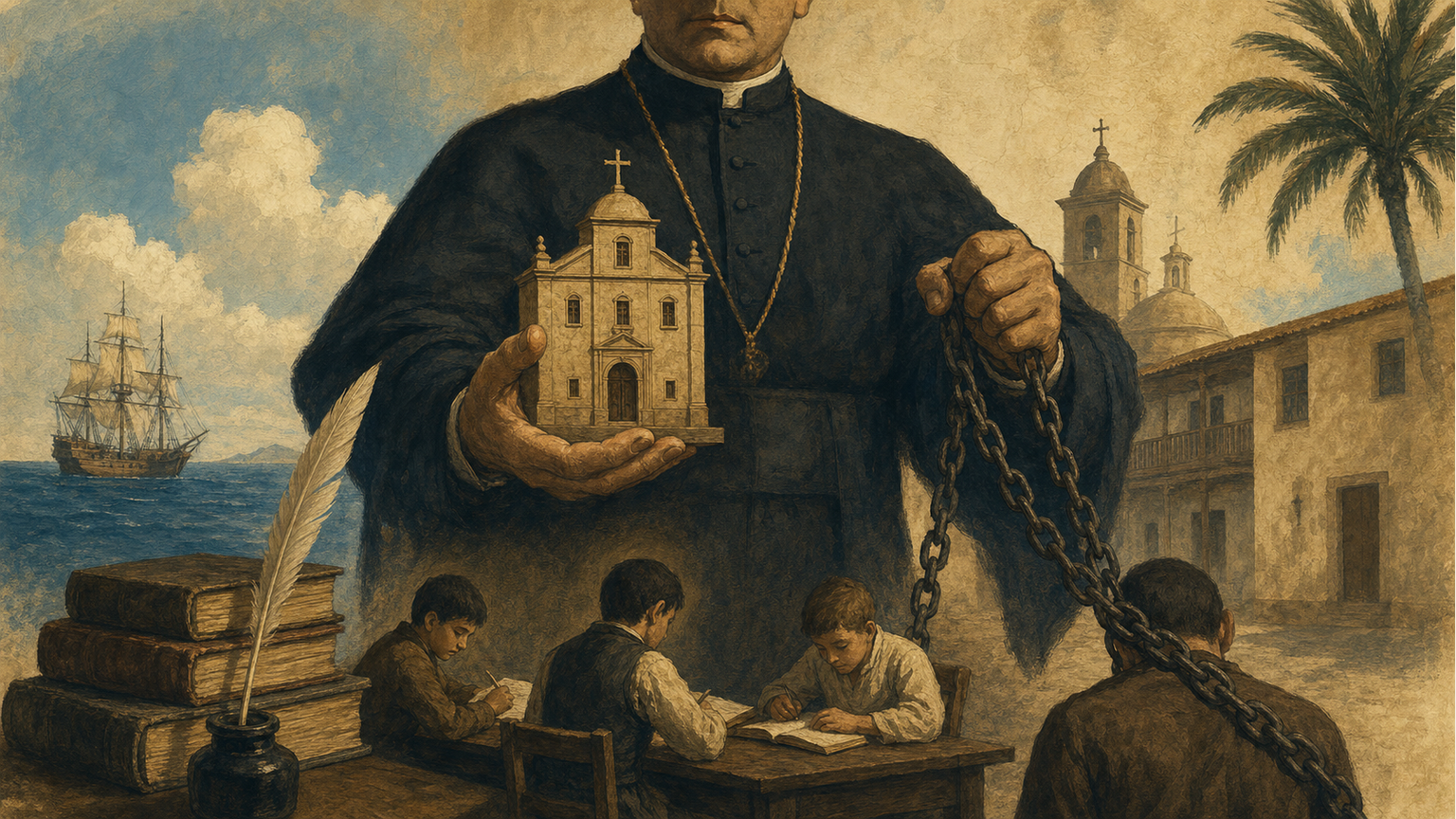
Agustín Millares Torres highlights the central role played by the clergy in the intellectual and social life of the Canary Islands during the 17th and 18th centuries. According to the author, the ecclesiastical state provided the islands with some of their most illustrious figures, significantly contributing to the cultural progress of the archipelago despite its relative intellectual backwardness[1].
Millares Torres points out that the clergy’s preeminence in Canarian society was due to its control not only over public education but also over wealth, power, and the moral and material influence of all social elements. The clergy directed and supervised primary schools, appointed and dismissed teachers and directors, and offered classes in literature, philosophy, and moral and theological sciences in nearly all major convents[1].
Additionally, the clergy enjoyed the significant privilege of censoring all works intended for publication, being able to prevent their printing if they contained ideas contrary to dogma or that undermined its influence over the governance and guidance of souls. This censorship was strictly enforced at the authorized ports of the islands, where a clergyman was specially commissioned to monitor the introduction of prohibited books[1].
The author cites an example from 1829, when Calomarde ordered the Bishop of Tenerife to confiscate copies of a work deemed offensive to religion and good morals, and requested the cooperation of civil authorities to assist the ecclesiastical jurisdiction in this task[1].
Millares Torres explains that, due to this monopoly over thought and education, many ambitious and talented young people sought refuge in convents, which were considered true sanctuaries of letters and the only secure path to honors, employment, and knowledge in Canarian society at the time[1].
The clergy’s control over intellectual life also extended to the censorship of foreign works, preventing the acquisition of important books published outside Spain, especially in countries not subject to ecclesiastical oversight. Thus, the Inquisition maintained strict control over thought and culture in the Canary Islands, limiting access to new ideas and intellectual currents[1].
According to Millares Torres, this situation explains why the clergy had a greater number of celebrated individuals among the island classes, as it possessed the means and authority to train and promote the most outstanding figures in the cultural and religious spheres of the islands[1].