

Gran Canaria in the 14th Century
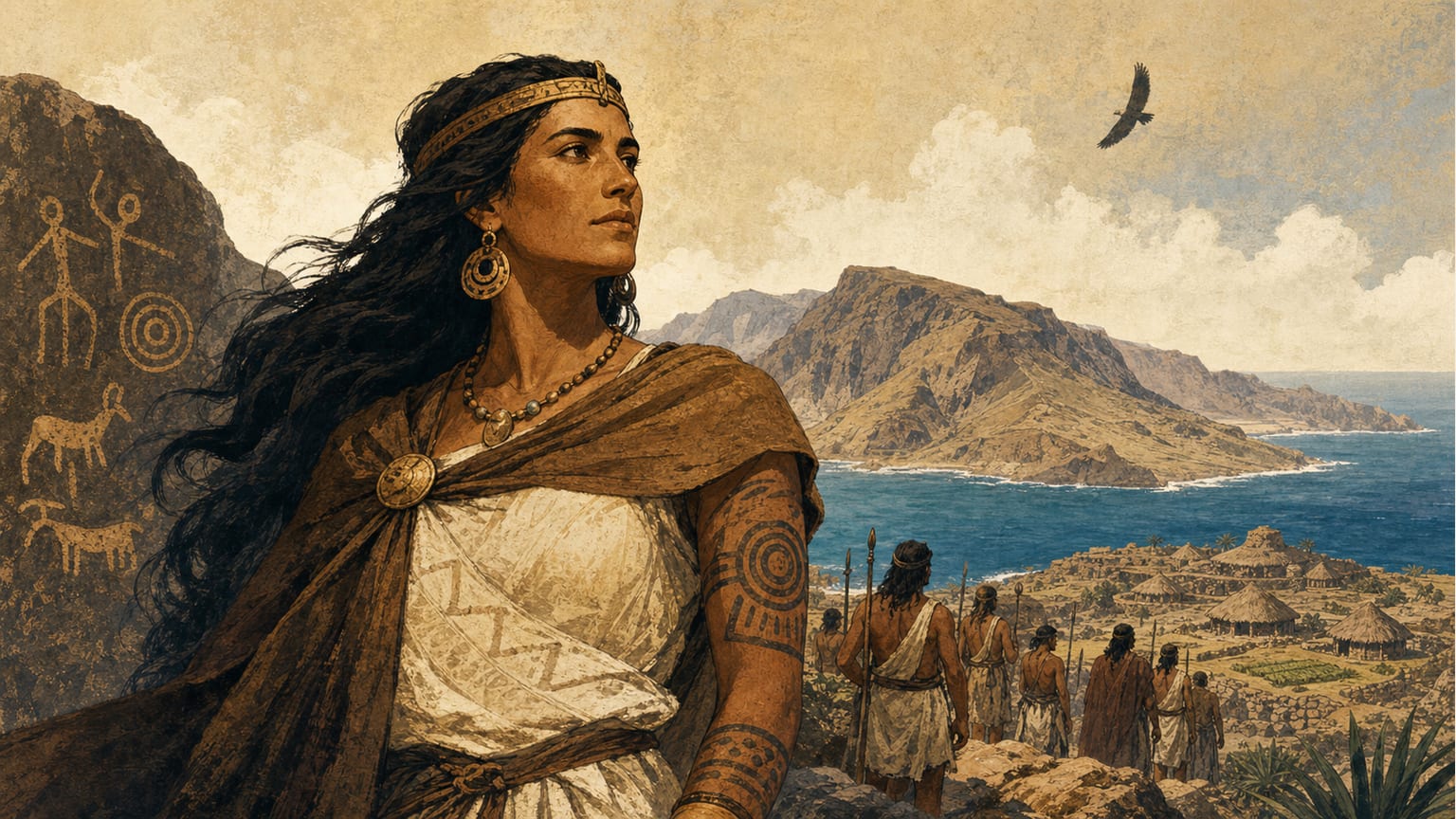
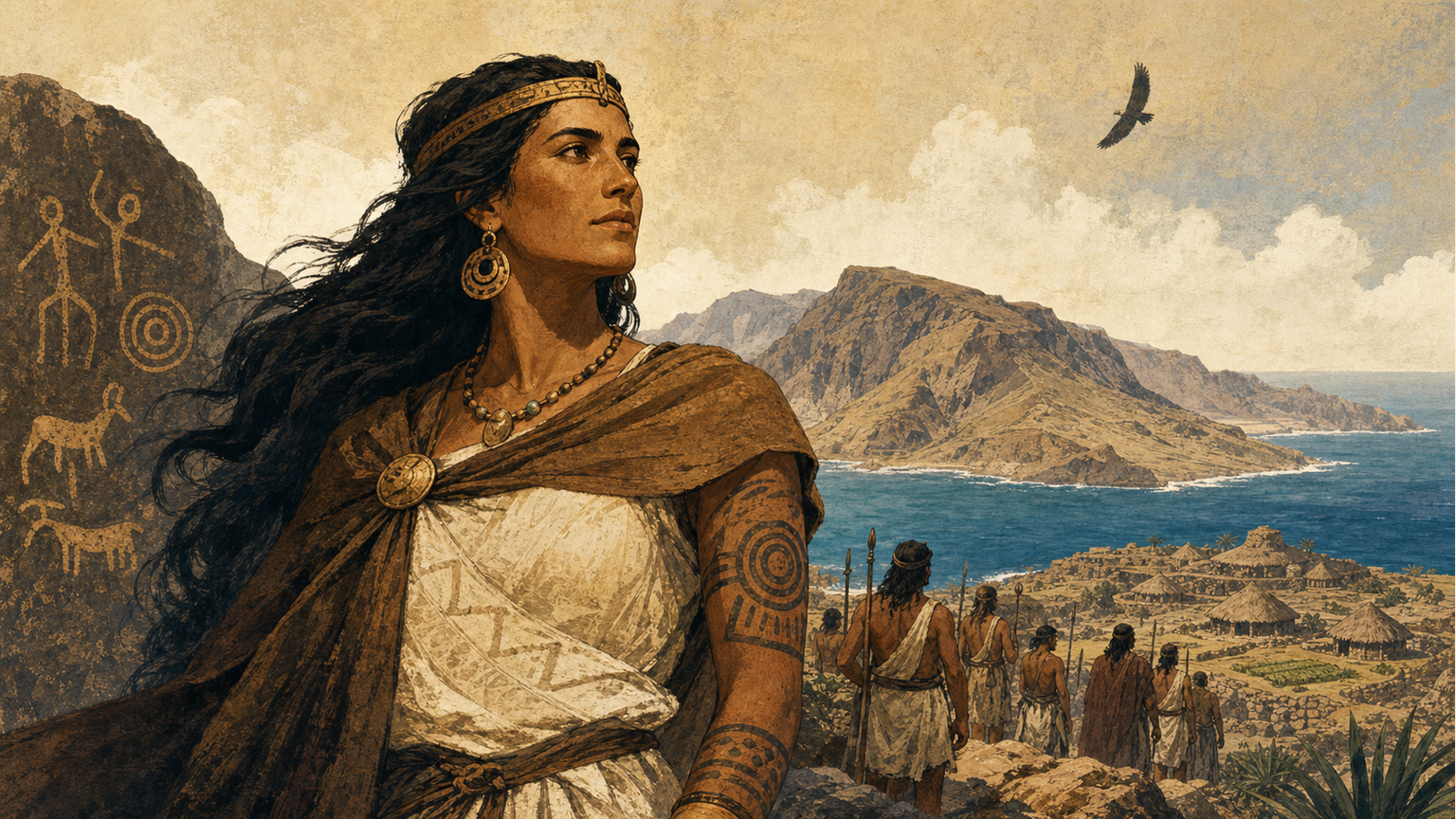
In the late 14th century, Gran Canaria was divided into ten independent districts, each ruled by a chief who owed allegiance to no other[1]. Among the seven inhabited islands, Gran Canaria was the most cultivated and showed signs of advanced civilization. Barley was grown for gofio, and the island produced figs and other fruits, which were preserved in palm-leaf baskets[1]. Houses were built from squared stones and lined with wood, while caves in rugged areas were also favored as homes for their comfort and health benefits[1].
The Canarians were described as bold, intelligent, tall, with dark skin, usually blue eyes, and blond hair. They wore tamarcos, woven from palm or reeds and sometimes painted yellow and red, and went barefoot[1]. Their language was sweet and harmonious, and they were fond of singing and dancing, traditions that remained famous even after the conquest[1].
The Rise of Andamana
Within this context, Andamana emerged in Gáldar, renowned for her beauty, intelligence, and virtues. She gained a reputation for wisdom and sound judgment, and all major issues on the island, from disputes to prophecies, were brought to her for advice[1]. Andamana encouraged the belief that she was inspired by the divine, maintaining a reserved demeanor and experiencing frequent trances in which she claimed to communicate with spirits[1].
Her influence provoked envy and opposition, prompting her to join with Gumidafe, chief of Gáldar, with the aim of extending their rule over the other nine districts and establishing a single monarchy[1]. Their marriage attracted the island’s most warlike youth, forming a loyal group of warriors who, district by district, subdued the other chiefs—some with promises, others with flattery, and most drawn by Andamana’s genius and beauty[1].
The Unification of Gran Canaria
After consolidating their power, Andamana and Gumidafe integrated the deposed chiefs into a council of Guayres, granting them honorary titles[1]. Upon their deaths, they left the royal dignity and absolute rule to their son, Artemi Semidán, who became renowned for his victory over Juan de Bethencourt’s forces at Arguineguín, earning the island the title of “Grande”[1].
Historical Significance
Andamana is regarded as the earliest historical figure of the Canary Islands, noted for her ability, influence, and merit in transforming the island’s political structure from a feudal system of ten independent chiefs to a centralized monarchy with a council[1].